Probable sarcopenia, depressive symptoms, and nutritional status as independent predictors of dysphagia risk in community-dwelling older adults
Abstract
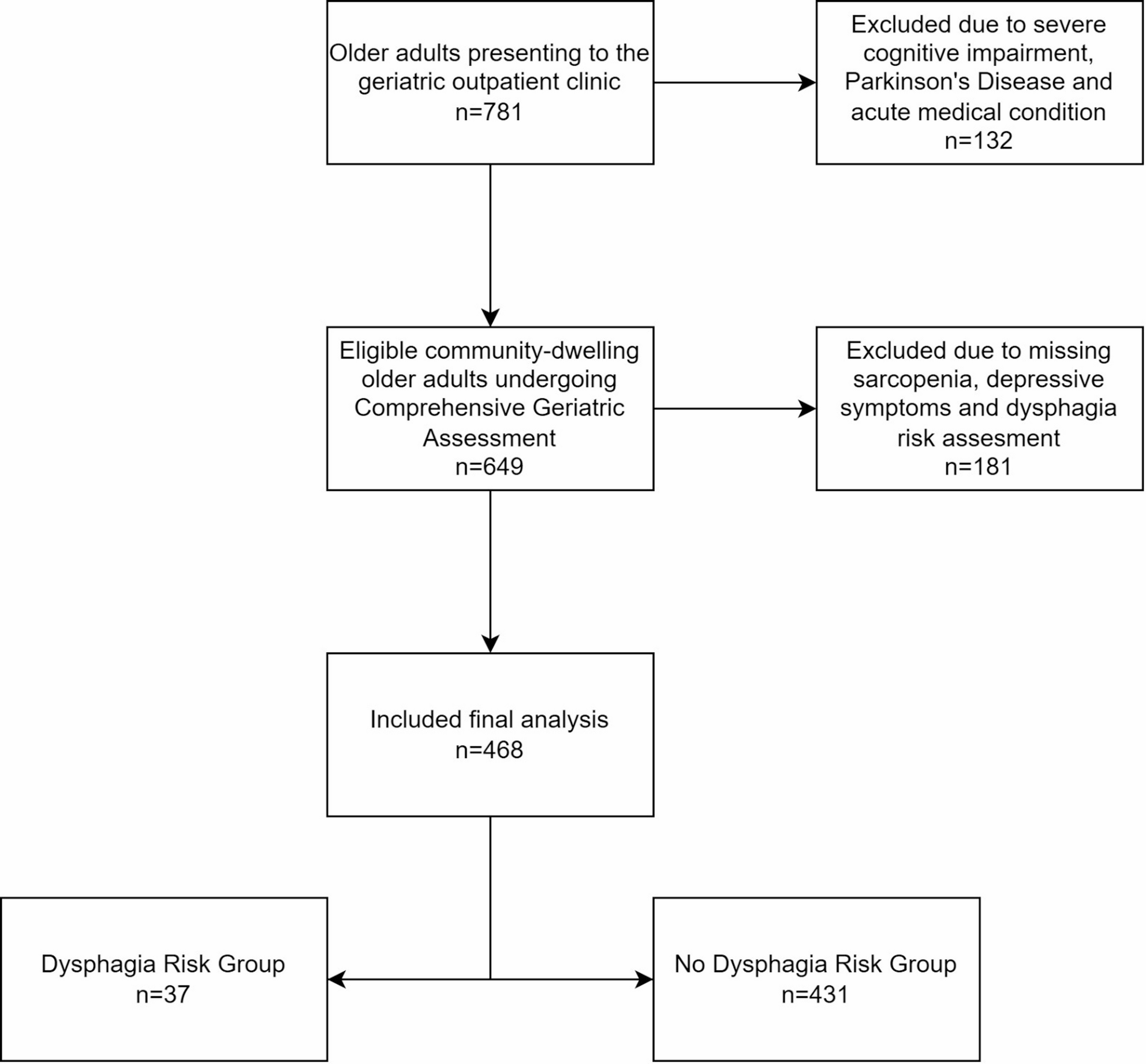
Background: Dysphagia is a critical geriatric syndrome associated with an increased risk of aspiration pneumonia, malnutrition, and mortality in older adults. The aim of this study was to evaluate the associations between Comprehensive Geriatric Assessment (CGA) parameters and dysphagia risk (Eating Assessment Tool-10 (EAT-10) ≥ 3) in community-dwelling older adults. Methods: This cross-sectional study included 468 community-dwelling older adults presenting to a geriatric outpatient clinic. Participants with severe cognitive impairment, Parkinson’s disease, those residing in a nursing home, and those with an acute medical condition were excluded from the study. Dysphagia risk was assessed using the EAT-10; probable sarcopenia was defined according to the European Working Group on Sarcopenia in Older People 2019 (EWGSOP2) criteria; depressive symptoms were evaluated with the Geriatric Depression Scale-15 (GDS-15); and nutritional status was assessed using the Mini Nutritional Assessment–Short Form (MNA-SF). Independent risk factors were identified using multivariate logistic regression analysis. Results: In the final multivariate regression model, the presence of probable sarcopenia (OR = 2.654, 95% CI: 1.184–5.947, p = 0.018) and higher GDS-15 scores (OR = 1.155, 95% CI: 1.063–1.255, p = 0.001) were independently and significantly associated with dysphagia risk. In contrast, a one-point increase in the MNA-SF score (indicating better nutritional status), when treated as a continuous variable, was an independent protective factor against dysphagia risk (OR = 0.684, 95% CI: 0.521–0.897, p = 0.006). Conclusions: In community-dwelling older adults, probable sarcopenia and depressive symptoms significantly increase the dysphagia risk, whereas good nutritional status plays a protective role. Prior to the development of dysphagia and its associated complications, optimizing muscle strength, mood, and nutritional status in outpatient settings is of importance for maintaining swallowing safety.
The paper
BMC Geriatrics, 16 Oct 2026, CC BY