High, rising social stress linked to death risk in older adults
The adjusted hazard ratio, which compares death rates over time, was 1.10 for consistently high, rising social stress versus initially lower, rising stress.
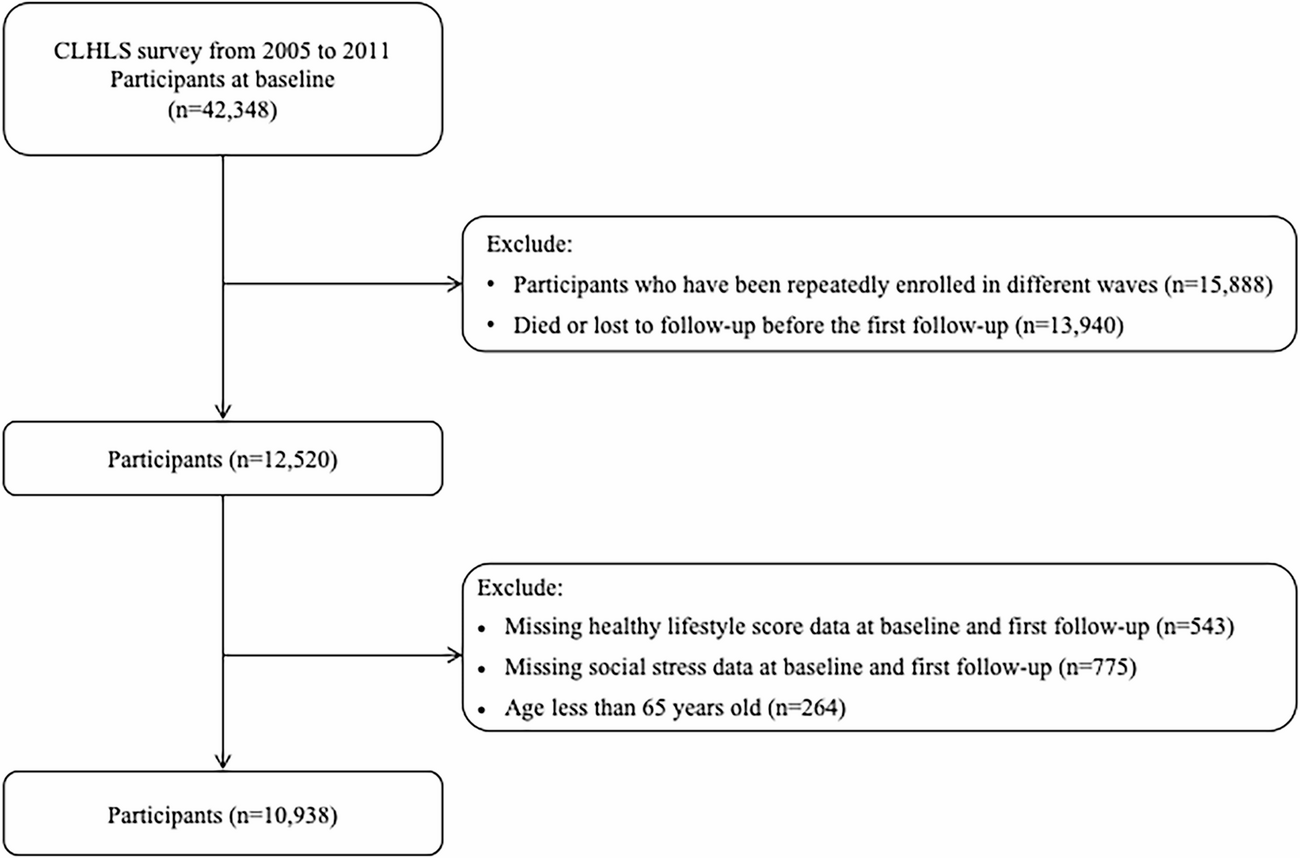
In a prospective observational cohort study, researchers studied 10,938 older adults in China using the Chinese Longitudinal Healthy Longevity Survey. They assessed social stress and healthy lifestyles at the start and first follow-up. They grouped participants by how these measures changed.
During follow-up, 5,920 participants died. People whose social stress stayed high and rose further had a higher risk of death from any cause than those whose stress started lower and increased. The association remained after accounting for social and demographic characteristics, lifestyle patterns and chronic conditions. It was evident in groups whose healthy lifestyle measures shifted from high to low or stayed moderate. It was not evident in the group whose lifestyle measures stayed low.
Why it matters
The paper highlights the importance of tracking changes in social stress and lifestyle behaviours when studying survival in older age.
Caveats
This observational study cannot show that social stress caused deaths. The findings concern older adults in China, with stress and lifestyle assessed at two time points.