Impact of malnutrition and protein-enriched oral nutrition on early recovery after fragility fractures in older adults: the NuTra trial
Registered NCT07582575
Abstract
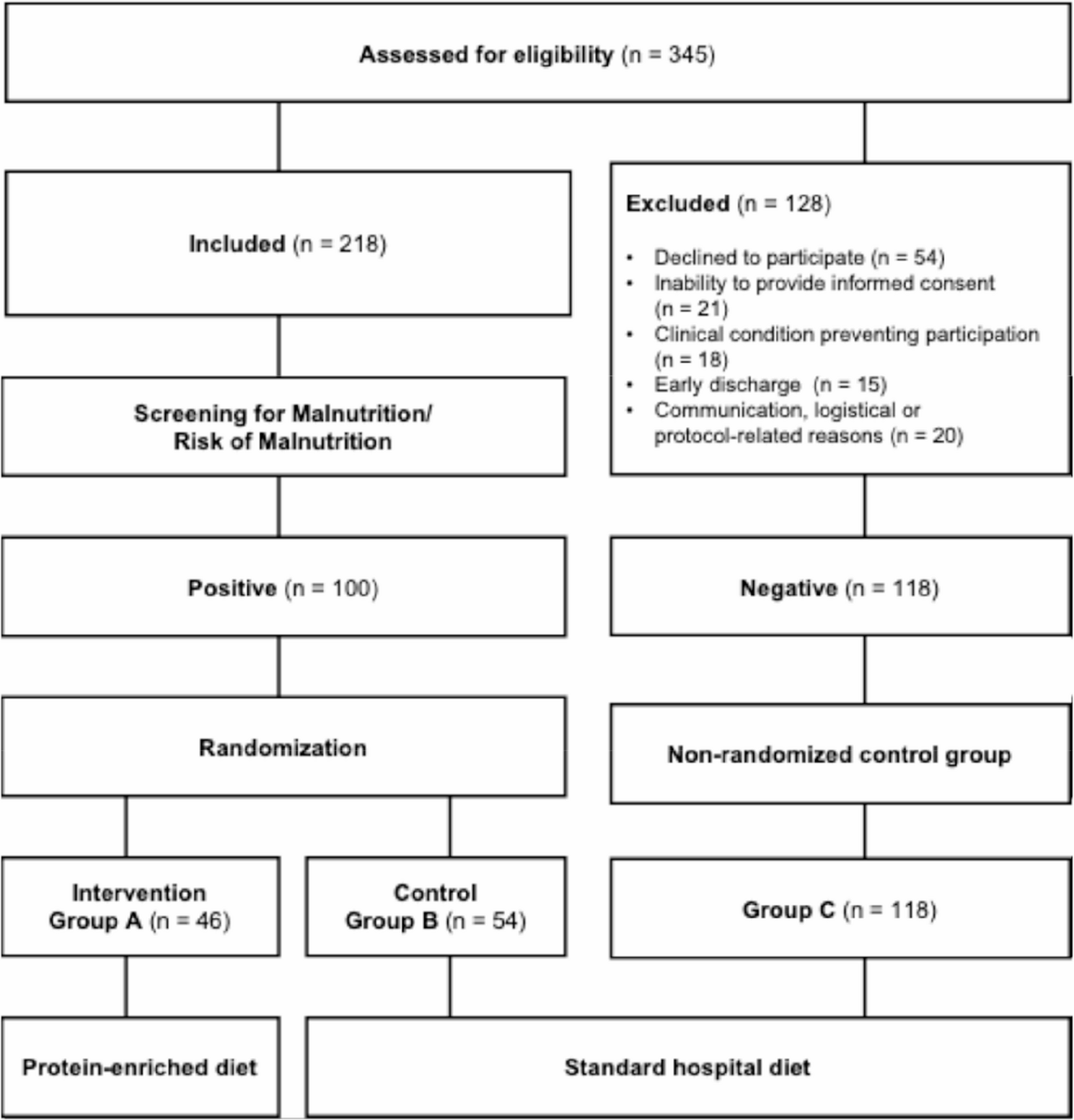
Background: Malnutrition is highly prevalent in geriatric trauma patients and is associated with impaired recovery, complications, and reduced likelihood of returning home. Nonetheless, the impact of a targeted protein-enriched diet during the acute hospital stay on patient outcome and rehabilitation remains to be investigated. Materials and methods: This single-center randomized controlled study enrolled patients ≥ 70 years with fragility fractures admitted to a Level I trauma center. Nutritional status was assessed using the Nutritional Risk Screening 2002 and Mini Nutritional Assessment. Patients screened positive in ≥ 1 tool were classified as being at nutritional risk and randomized to a protein-enriched diet (Group A) or standard diet (Group B); patients with negative screening served as observational reference group without nutritional risk (Group C). The intervention targeted 1.5–2.0 g/kg/day protein. Primary outcomes were in-hospital medical complications, surgical site infections and functional mobility at discharge. Secondary outcomes included length of stay, discharge destination, and in-hospital mortality. Multinomial logistic regression assessed independent associations with discharge destination. Results: Of the 218 patients (mean age 81.8 ± 6.9 years; 72.0% female), 100 (45.9%) screened positive for being at nutritional risk and were randomized to intervention (A, n = 46) or control (B, n = 54), while 118 (54.1%) patients without nutritional risk served as reference group (C). Patients at nutritional risk showed higher comorbidity burdens, higher ASA classes, and greater frailty than group C. Medical complications occurred in 45.0% of patients, with no significant differences between groups. Serum albumin decreased and CRP increased during hospitalization, without differences among the groups. Patients in reference group C were more often independently mobile and discharged home, whereas all patients at nutritional risk more frequently required institutional care. In multivariable analysis, a higher age-adjusted CCI was independently associated with discharge destination, whereas no independent effect of the nutritional intervention was observed. Conclusion: In this geriatric trauma cohort, being at nutritional risk was closely linked to frailty and multimorbidity. A protein-enriched diet during the acute hospital stay did not translate into measurable short-term benefits regarding complications, functional mobility, length of stay or discharge destination. Nutritional risk should therefore be considered within the broader context of overall vulnerability, and nutritional care may need to be embedded in comprehensive longitudinal rehabilitation strategies extending beyond the acute in-hospital phase. Trial registration: The study was retrospectively registered at ClinicalTrials.gov on 12 May 2026 (NCT07582575).
The paper
BMC Geriatrics, Oct 17, 2026, CC BY