Dapagliflozin linked to lower frailty odds in kidney disease study
Among prefrail adults over 65 with hypertension and chronic kidney disease, dapagliflozin users had lower frailty-progression odds than nonusers at one year (adjusted odds ratio 0.130).
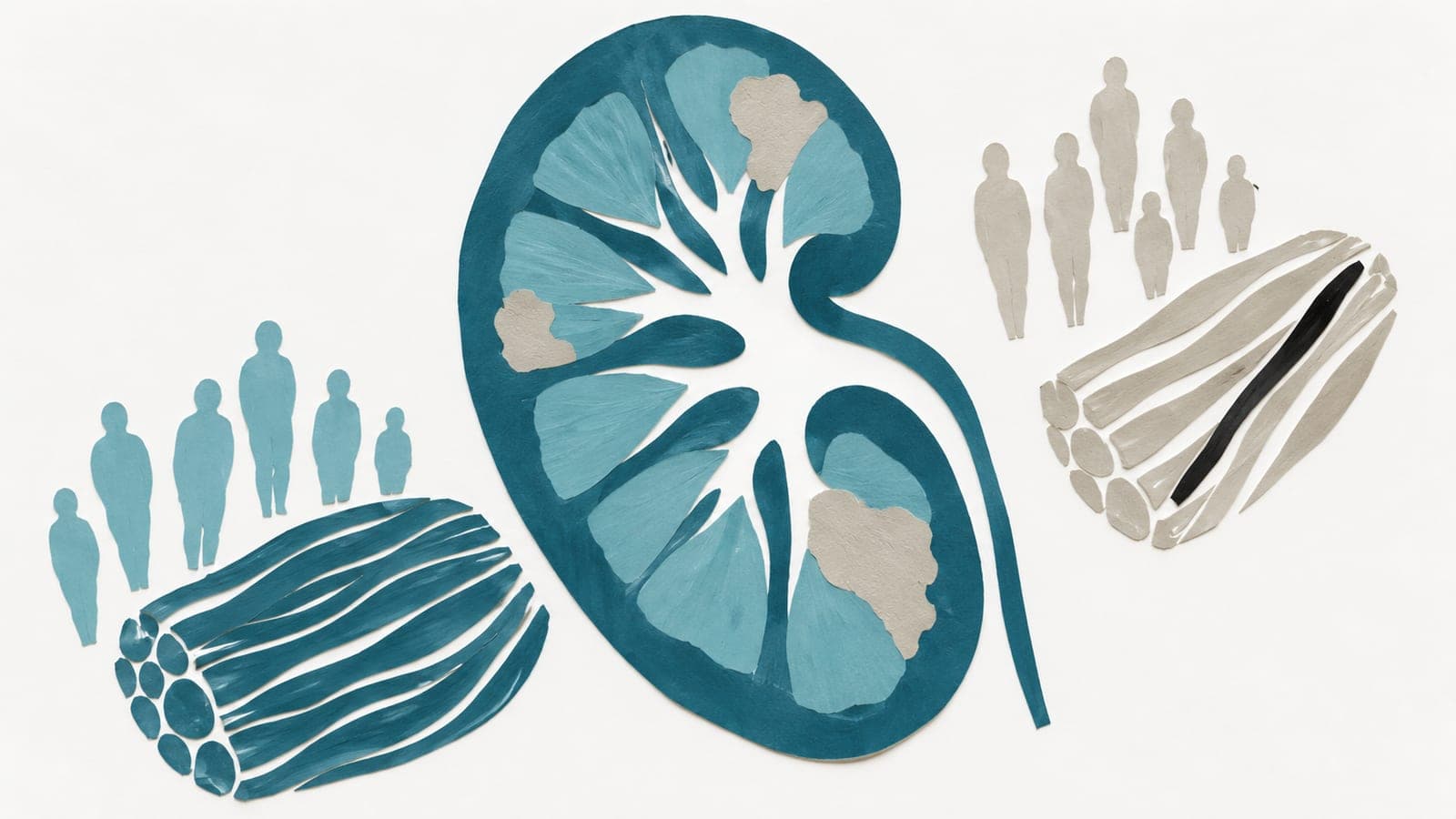
135 participants
Limit: Absolute frailty progression rates are not reported
Edited by Boris Djordjevic · AgingResearch.News
An observational study followed 135 prefrail patients older than 65 with high blood pressure and chronic kidney disease for one year. Prefrailty is an early stage of physical vulnerability. Researchers matched patients to make the comparison groups more similar, leaving 105 people, including 52 receiving the drug dapagliflozin.
Dapagliflozin use was associated with lower odds of progressing to frailty after adjustment for other factors. The odds ratio reported above is a relative comparison, not an absolute difference in risk. Higher levels of albumin, a blood protein, in urine were linked to slower walking. Better kidney filtration was linked to faster walking. Patients whose kidney filtration fell below the study’s threshold also performed worse on physical tests.
Why it matters
Physical decline is a concern for older adults with kidney disease and high blood pressure. The authors suggest a potential protective role for dapagliflozin’s drug class in limiting that decline.
Caveats
This observational study cannot establish cause and effect, and its findings concern prefrail adults older than 65 with both high blood pressure and chronic kidney disease. The abstract does not report absolute frailty progression rates or adverse events.
The paper
University of Molise; City University of New York
The Journal of Clinical Investigation, Nov 1, 2026, CC BY
Comments
Be the first to comment.