Anxiety and depression linked to later heart rhythm disorders
People with both conditions had a hazard ratio of 1.553 for later atrial fibrillation or flutter, compared with the study’s reference group.
Our read
Mechanisms- Studied:
- Cohort study of 95,787 Mass General Brigham Biobank participants
- What changed:
- Later atrial fibrillation or flutter was more likely with both anxiety and depression (hazard ratio 1.553)
- The catch:
- The abstract does not specify which groups the hazard ratios compare
- In the record:
- The 1,499th paper on C-reactive protein with results in people; 4,218 on record in all.
Editor of record: Boris Djordjevic · AgingResearch.News
Among 95,787 Mass General Brigham Biobank participants, anxiety and depression were linked to later atrial fibrillation or flutter—two types of irregular heartbeat—in an observational cohort study. Participants had a median age of 57, and 57.7% were female. None had either heart rhythm disorder before enrollment.
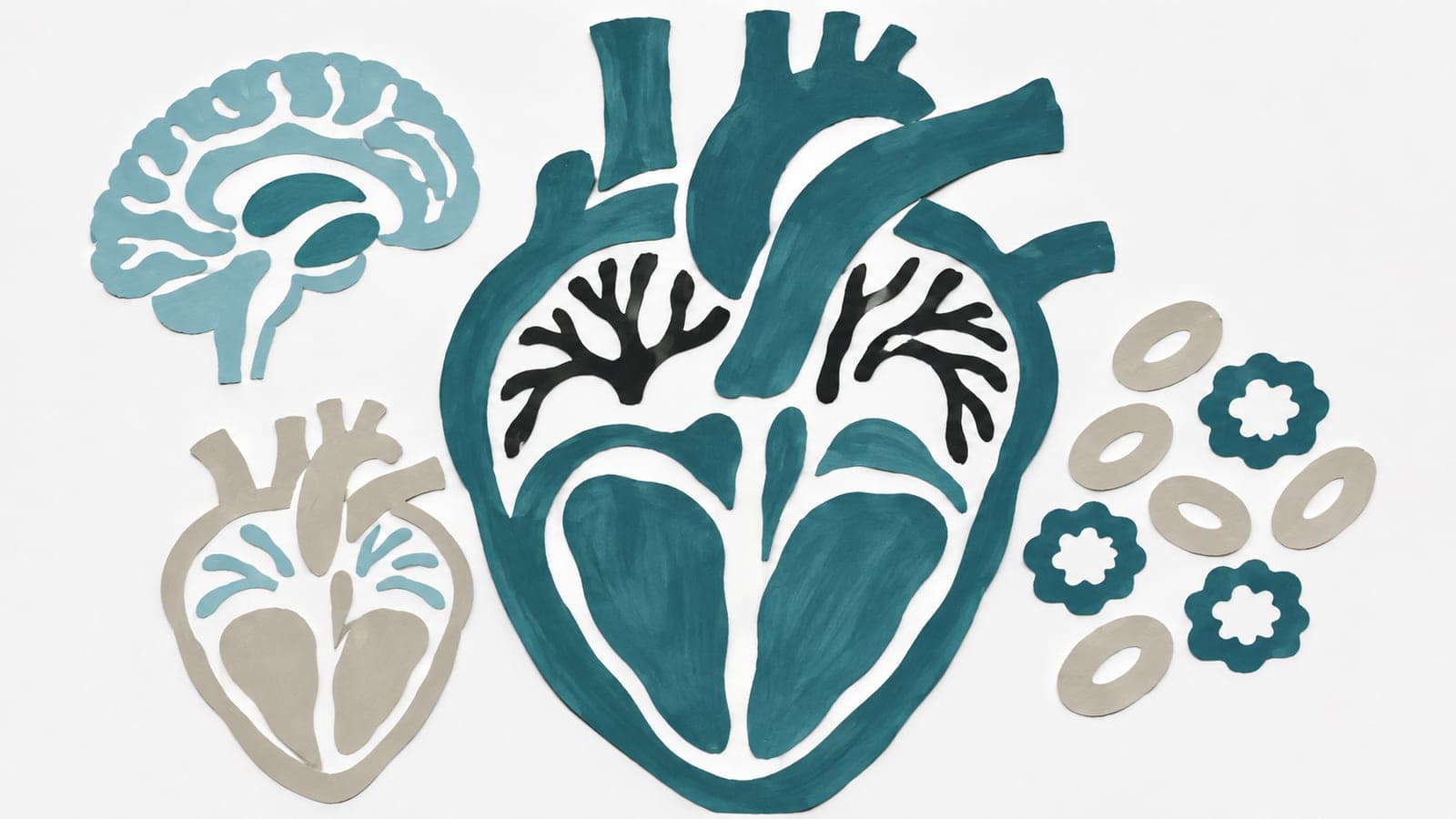
Anxiety, depression and both conditions together were associated with higher risk. The hazard ratio, a measure of relative risk over time, was 1.553 for both conditions after accounting for age and sex. The links persisted after further adjustment for cardiovascular risk, socioeconomic and lifestyle factors. Brain scans measured stress-related brain activity in 959 participants. Medical records provided measurements of C-reactive protein, a blood marker of inflammation, for 11,573. Statistical analyses suggested that stress-related brain activity and inflammation partly accounted for the links.
Why it matters
Heart rhythm disorders are relevant to cardiovascular health as people age. The authors suggest that therapies targeting stress-related brain activity and inflammation may reduce risk in people with anxiety or depression.
Caveats
Other health differences associated with anxiety or depression could have contributed to the heart rhythm risk despite adjustment. The conference abstract does not specify the hazard ratios’ comparison groups, and these analyses did not test whether targeting brain activity or inflammation reduced risk.
The paper
Cardiovascular Imaging Rsch Cntr
AHA Scientific Sessions 2026 Abstract, Nov 2, 2026
Presented at AHA Scientific Sessions 2026, abstract 5488
Comments
Be the first to comment.