Heart tracing model predicted irregular heartbeat risk across groups
The model scored 0.810 on a measure of distinguishing people who developed atrial fibrillation within 10 years from those who did not.

Our read
Biomarkers- Studied:
- Cohort study of 76,967 patients receiving primary or cardiology care, 10 years
- What changed:
- The model scored AUROC 0.810 for predicting irregular heartbeat, similarly across sexes and racial groups but better in younger patients
- The catch:
- Race comparisons grouped all non-White participants together, obscuring potential differences between racial groups
- In the record:
- One of 5 papers on ECG-AI on record: 1 with results in people.
- Why it’s aging research:
- It bears on staying healthy in midlife and later life.
Editor of record: Boris Djordjevic · AgingResearch.News
Among 76,967 patients receiving ongoing primary or cardiology care at Massachusetts General Hospital and Brigham and Women’s Hospital, researchers evaluated a heart tracing model in an observational study. Participants averaged 55.2 years of age, and 56.7% were women.
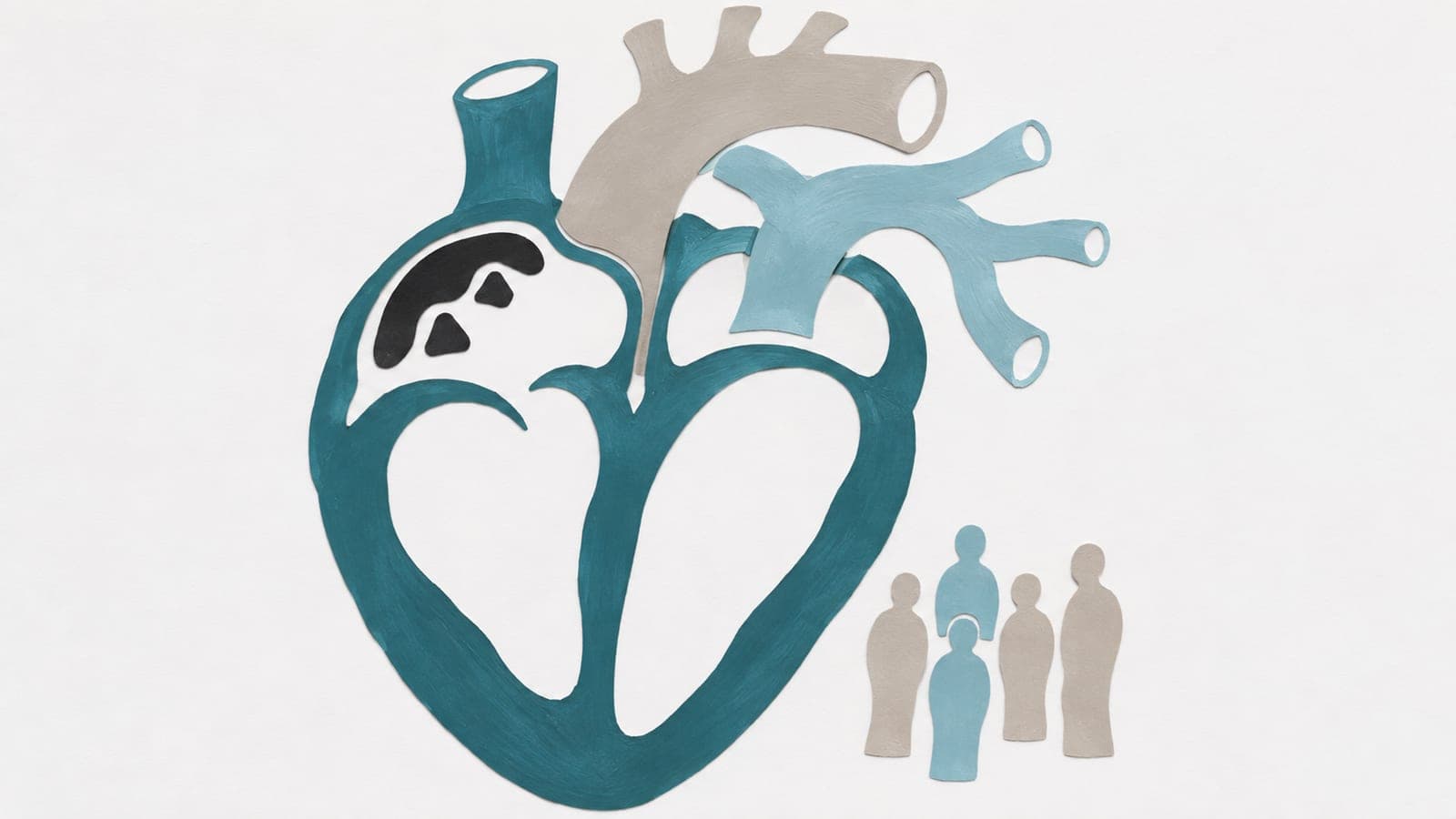
The artificial intelligence model used electrocardiograms, recordings of the heart’s electrical activity, to estimate future atrial fibrillation risk. Atrial fibrillation is an irregular heartbeat. The model’s ability to distinguish people who developed the condition within 10 years from those who did not was similar across sexes and racial groups, and modestly higher in younger patients. In 58,413 participants with data for comparison, its performance across sex, age and race was more consistent than an established clinical risk score based on 11 factors.
Why it matters
Predicting atrial fibrillation across age groups may help identify whom to prioritize for screening and preventive efforts.
Caveats
The analysis tested predictions, not whether model-guided screening improved health. Results came from two hospitals, and race comparisons grouped all non-White participants together.
The paper
Massachusetts General Hosp
AHA Scientific Sessions 2026 Abstract, Nov 2, 2026
Presented at AHA Scientific Sessions 2026, abstract 11938



Comments
Be the first to comment.