Early type 2 diabetes diagnosis linked to higher death rates
With 100 representing expected mortality based on Finns without diabetes, death ratios were 288 for diagnosis by 40 and 56 at 80 or older.
Our read
Populations- Studied:
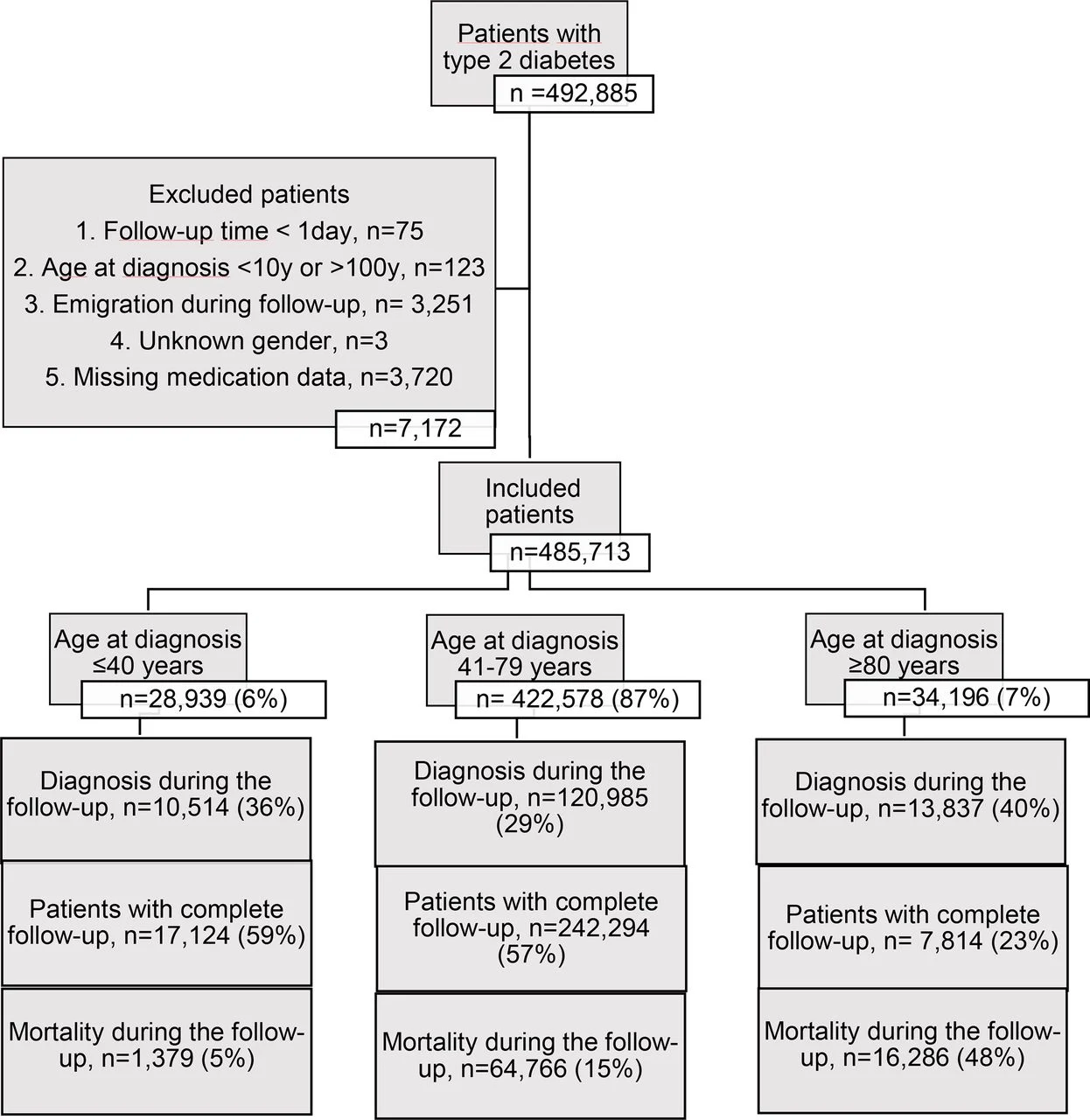
- Cohort study of 485,713 Finnish patients with type 2 diabetes, median 6 years
- What changed:
- Deaths among people diagnosed with diabetes at ≤40 years were 288 percent of expected deaths based on people without diabetes
- The catch:
- Smoking, body mass index, and blood pressure were unavailable, leaving mortality comparisons vulnerable to confounding
- In the record:
- The 172nd paper on insulin with results in people; 607 on record in all. Its result on mortality agrees with 10 of 13 other findings on record; 2 point the other way and 1 found no change.
Editor of record: Boris Djordjevic · AgingResearch.News
In Finland, 485,713 people with type 2 diabetes were included in a retrospective dynamic cohort study using national registry records from 2018 to 2023. People diagnosed during follow-up entered at diagnosis. Median follow-up was six years, and 82,431 people died.
After adjustment for age and sex, death rates were higher than among Finns without diabetes for people diagnosed at 40 or younger, but lower for those diagnosed at 80 or older. Overall mortality was also lower than in the comparison population. Across the cohort, heart failure and high or very high risk of worsening kidney disease were strongly associated with higher mortality.
Why it matters
Age at diagnosis may help guide risk assessment as people with type 2 diabetes grow older. The authors highlighted the need for targeted management of high-risk individuals.
Caveats
Other illnesses could have influenced the mortality comparison, which adjusted only for age and sex. The analysis excluded people diagnosed before age 10 or after age 100.
Where the evidence stands
GLP-1 receptor agonists
- 994 independent labs in 89 countries
- 733 findings against
- 1,238 trials, 309 with no results posted
- Funders: Eli Lilly and Company and others
- 1,728 of 7,097 findings with company ties
- 755 of 1,238 trials sponsored by its developers
Insulin
- 155 independent labs in 45 countries
- 24 findings against
- 234 trials, 92 with no results posted
- Funders: National Institutes of Health and others
- 24 of 310 findings with company ties
- 53 of 234 trials sponsored by its developers
From the paper
- Follow-up
The median follow-up time was 6 years, with 55% of patients completing the full follow-up period.
- Result
In the multivariable analysis, age at the start of follow-up was positively associated with the risk of death (RR 1.06, 95% CI 1.06 to 1.06).
Quoted word for word from the full text on drc.bmj.com.
- GLP-1 receptor agonists
- Insulin
- Insulin + oral glucose-lowering medications or GLP-1 receptor agonists
- Type 2 diabetes
- Heart failure
- Humans
The paper
Tampere University
BMJ Open Diabetes Research & Care, Nov 12, 2026, Open access, CC BY-NC


Comments
Be the first to comment.