Machine learning based on event-related oscillations of working memory differentiates between preclinical Alzheimer’s disease and neurotypical aging
Abstract
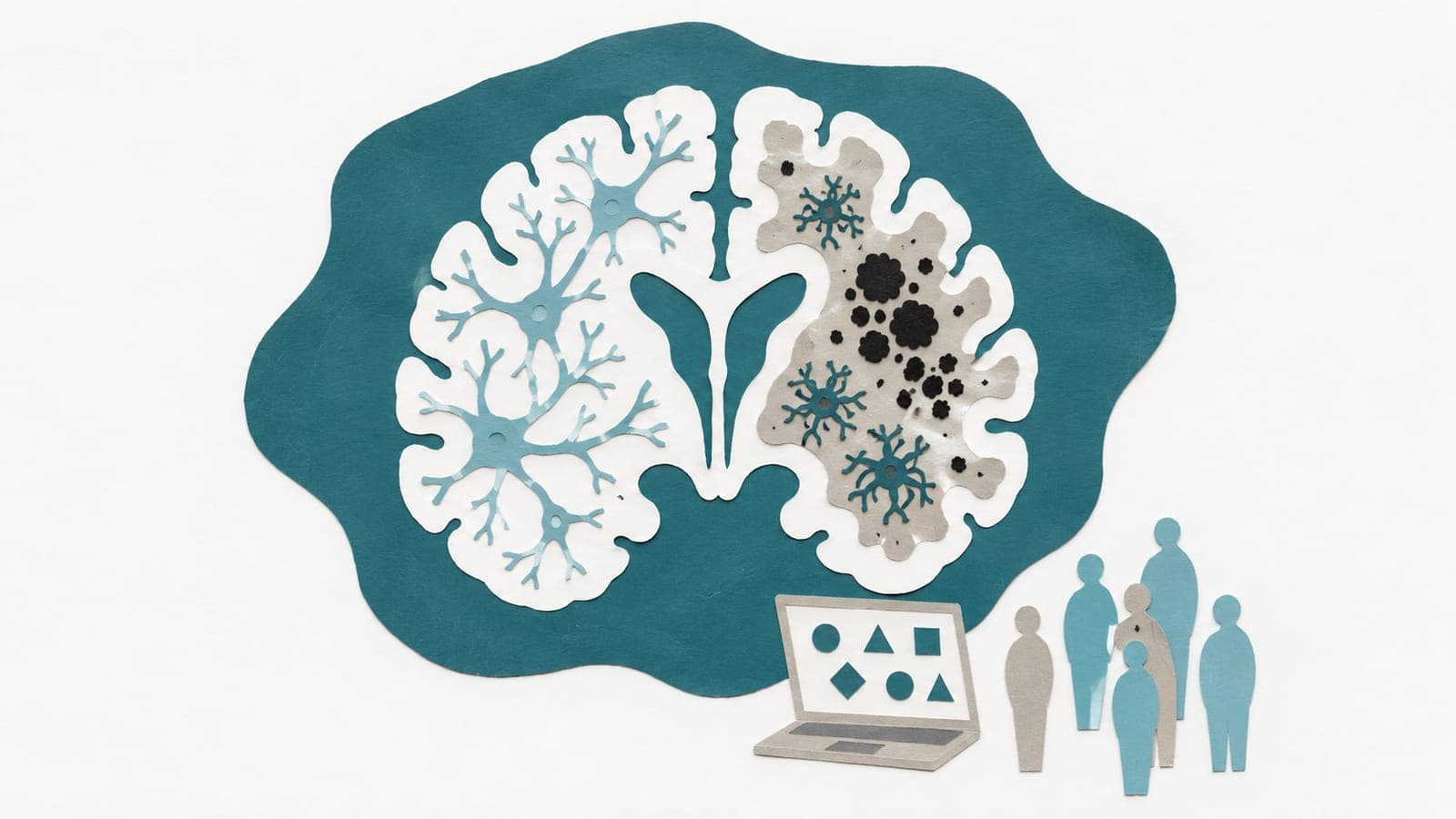
Abstract There is increasing evidence of the usefulness of electroencephalography (EEG) as an early neurophysiological marker of preclinical AD. Our objective was to apply machine learning approaches on event-related oscillations to discriminate preclinical AD from neurotypical controls. Twenty-two preclinical AD participants who were cognitively normal with elevated amyloid and 21 cognitively normal with no elevated amyloid controls completed n-back working memory tasks (n= 0, 1, 2). EEG signals were recorded through a high-density sensor net. The event-related spectral changes were extracted using the discrete wavelet transform in the delta, theta, alpha, and beta bands. The support vector machine (SVM) machine learning method was employed to classify participants, and classification performance was assessed using the Area Under the Curve (AUC) metric. The relative power of the beta and delta bands outperformed other frequency bands with higher AUC values. The 2-back task obtained higher AUC values than the 0 and 1-back tasks. The highest AUC values were from the 2-back task beta band (AUC = 0.86) and delta bands (AUC = 0.85) nontarget data. This study demonstrates the promise of using machine learning on EEG event-related oscillations from working memory tasks to detect preclinical AD.
The paper
University of Kansas Medical Center; University of Kansas
medRxiv, Oct 12, 2023, Open access, CC BY-NC-ND, Preprint, not peer-reviewed