Harvester ant colonies face lower death risk as they age
A 34-year observational study of 3,285 western harvester ant colonies found declining mortality and increasing reproduction as colonies aged.
Our read
Mechanisms- Studied:
- Experiments in model organisms (3,285 colonies, 34 years, cohort study)
Editor of record: Boris Djordjevic · AgingResearch.News
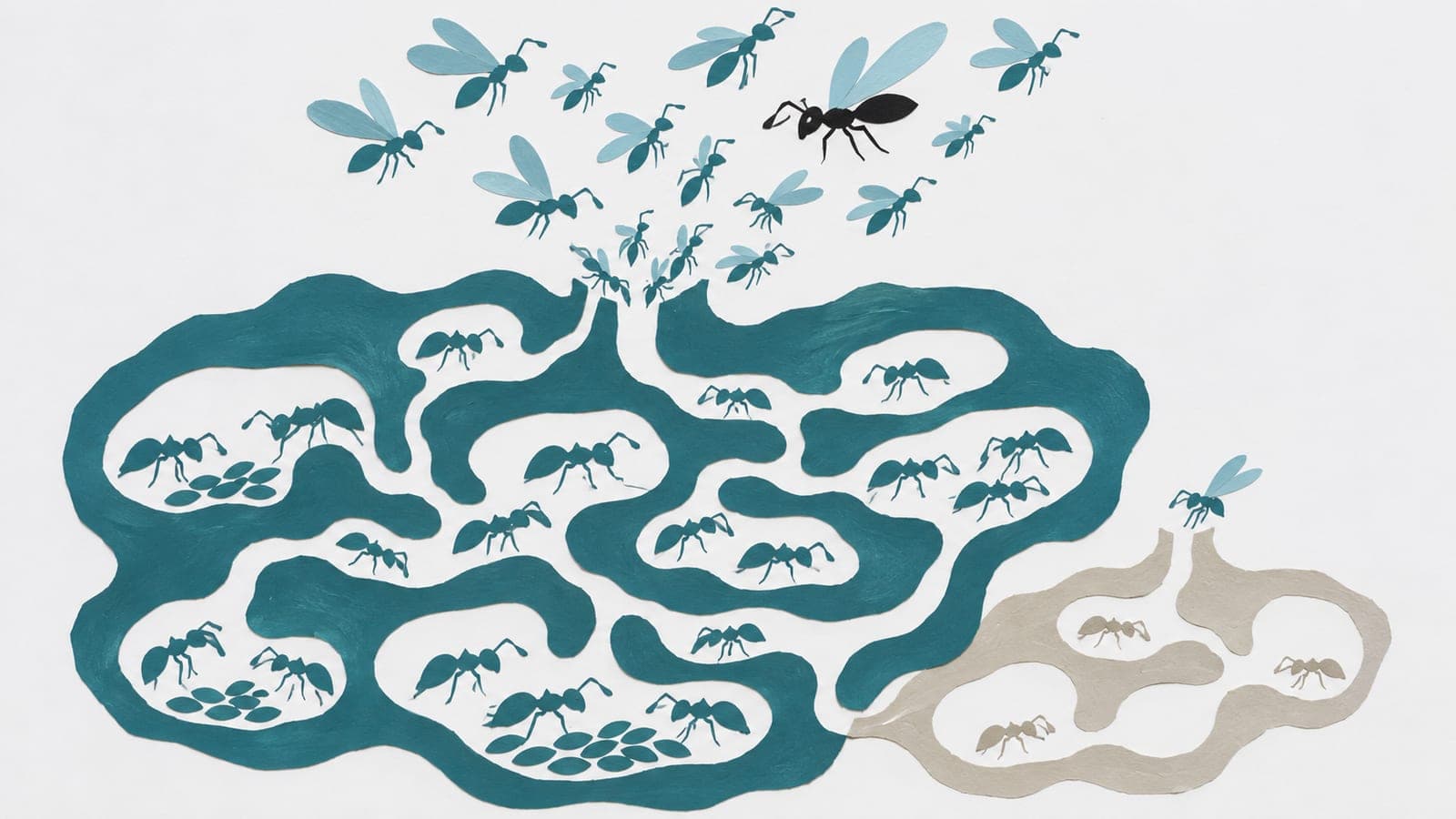
Western harvester ant (Pogonomyrmex occidentalis) colonies had lower death rates and reproduced more at older ages in a 34-year observational study of 3,285 colonies of known age. This pattern, called negative senescence, reverses the age-related rise in mortality and decline in reproduction seen in most vertebrates and insects.
Colonies continued growing throughout their lives, making older colonies larger on average. Growth and reproduction were positively linked, with no evidence of a tradeoff between them. At the population level, greater reproduction in one year did not lead to more new colonies the following year. The authors argued that environmental unpredictability favors an extended reproductive lifespan.
Why it matters
Colony aging offers a way to examine theories that continued growth without a tradeoff with reproduction can favor the evolution of declining mortality with age.
Caveats
The observational design did not isolate whether growth promoted reproduction or reproduction promoted growth. The age-related results concerned whole colonies of western harvester ants, not individual ants.

Comments
Be the first to comment.