Mineral supplement extends lifespan in male mice
Older mice given vanadyl sulfate in drinking water for 13 weeks had better hanging endurance and less fat accumulation than controls.

Our read
Interventions- Studied:
- Experiments in aged male C57BL/6J mice, 3 months, against mice given normal water
- What changed:
- Median lifespan rose to 952 days with vanadyl sulfate, compared with 886.5 days with normal water
- The catch:
- The lifespan test included only 19 treated mice and 20 mice receiving normal water
- Stake:
- An author founded AllyRNA and holds shares in it. An author founded Accent Therapeutics and holds shares in it. Authors also declare ties to 1 more company.
Editor of record: Boris Djordjevic · AgingResearch.News
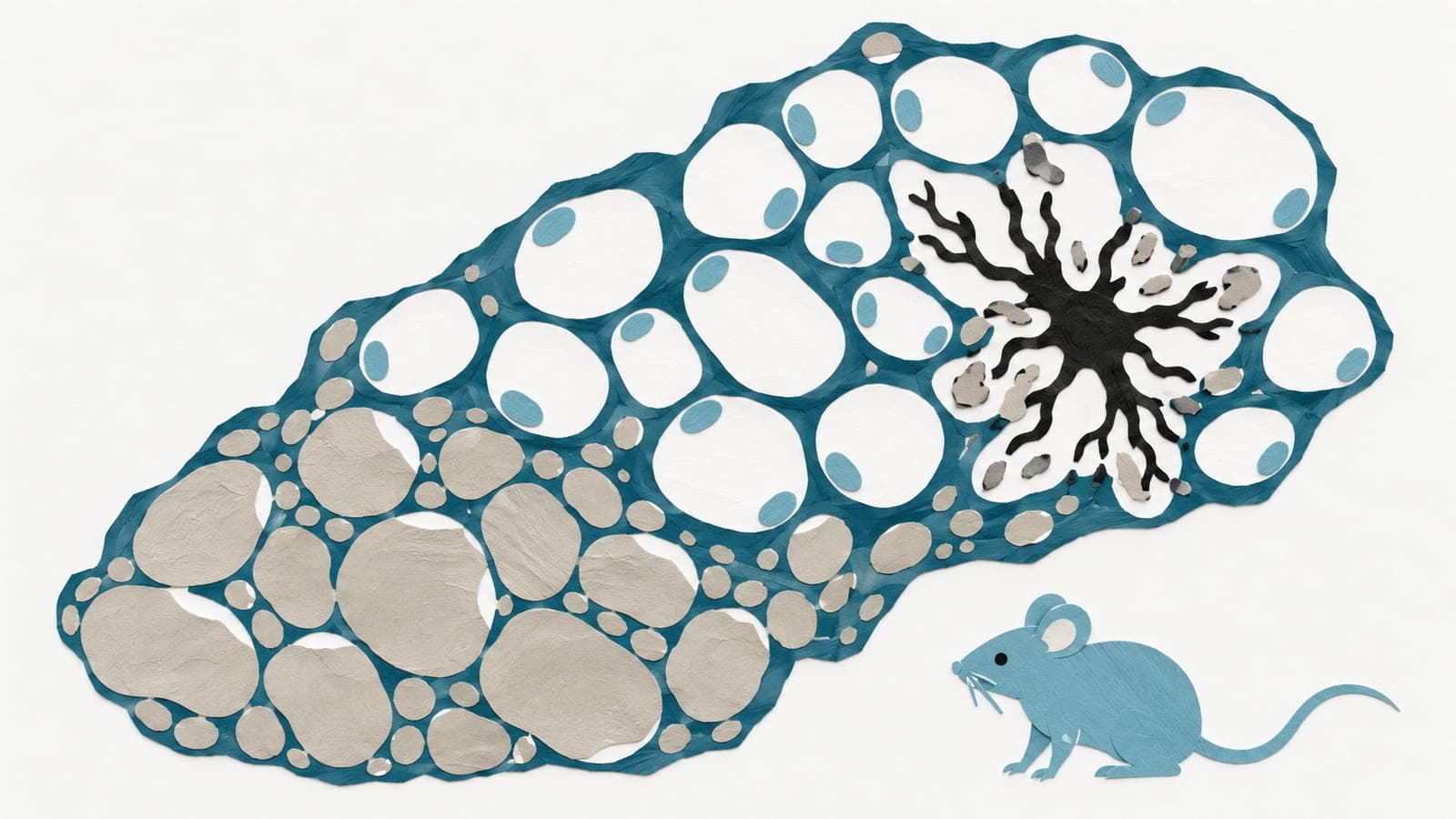
Male mice given oral vanadyl sulfate, a mineral dietary supplement, lived longer in animal experiments. In a separate experiment, 12- and 76-week-old mice received drinking water containing 0.15 milligrams per milliliter of the compound or control water for 13 weeks. Older mice receiving the compound had better hanging endurance and accumulated less fat than controls.
In human connective-tissue cells grown in the lab, vanadyl sulfate preferentially killed senescent cells—cells that had stopped dividing. It altered cysteine, a building block of proteins, promoting bonds that caused proteins to misfold and clump, ultimately killing the cells. The researchers linked this vulnerability to a buildup of oxidized glutathione, a molecule involved in maintaining cells’ chemical balance.
Why it matters
A buildup of senescent cells marks several age-related diseases. The authors propose exploiting these cells’ altered protein chemistry as a potential way to ease the effects of aging.
Caveats
The reported lifespan extension was in male mice; the abstract and excerpts do not give lifespan-group sizes. These experiments did not test anti-aging benefits or safety in people.
- Vanadyl sulfate
- Cell killing (cytotoxicity)
- Cellular senescence
- Glutathione disulfide
- Glutathione reductase
- Mice
The paper
University of Chicago
Nature Aging, Nov 6, 2026, Open access, CC BY-NC-ND



Comments
Be the first to comment.