Aging in mice linked to brain clock changes and weaker rhythms
A study comparing young and aged mice found weaker two- to six-hour cycles in movement and body temperature, alongside changes in the brain’s daily clock.
Our read
Mechanisms- Studied:
- Experiments in mice
Editor of record: Boris Djordjevic · AgingResearch.News
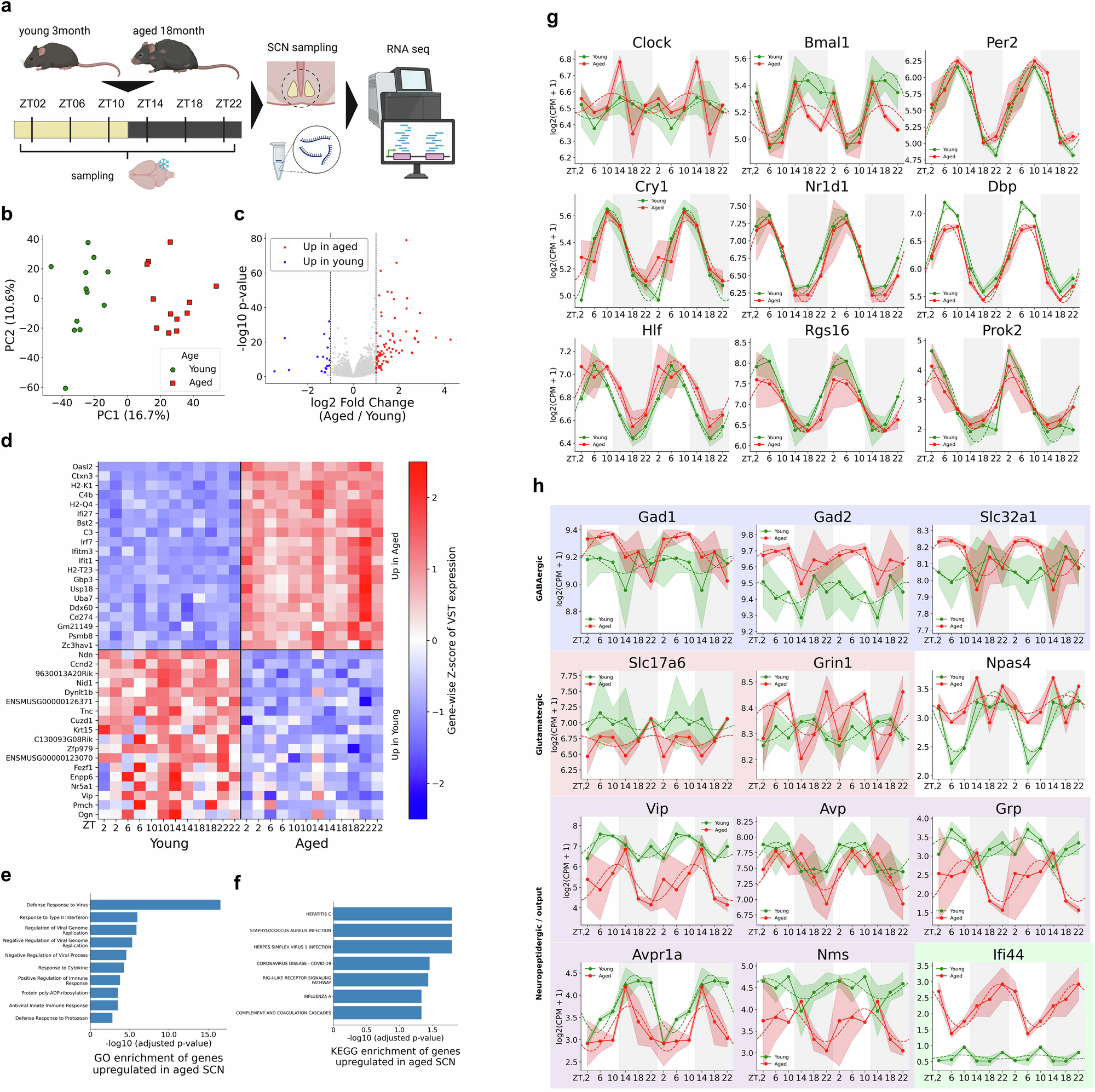
Young and aged mice were compared in an animal study of the suprachiasmatic nucleus, a brain region that regulates daily rhythms. Researchers analyzed gene activity and tracked movement and core body temperature over time, using separate groups for the molecular and physiological analyses.
Aging was associated with widespread changes in gene activity, including patterns related to immune responses and glia, cells that support nerve cells. Some core clock genes retained rhythmic activity. Aged mice still had detectable daily rhythms, but their two- to six-hour cycles in movement and temperature were weaker. Movement and temperature also tracked each other less closely, with relationships differing by time of day. Tissue analyses found changes in glia and a lower density of cells carrying nerve-cell markers in the aged brain region.
Why it matters
The brain’s daily clock helps organize physiology. These findings bear on how changes in that clock with age relate to the timing and coordination of bodily functions.
Caveats
Molecular measurements and physiological recordings came from separate groups of mice, so the study could not link an individual animal’s brain changes to its rhythm changes.

Comments
Be the first to comment.