Health vulnerability score is linked to disease and death
In 35,193 healthy adults followed for over a decade, each one-unit score rise was linked to a hazard ratio of 2.60 for disease progression.
NPJ Digital Medicine
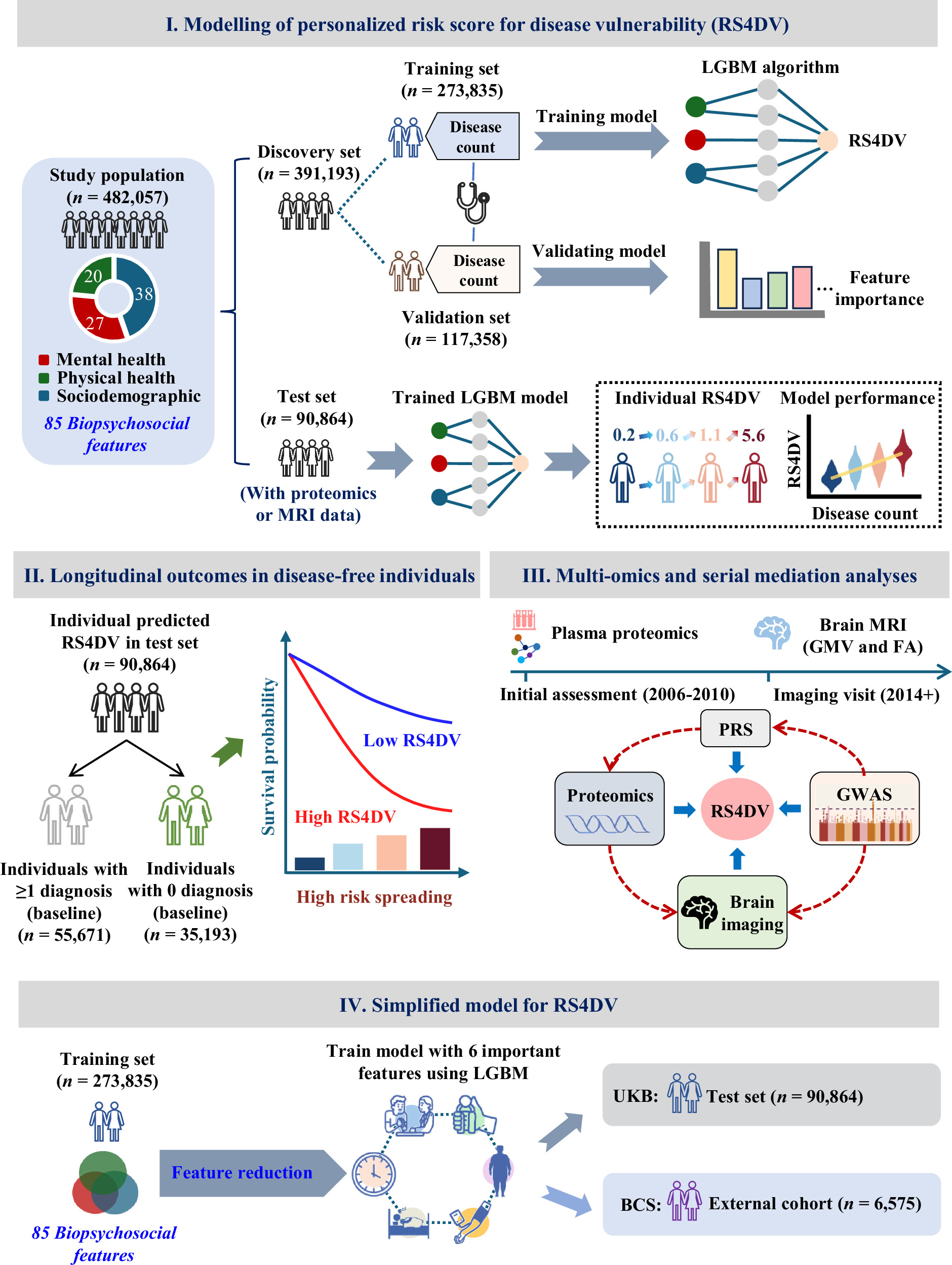
In an observational cohort study of 35,193 UK Biobank participants who had no diagnosed diseases at the start, researchers tracked long-term health outcomes over more than a decade. The team built a disease vulnerability score using 85 biological, psychological, and social measures analysed with machine learning in 391,193 participants and evaluated in 90,864 others. Among the initially healthy participants, each one-unit increase in the score was associated with disease progression and all-cause mortality. Biological analyses identified genomic, proteomic, and neuroimaging correlates, supporting biological relevance across organizational levels. The researchers also developed a simplified six-item version using routine measures, which showed moderate predictive performance and transferred to the separate 1970 British Birth Cohort.
Why it matters
Risk of multiple chronic diseases rises with age, but existing medical tools usually focus on single conditions. A general score based on accessible physical, mental, and social factors could help identify ostensibly healthy adults who face higher risks of broad health decline.
Caveats
Because the study was observational, the score shows statistical associations rather than causes of illness. In addition, the simplified model showed only moderate predictive performance, and both cohorts were based in the United Kingdom.
The paper
Show 8 more authors
Wei Li, Christos Christogiannis, Tianye Jia, Charlotte Walton, Sangma Xie, Tifei Yuan, Samuele Cortese, Bing Liu,Kunming University of Science and Technology
NPJ Digital Medicine · 7 Oct 2026 · CC BY-NC-ND