Immune cell profile linked to poor colorectal cancer outlook
An observational analysis of human colorectal cancer data identified a distinct group of tumor immune cells with a profile linked to immune suppression.
Our read
Biomarkers- Studied:
- Computational study of people with colorectal cancer
- What changed:
- The macrophage profile was linked to poorer colorectal cancer prognosis
- The catch:
- Other tumor features could explain the links to immune suppression and prognosis
- Why it’s aging research:
- It studies something that builds up in the body with age.
Editor of record: Boris Djordjevic · AgingResearch.News
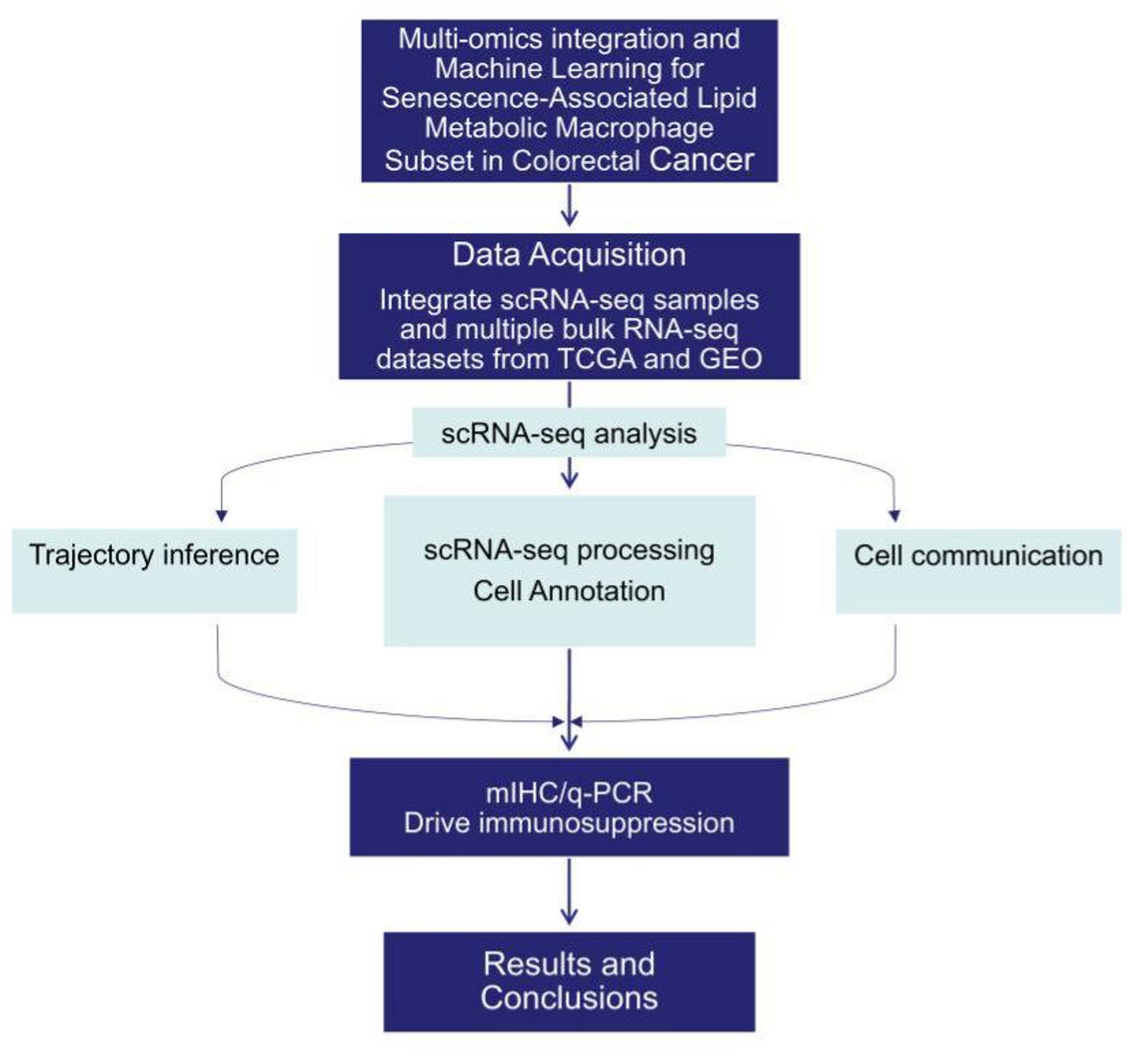
Human colorectal cancer data revealed a distinct group of macrophages, a type of immune cell, in an observational analysis. Researchers combined several types of molecular data, including gene activity measured in individual cells. The group showed gene activity linked to senescence, a state in which cells stop dividing, and to fat metabolism. The data also linked these cells to immune-suppressing signals exchanged with T cells, another type of immune cell.
Imaging found cells carrying the group's markers concentrated at the tumor's leading edge. A prognosis model based on the group's gene activity achieved an area under the curve of 0.972, a measure of how well it distinguished outcomes. Researchers tested the model on portions of a combined dataset held back during model development.
Why it matters
Cell senescence connects this work to questions about aging and cancer. The authors propose this macrophage group as a prognostic marker and potential treatment target.
Caveats
Other tumor features could have accounted for the links to immune suppression and prognosis, rather than effects caused by these macrophages. The model's reported accuracy came from internal testing, leaving its performance in an independent patient group uncertain.


Comments
Be the first to comment.