Immune cells that stop dividing help lab-grown cancer cells grow
Cell experiments found that these immune cells also promoted resistance to chemotherapy by changing tumor cell behavior.
Our read
Mechanisms- Studied:
- Experiments in animals
- Why it’s aging research:
- It studies something that builds up in the body with age.
Editor of record: Boris Djordjevic · AgingResearch.News
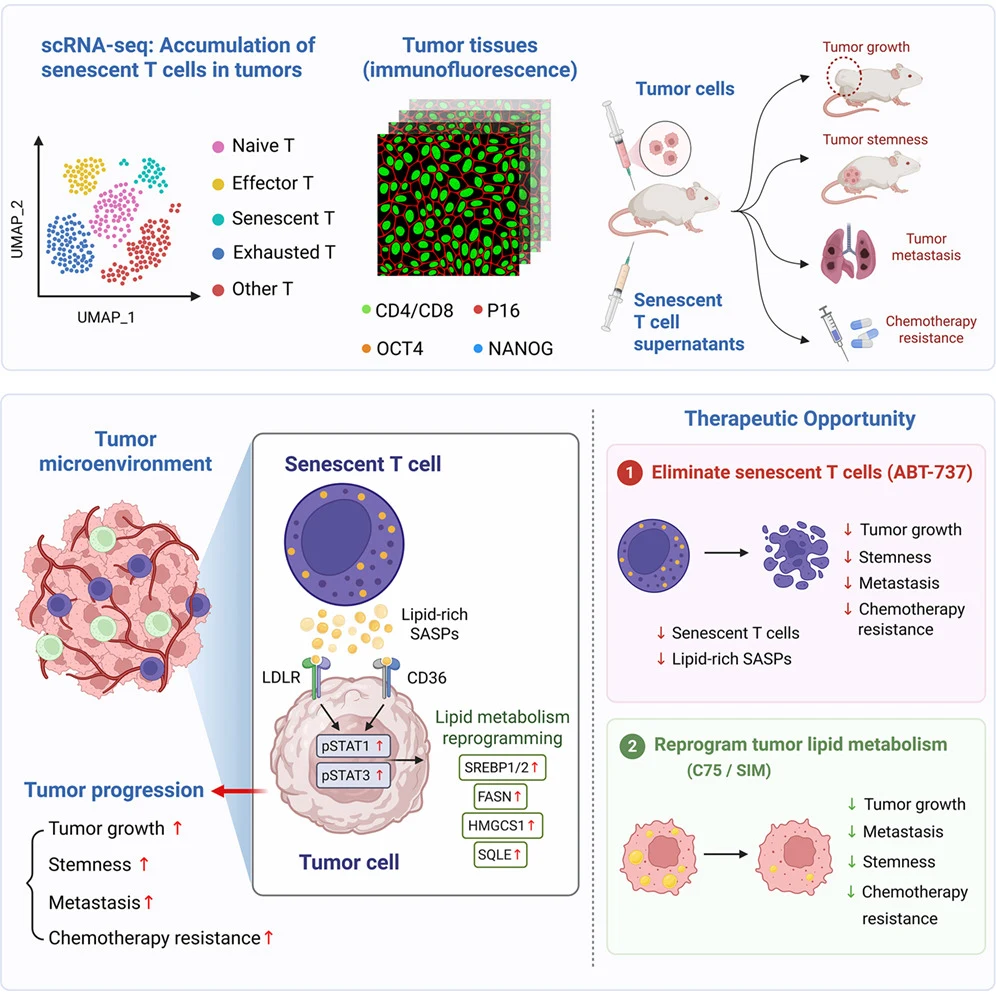
Senescent T cells—immune cells in a state in which they stop dividing—promoted tumor growth, spread and chemotherapy resistance in experiments with cells and living organisms. The researchers also analyzed gene activity in individual cells and identified abundant senescent T cells in breast, colorectal and lung cancers.
The senescent cells released a mixture of substances rich in fats that changed tumor cells’ metabolism, the chemical processes that sustain them. These secretions also activated signaling proteins inside tumor cells. In experiments in living organisms, removing senescent T cells or disrupting the resulting changes in tumor fat metabolism suppressed the tumor progression and spread promoted by these immune cells.
Why it matters
Immune cell senescence could offer a target for improving anti-cancer immunity and treatment responses, the authors propose.
Caveats
The abstract does not identify the species or group sizes used in the experiments in living organisms, limiting assessment of how well those findings apply to people.
The paper
Cell Reports Medicine, Nov 2026, CC BY


Comments
Be the first to comment.