Feasibility and safety of early bedside personalized rehabilitation in acute decompensated heart failure: a pilot randomized trial
Abstract
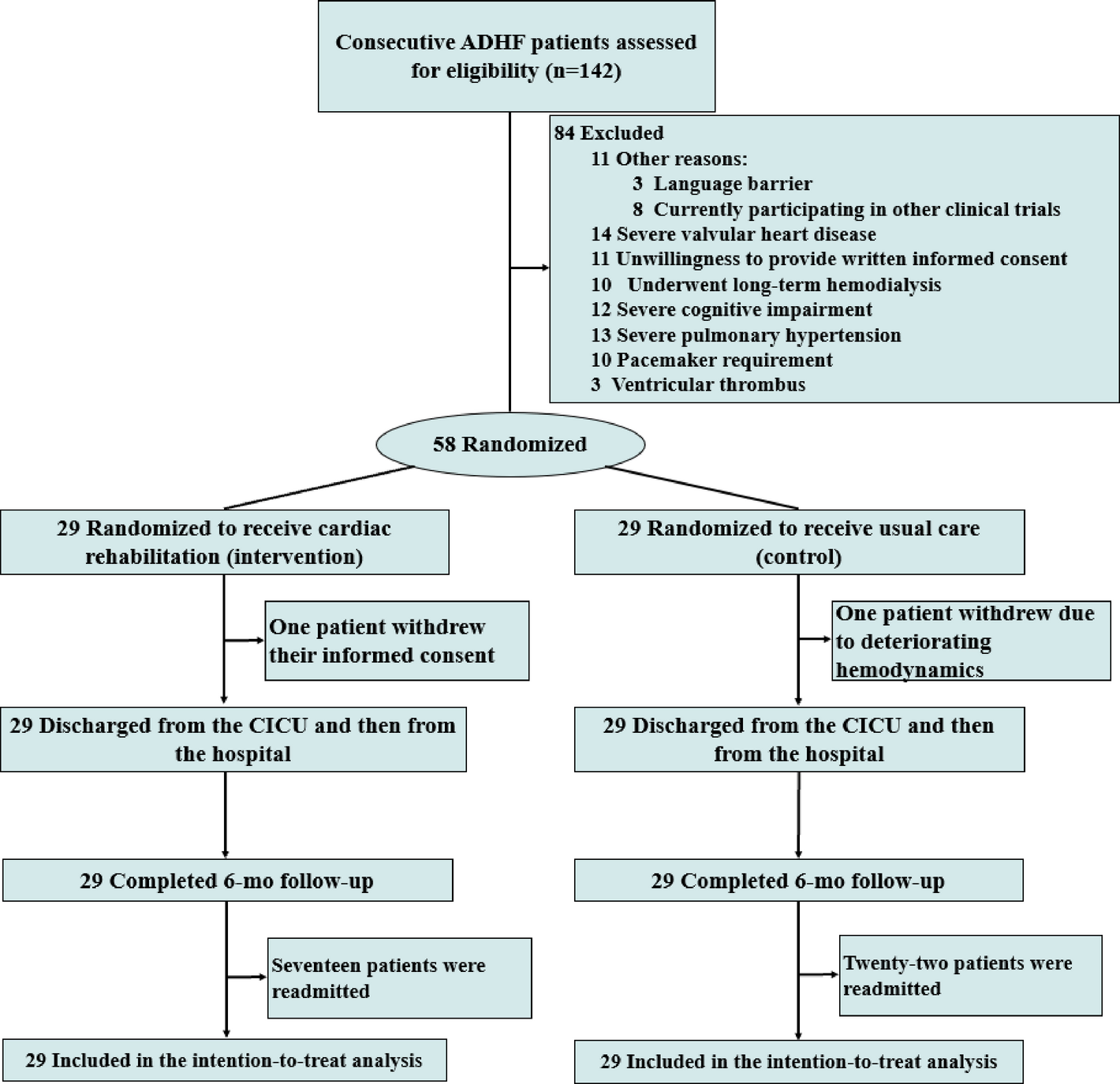
The initiation of individualized bedside rehabilitation during the acute phase of acute decompensated heart failure (ADHF), particularly among elderly patients, remains insufficiently understood. Although early rehabilitation may improve mobility, alleviate congestion, and enhance quality of life (QoL), evidence supporting its effectiveness is limited. To assess the feasibility and safety of early individualized bedside rehabilitation and to explore preliminary between-group differences in physical function and congestion-related outcomes in elderly patients with ADHF prior to discharge. A single-center randomized controlled trial (RCT) was conducted at the CICU of Jiujiang University Affiliated Hospital from January 2024 to March 2025. Patients aged ≥ 65 years with ADHF were randomly allocated to either the intervention group (IG) or the control group (CG). The IG received early individualized rehabilitation, including mobilization, respiratory training, and low-intensity resistance exercises, whereas the CG received standard conventional treatment. A total of 58 patients were enrolled. The predefined AHF-CR intervention was successfully delivered in all patients allocated to the intervention group (29/29, 100%), and no rehabilitation-related adverse events were observed. Exploratory analyses showed higher SPPB scores in the intervention group at discharge. Early individualized bedside rehabilitation appears to be feasible and safe for elderly patients with ADHF. Preliminary exploratory differences in discharge SPPB and ERCS scores were observed between groups, warranting confirmation in larger adequately powered trials.
- Early individualized bedside rehabilitation
- Mobilization
- Resistance training
- Acute decompensated heart failure
- Congestion
- Humans
The paper
Jiujiang University
Scientific Reports, 15 Oct 2026, Open access, CC BY-NC-ND