Semaglutide lowered pressure in a heart failure group with obesity
Among patients with obesity and heart failure with preserved ejection fraction, exercise pressure fell 9.8 millimeters of mercury with semaglutide versus a 0.9 rise with placebo.
Our read
Interventions- Studied:
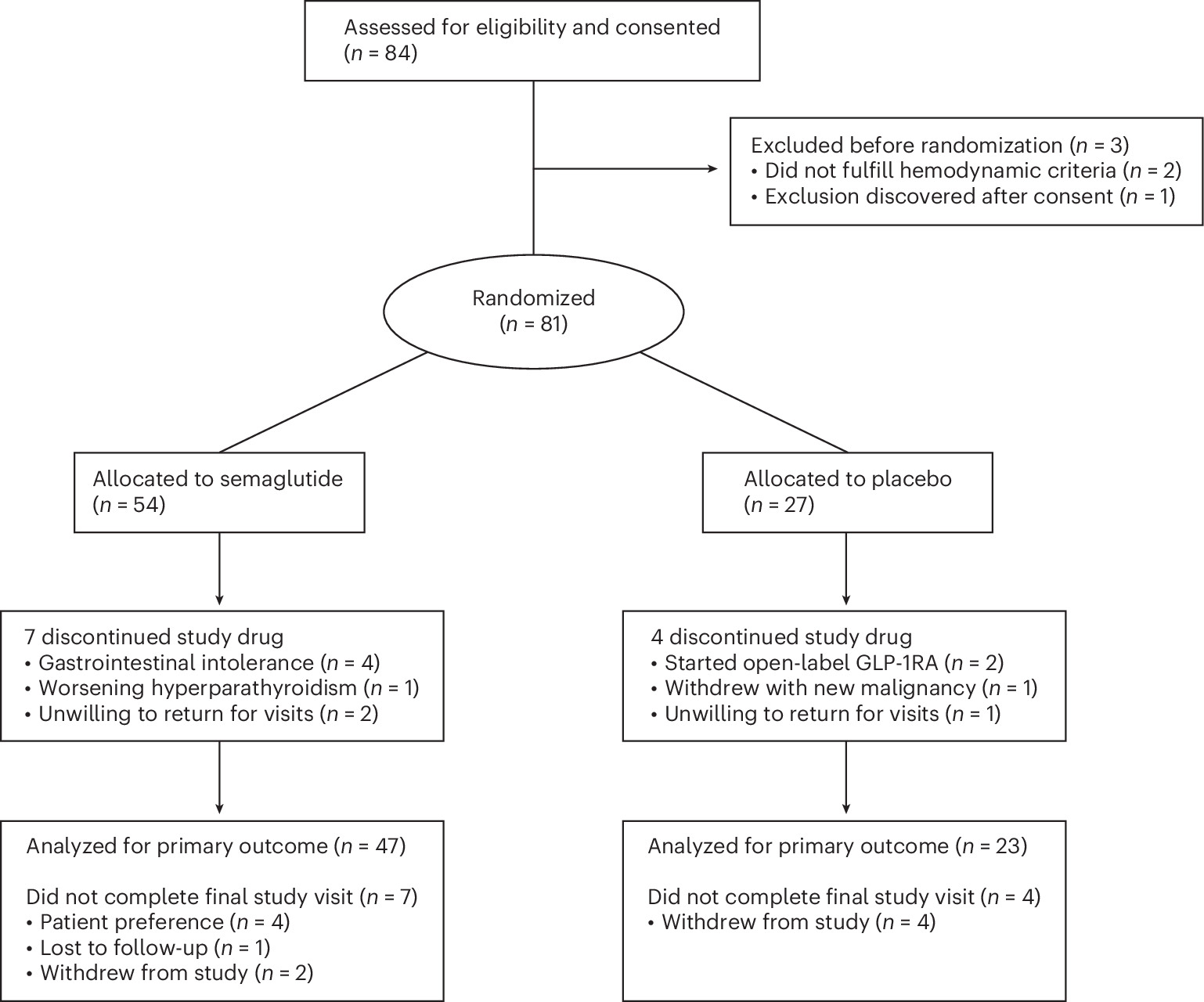
- Randomized trial in 81 people (52 weeks, double-blind, placebo-controlled, registered NCT05371496)
- In the record:
- The 677th paper on semaglutide with results in people; 1,706 on record in all.
- Why it’s aging research:
- It studies an intervention with evidence of extending healthy life.
Editor of record: Boris Djordjevic · AgingResearch.News
Eighty-one patients with obesity had heart failure with preserved ejection fraction, meaning the heart still pumped out a normal share of its blood with each beat. They included 47 women and entered a randomized, double-blind trial of semaglutide, 2.4 milligrams weekly, or placebo for 52 weeks.
The main outcome was the change in pulmonary artery wedge pressure during low-intensity exercise. This invasive measurement indicates congestion and pressure as the heart fills. Exercise pressure fell by 9.8 millimeters of mercury with semaglutide, versus a 0.9 rise with placebo. Semaglutide also reduced resting pressure. At 52 weeks, 53.7% of semaglutide patients versus 7.4% of placebo patients had normal pressures at both rest and exercise, meeting the trial’s pressure-based definition of remission.
Why it matters
Heart failure is an age-related disease. The trial helps address how semaglutide may improve symptoms in people who have this form of heart failure alongside obesity.
Caveats
The main outcome measured heart pressure rather than hospitalizations or survival. The trial covered 81 patients with both this form of heart failure and obesity over 52 weeks, limiting its application to other patients or longer-term outcomes.
Where the evidence stands
Semaglutide
- 424 independent labs in 62 countries
- 102 findings against
- 411 trials, 97 with no results posted
- Funders: Novo Nordisk and others
- 381 of 1,525 findings with company ties
- 215 of 411 trials sponsored by its developers
GLP1R
- 31 independent labs in 15 countries
- 2 findings against
- 865 trials, 125 with no results posted
- Funders: National Natural Science Foundation of China and others
- 6 of 60 findings with company ties
- 796 of 865 trials sponsored by developers of drugs aimed at it


Comments
Be the first to comment.