Diabetes drugs linked to lower risk of death or heart failure stays
Compared with two other diabetes drug classes, glucagon-like peptide-1 drugs were linked to lower relative risk of the combined outcome (adjusted hazard ratio 0.78).
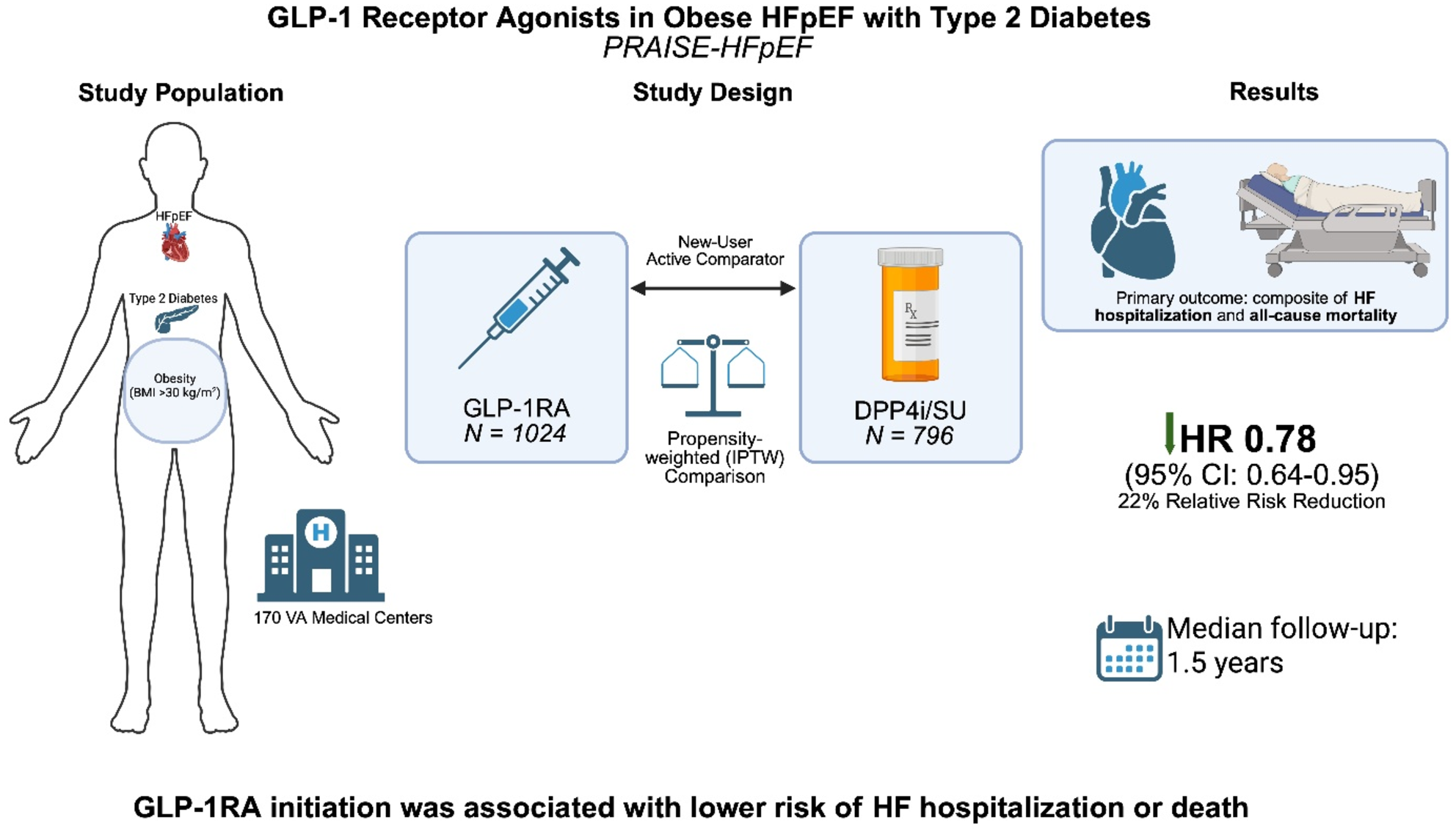
1,024 participants, multicenter
Limit: Adverse events are not reported, leaving drug harms out of the comparison
Edited by Boris Djordjevic · AgingResearch.News
Adults with obesity, type 2 diabetes and heart failure with preserved ejection fraction were studied in an observational cohort across 170 US Veterans Affairs hospitals. In this form of heart failure, the heart still pumps out a normal share of the blood it holds. Researchers compared 1,024 people starting glucagon-like peptide-1 receptor agonists, a class of diabetes drugs, with 796 starting dipeptidyl peptidase-4 inhibitors or sulfonylureas, two other diabetes drug classes.
Over a median 1.5 years, starting the glucagon-like peptide-1 drugs was associated with a lower risk of the combined outcome of death from any cause or hospitalization for heart failure. The adjusted hazard ratio, a measure of relative risk over time, was 0.78. Weight loss was modestly greater with these drugs: 12.9%, compared with 10.1% with the other drugs.
Why it matters
Heart failure is a concern in later life. The study bears on how diabetes drug choice relates to serious outcomes when heart failure and obesity occur together.
Caveats
This observational comparison cannot show that the drugs caused the lower risk, even after statistical adjustment. The findings concern adults with all three conditions receiving Veterans Affairs care; the abstract does not report adverse events.
The paper
Glucagon-Like Peptide-1 Receptor Agonists in Obese Heart Failure With Preserved Ejection Fraction
Louis Stokes Cleveland VA Medical Center; University Hospitals of Cleveland
Journal of the American Heart Association, Oct 30, 2026, Open access


Comments
Be the first to comment.