Later-born generations showed better memory and slower decline
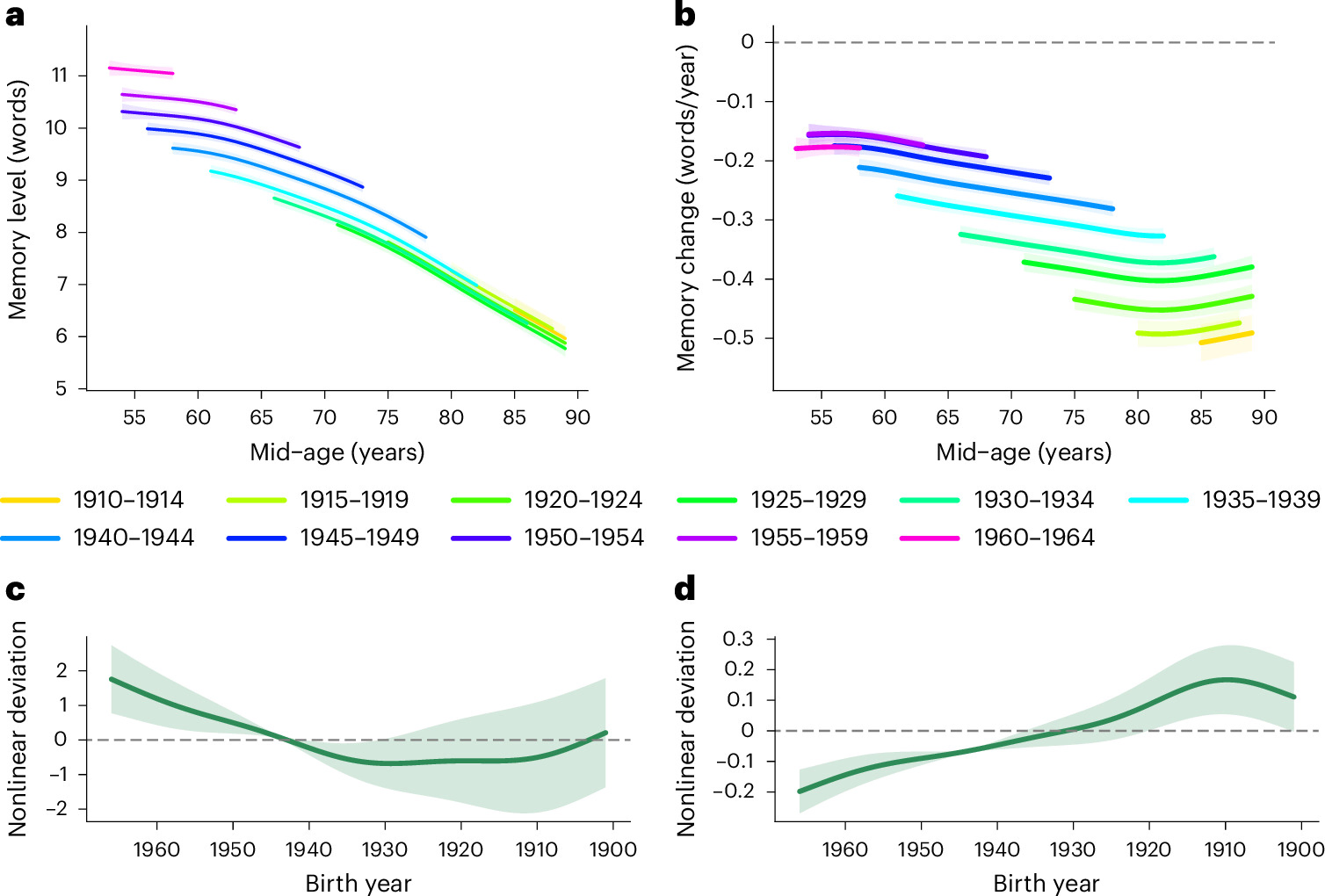
Five longitudinal studies of about 219,000 people, followed for up to 30 years, linked later birth to stronger memory entering old age and slower decline.
Our read
Populations- Studied:
- Cohort study of 219,000 individuals, up to 30 years
- What changed:
- Later-born generations entered old age with better memory and experienced slower memory decline afterward
- The catch:
- Memory improvements serve as a stand-in for the proposed reduction in dementia incidence
Editor of record: Boris Djordjevic · AgingResearch.News
About 219,000 people contributed roughly 783,000 assessments of episodic memory—the ability to recall events and experiences—in an analysis of five longitudinal studies with up to 30 years of follow-up. Later birth was associated with higher memory levels entering old age and slower decline afterward.
Improvements were concentrated among people whose memory declined fastest. Later-born generations also had longer periods of stable memory. Their slower decline was mirrored by lower rates of clinical impairment and slower shrinkage of the hippocampus, a brain region involved in memory. The combined memory advantage was large enough to plausibly account for the reported 13% per-decade decline in dementia incidence.
Why it matters
Dementia prevention may depend on both building memory capacity early in life and limiting decline in adulthood. The authors argue for brain-health policies spanning the whole lifespan, beginning in childhood.
Caveats
The memory advantage offered a plausible explanation for falling dementia rates, but the comparisons between generations could not rule out other contributors to that decline.


Comments
Be the first to comment.