Rhythmic stimulation helps brain grafts join visual circuits in mice
An experiment in injured adult mouse brains used a neural interface to guide lab-grown, human brain-like grafts and improve measures of vision.
Our read
Interventions- Studied:
- Experiments in adult mice with visual cortex injuries
- What changed:
- Brain grafts receiving rhythmic stimulation formed two-way connections with the mice’s visual circuits
- The catch:
- The experiment assessed injury repair, not age-related brain decline
Editor of record: Boris Djordjevic · AgingResearch.News
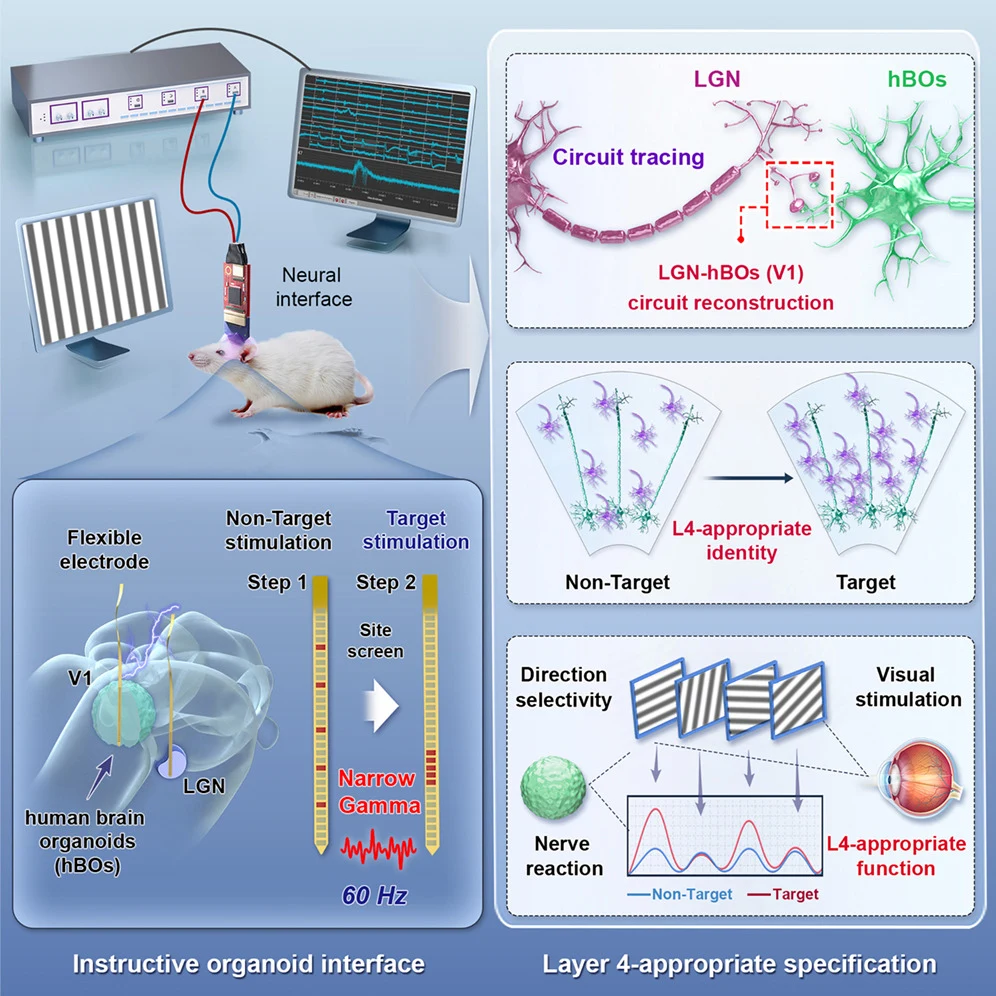
Adult mice with injuries to the visual cortex, the brain region that processes sight, received human brain organoid grafts in an animal experiment. These organoids are three-dimensional, brain-like tissues grown in the lab. A neural interface first promoted connections between the grafts and the mouse brain. It then delivered stimulation to selected groups of cells using a naturally occurring rhythm of brain activity.
The grafts developed molecular features and activity patterns suited to layer 4 of the cortex. They formed connections that carried signals in both directions with the mice’s visual circuits. Grafted nerve cells became sensitive to the direction of visual motion, and their firing synchronized with the mouse brain’s rhythms. Behavioral tests showed restored visual sharpness and sensitivity to light-dark contrast.
Why it matters
Repairing damaged brain circuits bears on efforts to preserve brain function with age. The authors proposed directing how grafts assemble into circuits rather than relying on cell replacement alone.
Caveats
The experiment tested repair after injury in adult mice, not age-related brain decline or use in people.
Comments
Be the first to comment.