Natural compound curbs bone breakdown by lab-grown cells
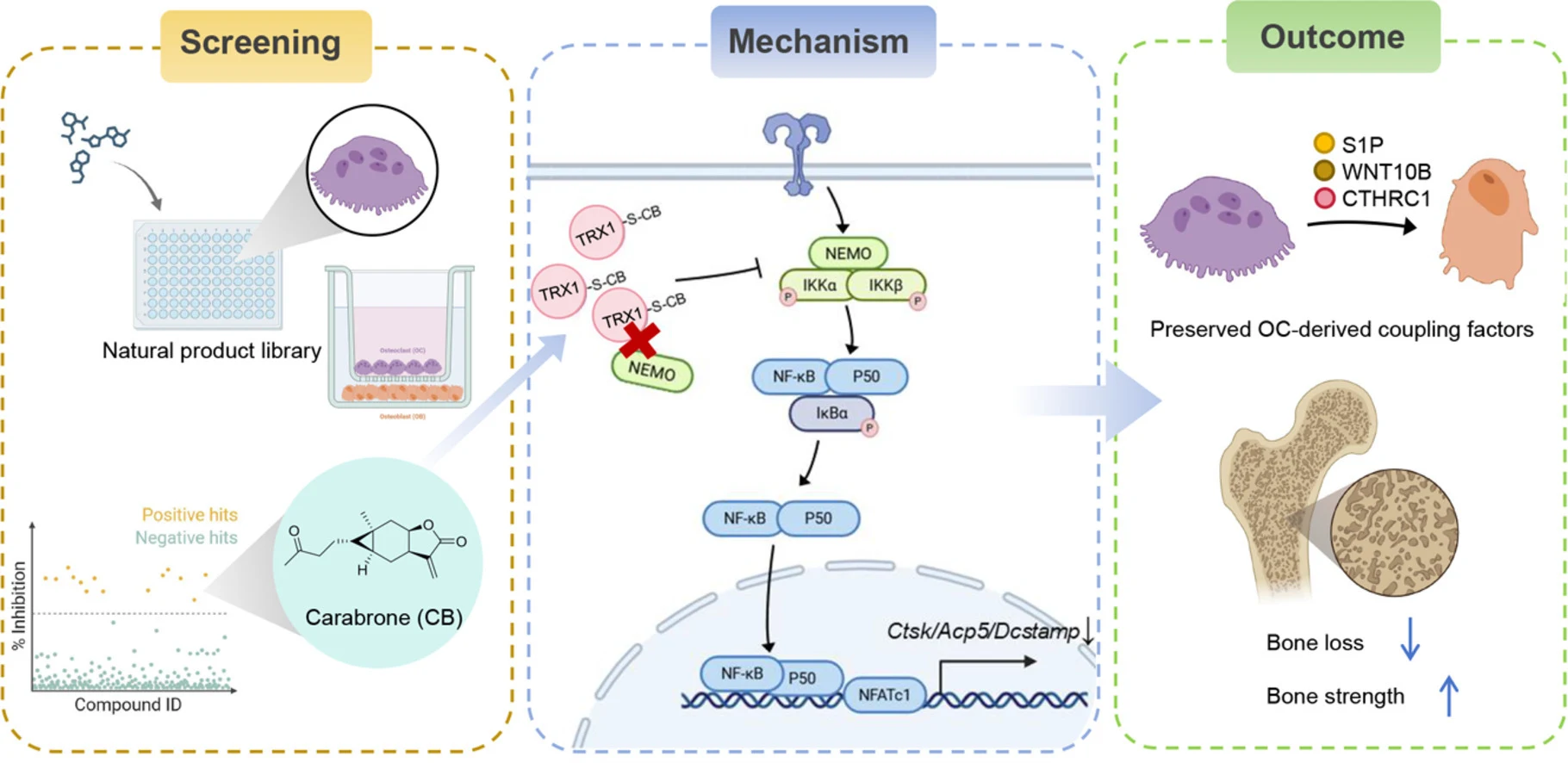
Lab experiments found that carabrone reduced bone-resorbing activity while having limited effects on measured cell signals involved in coordinating bone formation.
Our read
Interventions- Studied:
- Experiments in lab-grown osteoclasts
- What changed:
- Carabrone reduced bone breakdown by lab-grown osteoclasts
- The catch:
- Selected cell signals are a stand-in for coordination between bone breakdown and formation
Editor of record: Boris Djordjevic · AgingResearch.News
Osteoclasts, the cells that break down bone, formed less readily and showed less bone-resorbing activity when exposed to carabrone, a natural small molecule, in laboratory experiments. The compound had limited effects on measured signals from these cells that help coordinate bone formation.
In osteoporosis models involving removal of the ovaries, carabrone reduced loss of trabecular bone, the spongy bone inside bones, and improved bone mechanical properties. Blood levels of two markers of bone formation rose compared with ovariectomized controls. Further experiments found that carabrone chemically bound to the protein thioredoxin-1 and promoted osteoclast death. The authors identified this protein as a potential drug target for controlling osteoclast function.
Why it matters
Osteoporosis research faces a challenge: reducing bone breakdown without also impairing new bone formation. The authors propose carabrone as a starting point for developing drugs to address that problem.
Caveats
The cell experiments measured selected signals; limited changes in those signals do not establish that coordination between bone breakdown and formation remained intact. The experiments also leave carabrone’s effects in people with osteoporosis open.

Comments
Be the first to comment.