Risks linked to larger share of cardiovascular than cancer deaths
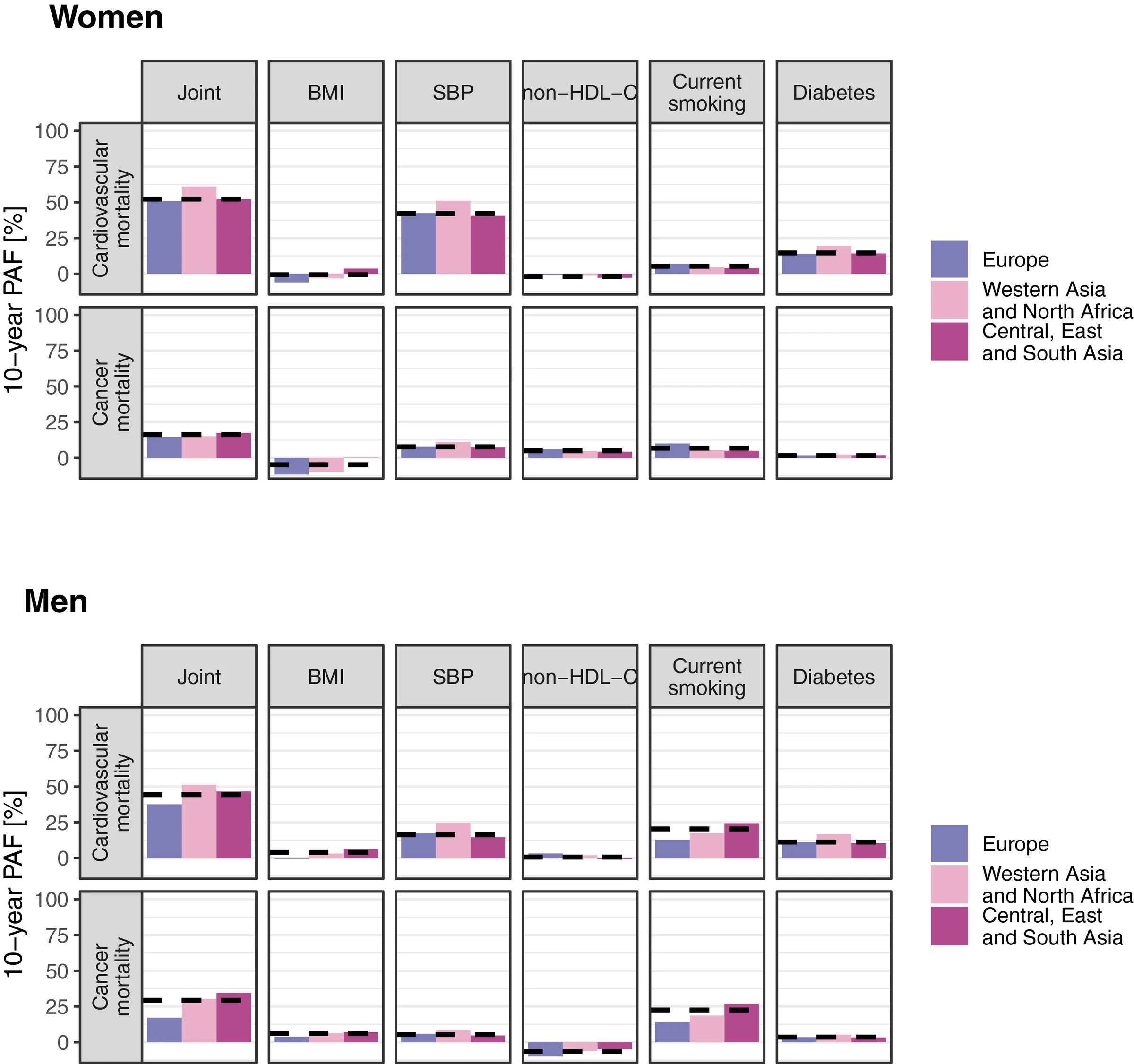
Estimated shares linked to five risks were 52.3% for cardiovascular versus 16.3% for cancer deaths in women, and 44.4% versus 29.3% in men.
Our read
Populations- Studied:
- Meta-analysis of 798,867 adults across Europe, Asia, and North Africa, median 8.2 years
- What changed:
- Risks were linked to larger shares of cardiovascular than cancer deaths: 52.3% versus 16.3% in women; 44.4% versus 29.3% in men
- The catch:
- Deaths prevented by changing these risk factors were not measured
- In the record:
- The 1,882nd paper on smoking with results in people; 4,595 on record in all. Its result on cancer mortality agrees with all 4 other findings on record.
- Why it’s aging research:
- It bears on staying healthy in midlife and later life.
Editor of record: Boris Djordjevic · AgingResearch.News
The 798,867 adults in this observational analysis came from 25 cohorts across Europe, Western Asia and North Africa, and Central, East and South Asia. Researchers examined weight relative to height, the higher blood pressure reading, cholesterol other than the “good” kind, current smoking and diabetes.
During a median follow-up of 8.2 years, 12,429 people died from cardiovascular disease—disease of the heart and blood vessels—and 19,674 from cancer. Blood pressure and diabetes contributed most to the estimated share of cardiovascular deaths linked to these risks. Smoking contributed most to the estimated share of cancer deaths, particularly in men. The shares varied by sex and region.
Why it matters
Preventing cardiovascular and cancer deaths is important for extending lifespan. The authors suggested that prioritizing blood pressure, diabetes and smoking cessation could reduce deaths through region-specific prevention.
Caveats
The estimated shares came from cohort data, not from testing whether changing these risks reduced deaths. Other differences between people with and without these risk factors may have influenced their death risks.
Comments
Be the first to comment.