Unstable-surface strength training aided some thinking skills
At 24 weeks, training improved verbal fluency by 1.2 letters and forward digit recall by 0.7 points compared with low-intensity exercise.
Our read
Interventions- Studied:
- Randomized trial in 162 older adults with probable mild cognitive impairment, 24 weeks (Blinded, sham-controlled, registered RBR-9bv3dc9)
- What changed:
- Verbal fluency improved by 1.2 letters with unstable-surface strength training compared with low-intensity exercise
- The catch:
- Follow-up lasted only 24 weeks, limiting assessment of lasting gains
- In the record:
- One of 5 papers on instability resistance training on record: 5 with results in people.
- Why it’s aging research:
- It studies an intervention with evidence of extending healthy life.
Editor of record: Boris Djordjevic · AgingResearch.News
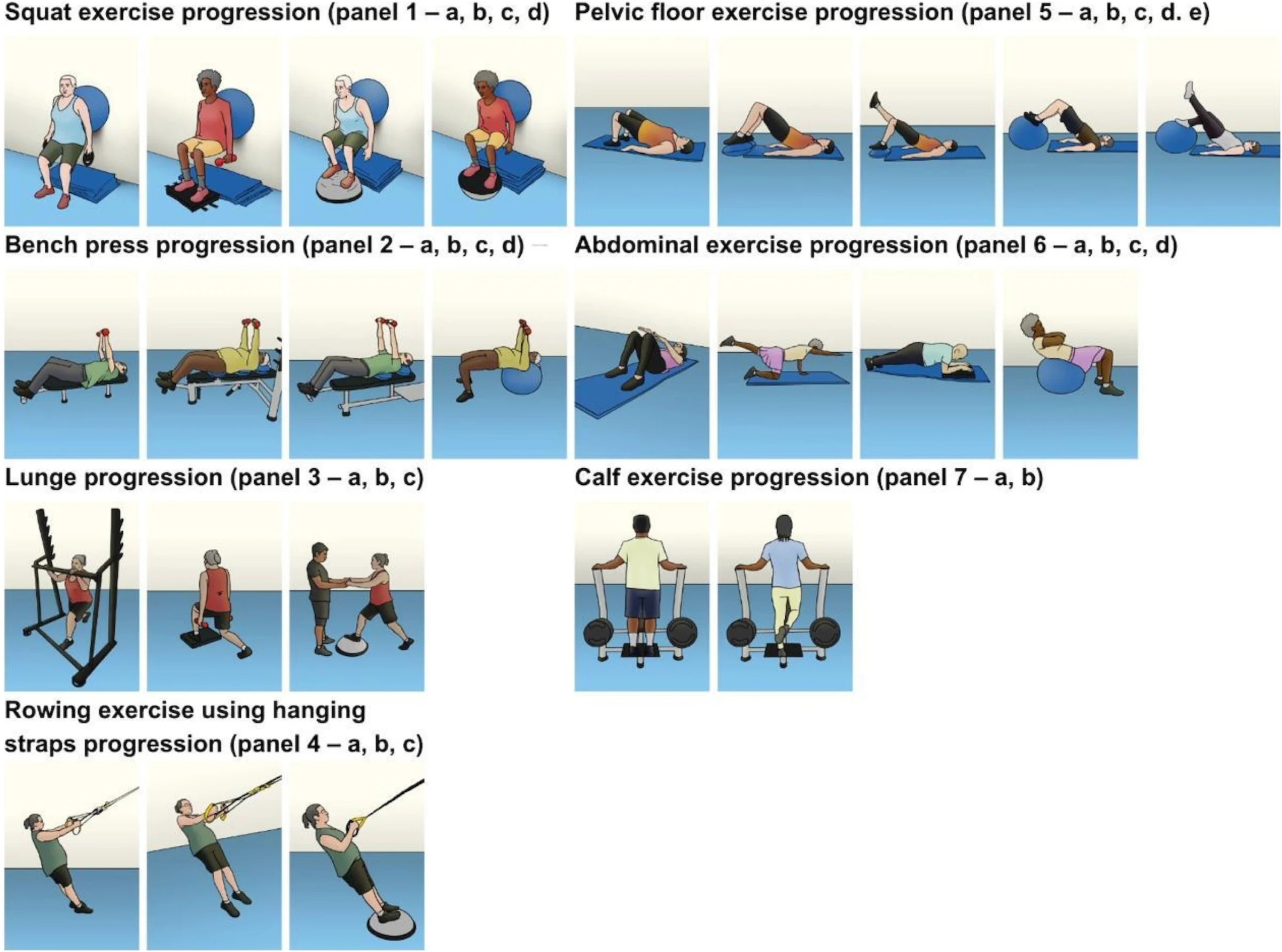
Physically independent adults aged 65 or older with probable mild cognitive impairment took part in a randomized trial involving 162 people. Their average age was 70.4 years. Researchers assigned 80 participants to twice-weekly strength training on unstable surfaces for 24 weeks. They performed seven exercises, each in three sets of 10–15 repetitions. The other 82 participants performed low-intensity functional exercises, stretching and relaxation without progression.
Assessors who measured cognition did not know participants’ group assignments. At 24 weeks, the strength-training group performed better on two tests of executive function, the mental skills used to manage tasks: letter-based verbal fluency and recalling digits in order. The remaining cognitive outcomes, including memory, did not differ significantly between groups.
Why it matters
Probable mild cognitive impairment raises the question of which thinking skills remain responsive to exercise in older age.
Caveats
Follow-up lasted 24 weeks, leaving the durability of the gains unclear. Participants were physically independent and had probable mild cognitive impairment, rather than representing older adults generally.
- Instability resistance training
- Probable mild cognitive impairment
- Digit Span Memory test
- Digit Symbol Substitution Test
- MoCA
- Humans
The paper
The Journal of Nutrition, Health & Aging, Nov 7, 2026, CC BY

Comments
Be the first to comment.