Blood fat patterns linked to cognitive decline after surgery
A model combining blood fats and clinical measures scored 0.817 at distinguishing postoperative cognitive decline, versus 0.734 for clinical measures alone.
Our read
Biomarkers- Studied:
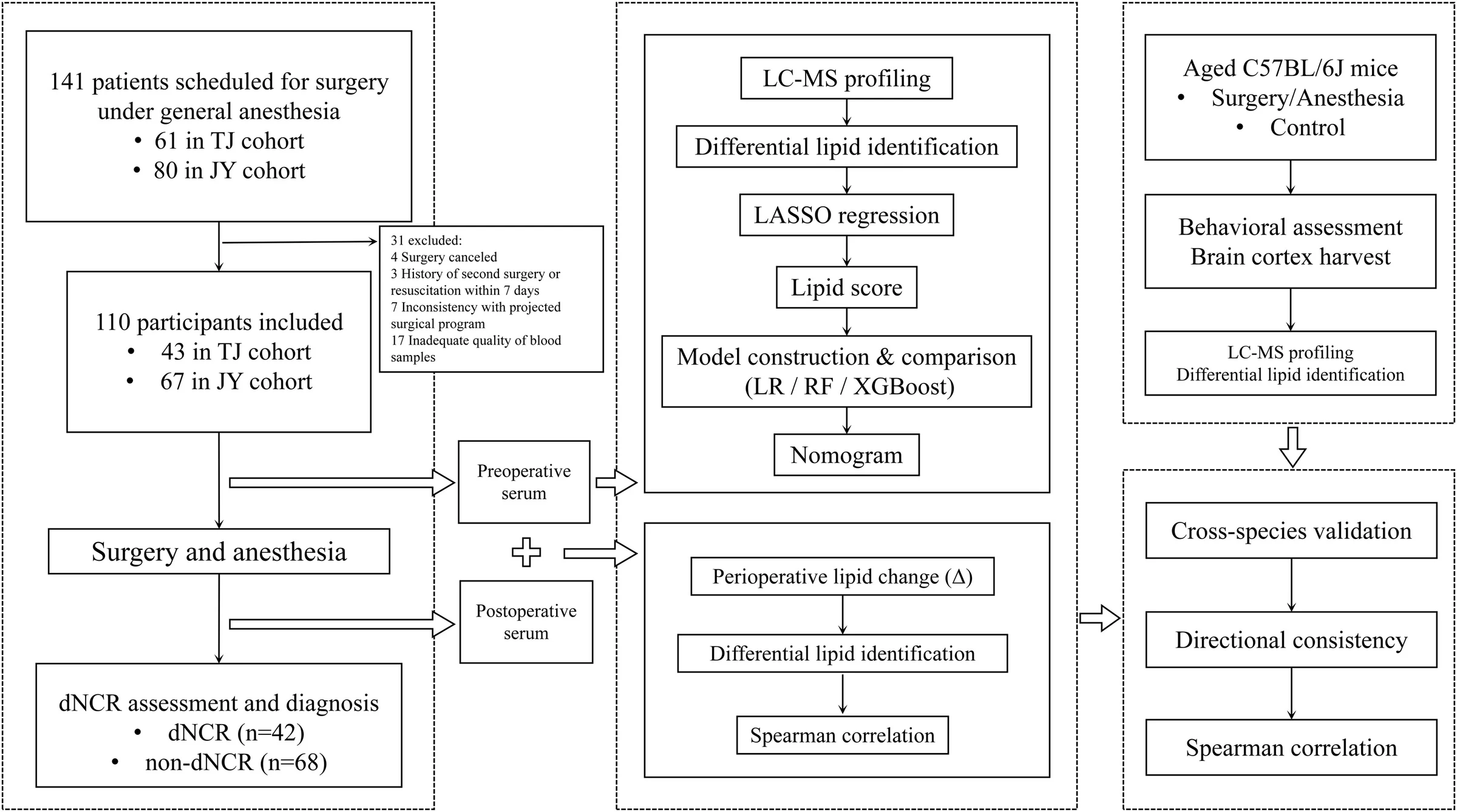
- Cohort study of 110 older adults undergoing elective surgery, 30 days (Multicenter)
- What changed:
- Prediction of cognitive decline improved with blood fats: area under the curve 0.817 versus 0.734 for clinical measures alone
- The catch:
- Only 42 participants developed cognitive decline, limiting the data available for prediction model development
Editor of record: Boris Djordjevic · AgingResearch.News
Adults aged 60 or older undergoing elective surgery under general anesthesia took part in a prospective observational cohort study at two medical centers in Shanghai. Researchers analyzed blood lipids, or fats, before surgery and on the first day afterward in 110 participants. Within 30 days, 42 participants (38.2%) developed delayed neurocognitive recovery, a decline in thinking abilities identified through standardized testing.
The team identified 38 lipid candidates before surgery associated with delayed recovery and 58 candidates based on changes around surgery. A model combining a lipid score, total blood protein and blood glucose had an area under the curve of 0.817, compared with 0.734 for clinical measures alone and 0.770 for lipids alone. This measure describes how well a model distinguishes people with and without the outcome.
Why it matters
Cognitive problems after surgery raise the question of how to identify vulnerable older adults before an operation. The authors propose blood lipid patterns as candidates for assessing that risk.
Caveats
Patients with different blood fat patterns may also have differed in health factors that affected cognitive recovery. The findings concern adults aged 60 or older undergoing elective surgery under general anesthesia.
Comments
Be the first to comment.