Arsenic-exposed rats showed Alzheimer’s-like brain changes
An experiment exposed rats through drinking water from gestation through postnatal day 185, revealing signs of inflammation and altered production of a regulatory protein.
Our read
Mechanisms- Studied:
- Experiments in Sprague–Dawley rats, through postnatal day 185, against unexposed rats (Independent replication)
- What changed:
- Arsenic-exposed rats showed Alzheimer’s-like brain changes compared with unexposed rats
- The catch:
- Alzheimer’s-like tissue changes do not measure memory loss
Editor of record: Boris Djordjevic · AgingResearch.News
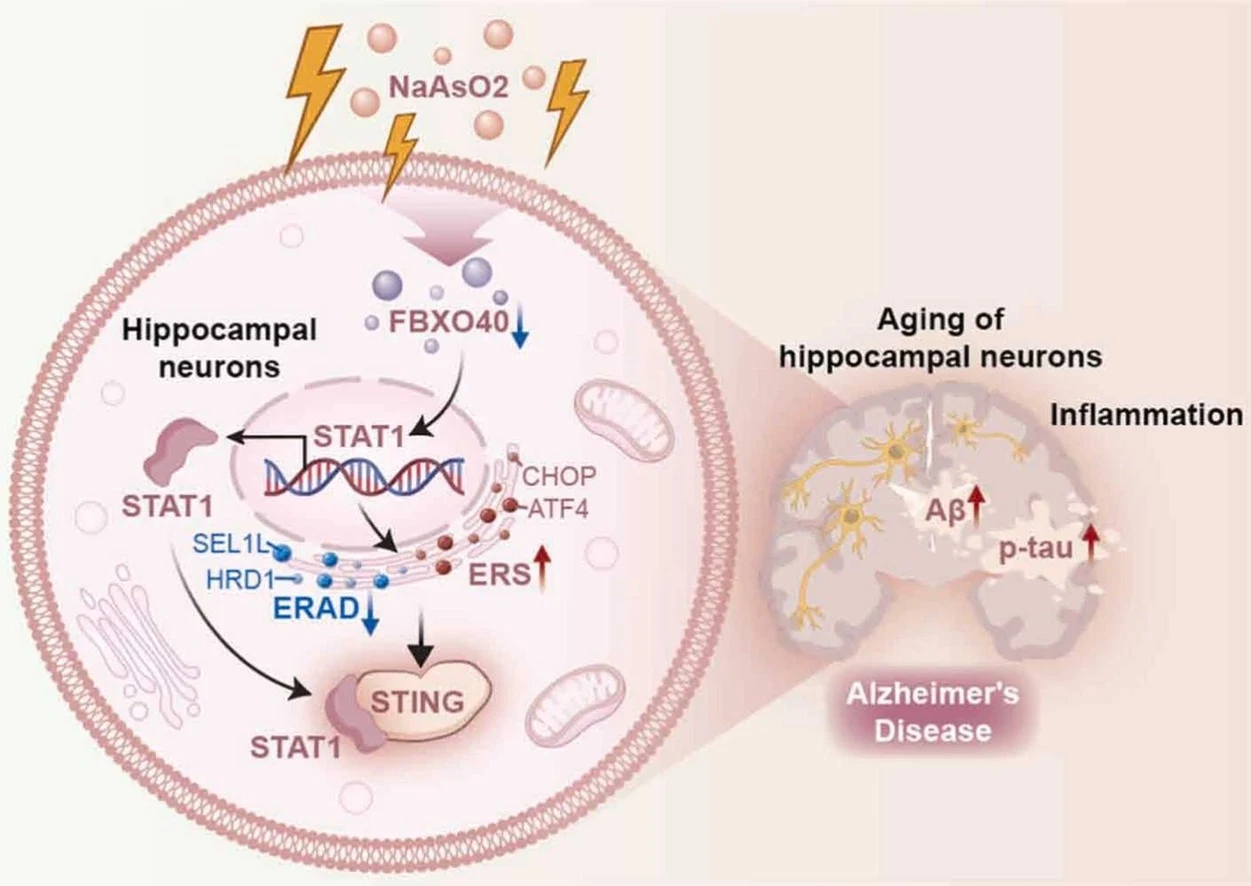
Sprague–Dawley rats received sodium arsenite in drinking water at 0, 30 or 100 parts per million from gestation through postnatal day 185 in an animal experiment. Arsenic-exposed rats showed Alzheimer’s-like changes in the hippocampus, a brain region involved in memory. They also showed altered production of FBXO40 and signs of inflammation and senescence—a state in which cells stop dividing.
FBXO40 is a protein that marks other proteins for disposal. In cells grown in the lab, reducing FBXO40 worsened arsenic-induced senescence, while increasing it countered that effect. The researchers reported that FBXO40 prevented abnormal activation of STING, an immune-signaling protein, by marking another protein for breakdown. They also validated the findings in two types of mice.
Why it matters
Cell senescence is implicated in Alzheimer’s disease. The authors identified the interaction between FBXO40 and STING as a potential intervention target for brain degeneration associated with environmental exposures.
Caveats
Experiments in rodents and cells grown in the lab do not show whether altering this pathway would prevent or slow Alzheimer’s disease in people.
The paper
Arsenic exposure induces cellular senescence and Alzheimer's pathogenesis via FBXO40-STING axis
Zhejiang Chinese Medical University
Journal of Hazardous Materials, Nov 21, 2026

Comments
Be the first to comment.