Swiss people with spinal cord conditions had lower functioning
Scores averaged 53.6 for lower-body paralysis and 52.0 for four-limb paralysis, versus 74.7 among general-population participants without a history of heart attack, stroke or cancer.
Our read
Biomarkers- Studied:
- Cross-sectional study of 1,311 Swiss people with spinal cord injury or disease
- What changed:
- Functioning scores averaged 53.6 with lower-body paralysis and 52.0 with four-limb paralysis, against 74.7 without heart attack, stroke, or cancer
- The catch:
- Individual changes in functioning with aging were not measured
- Why it’s aging research:
- It looks at how biology varies with age or lifespan.
Editor of record: Boris Djordjevic · AgingResearch.News
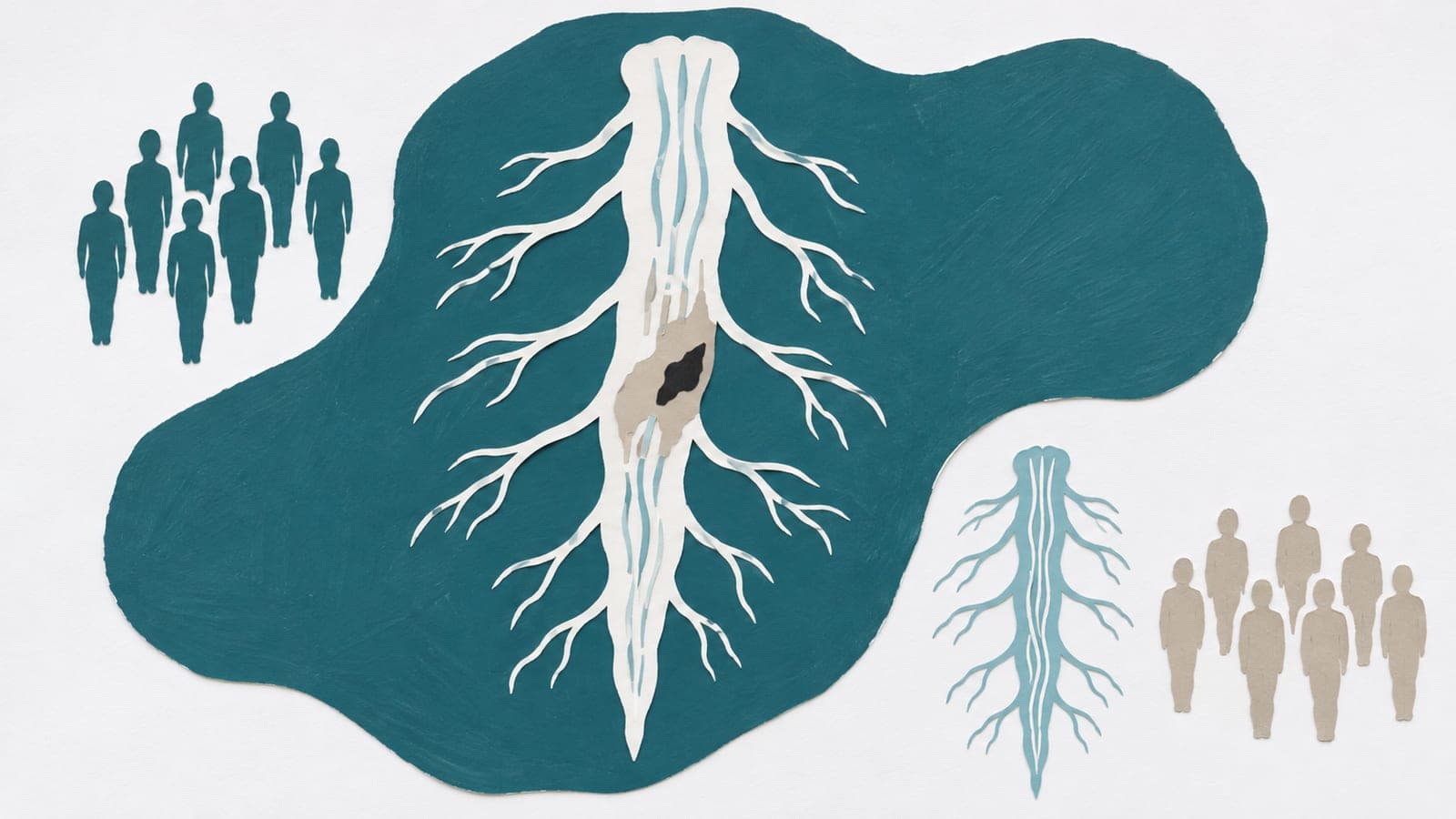
People with spinal cord injury or disease in Switzerland had lower functioning scores in a cross-sectional analysis comparing 1,311 affected participants with 11,836 general-population participants. The researchers matched the 2022 survey groups by age, sex and language region. They developed a shared 0–100 scale from questions measuring comparable aspects of functioning in two Swiss surveys.
Mean scores were 53.6 among participants with paraplegia, paralysis affecting the lower body, and 52.0 among those with tetraplegia, paralysis affecting all four limbs. Both groups included complete and incomplete injuries. General-population participants without a history of heart attack, stroke or cancer averaged 74.7. Scores were also higher in general-population groups with those conditions. Older age was associated with lower functioning in the general-population and paraplegia groups, but showed no clear association in the tetraplegia group.
Why it matters
Tracking functioning across age groups can complement death rates and diagnosed illness as measures of population health. The authors support using it to inform health surveillance and health-system planning.
Caveats
The comparison captured functioning at one point in time, so the age associations did not show how individuals changed as they grew older.
The paper
Functioning in persons with Spinal Cord Injury compared with the general population
Journal of Clinical Epidemiology, Nov 4, 2026, Open access, CC BY

Comments
Be the first to comment.