Nighttime light linked to signs of faster organ aging
Across nighttime light exposure categories, the strongest link involved protein-based brain aging, with a statistical association estimate of 0.21.
Our read
Populations- Studied:
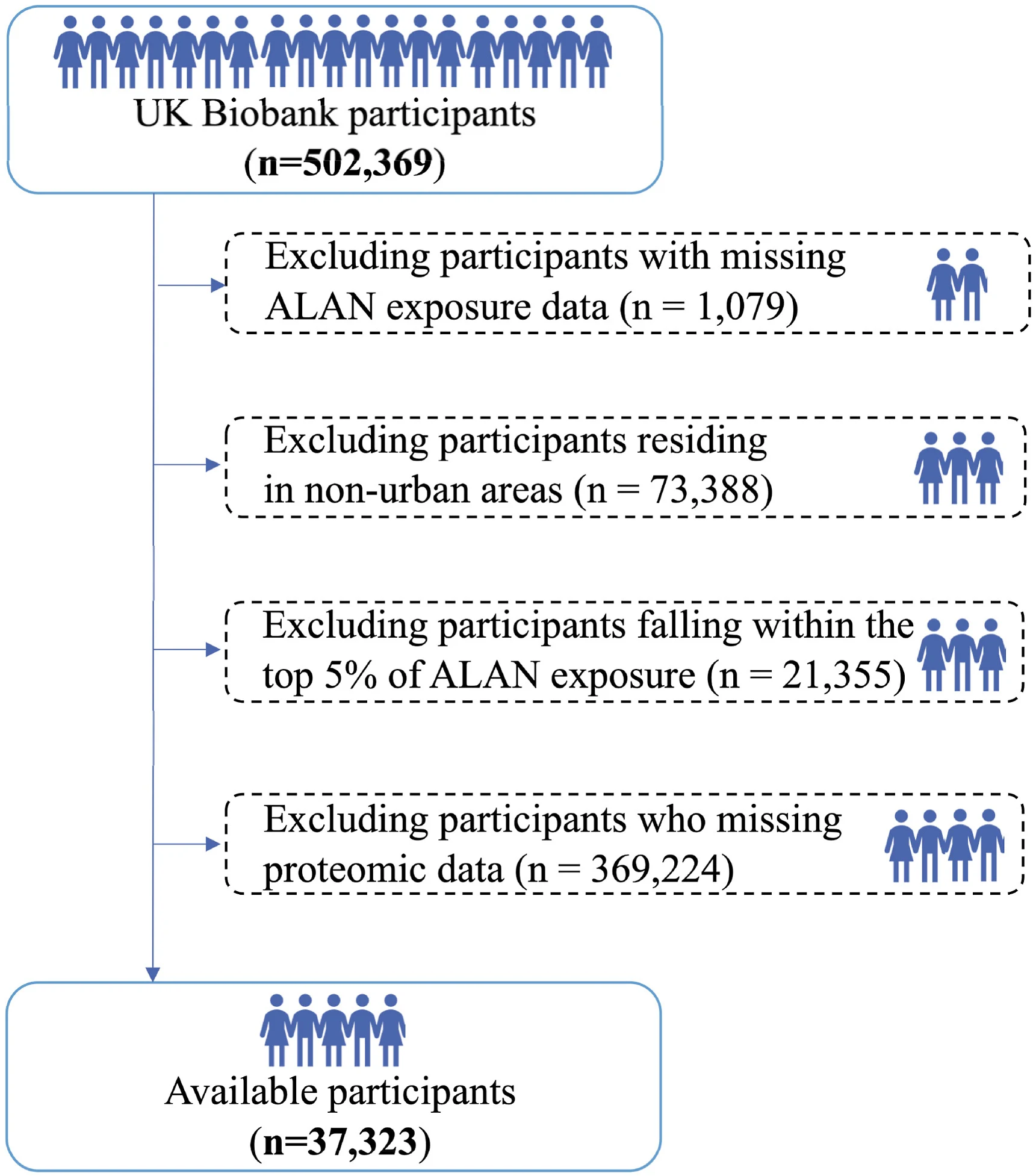
- Cross-sectional study of 37,323 people (Dose-response)
- In the record:
- The 8th paper on artificial light at night with results in people; 23 on record in all.
- Why it’s aging research:
- It measures an outcome that worsens with age.
Editor of record: Boris Djordjevic · AgingResearch.News
Among 37,323 middle-aged and older urban UK Biobank participants, higher nighttime light exposure was linked to signs of faster aging in several organ systems in an observational study. Researchers estimated long-term light exposure using a nighttime-light dataset covering 2006–2010. They used blood proteins associated with particular organs to estimate biological aging across 11 organ systems.
The most consistent associations involved the brain, pancreas and intestine. Aging estimates increased with greater light exposure, particularly for the brain and pancreas. The associations with lung, intestine and fat-tissue aging were stronger in men than in women.
Why it matters
Organs age at different rates, raising questions about how environmental exposures contribute. The authors call for studies testing whether reducing nighttime light can support healthy aging.
Caveats
Blood proteins provided indirect estimates of organ aging; other differences between brighter and darker urban environments could have contributed to the associations. The abstract does not specify the units of the reported association estimate.

Comments
Be the first to comment.