Engineered gut bacteria improved insulin sensitivity in aged mice
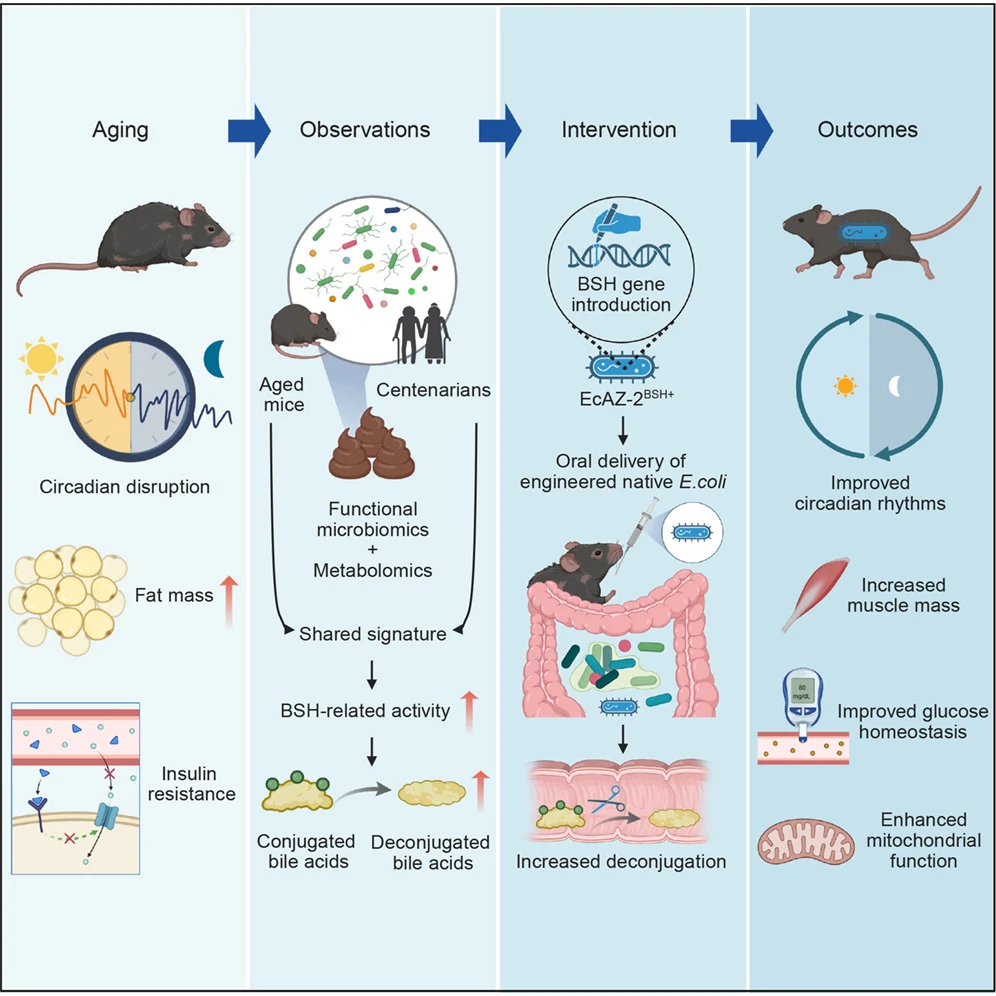
Engineered bacteria boosted a bile-acid-modifying enzyme’s activity in aged mice in an animal experiment, with supportive changes in body composition and other metabolic measures.
Our read
Interventions- Studied:
- Experiments in animals
Editor of record: Boris Djordjevic · AgingResearch.News
Aged mice showed improved insulin sensitivity in an animal experiment that used engineered native gut bacteria to boost an enzyme’s activity. Insulin sensitivity is how well the body responds to insulin, a hormone that regulates blood sugar. The enzyme, bile salt hydrolase, removes attached molecules from bile acids, substances involved in digestion. The mice also showed supportive changes in body composition and other metabolic measures.
Aged mice also showed increased removal of taurine, a small molecule, from bile acids, alongside increased activity of genes related to the enzyme. People with exceptional longevity showed a similar bile acid pattern, suggesting an association with resilient or exceptional aging.
Why it matters
The authors suggest that age-related changes in microbial bile acid processing may be protective rather than uniformly harmful, offering a potential strategy for improving late-life metabolic health.
Caveats
The metabolic benefits came from an experiment in aged mice; whether engineered bacteria would have similar effects in people remains open.
The paper
Microbial bile acid deconjugation counters metabolic decline in aging
Cell Metabolism, Nov 2026

Comments
Be the first to comment.