Hip monitor downtime matched diary-based sleep midpoints
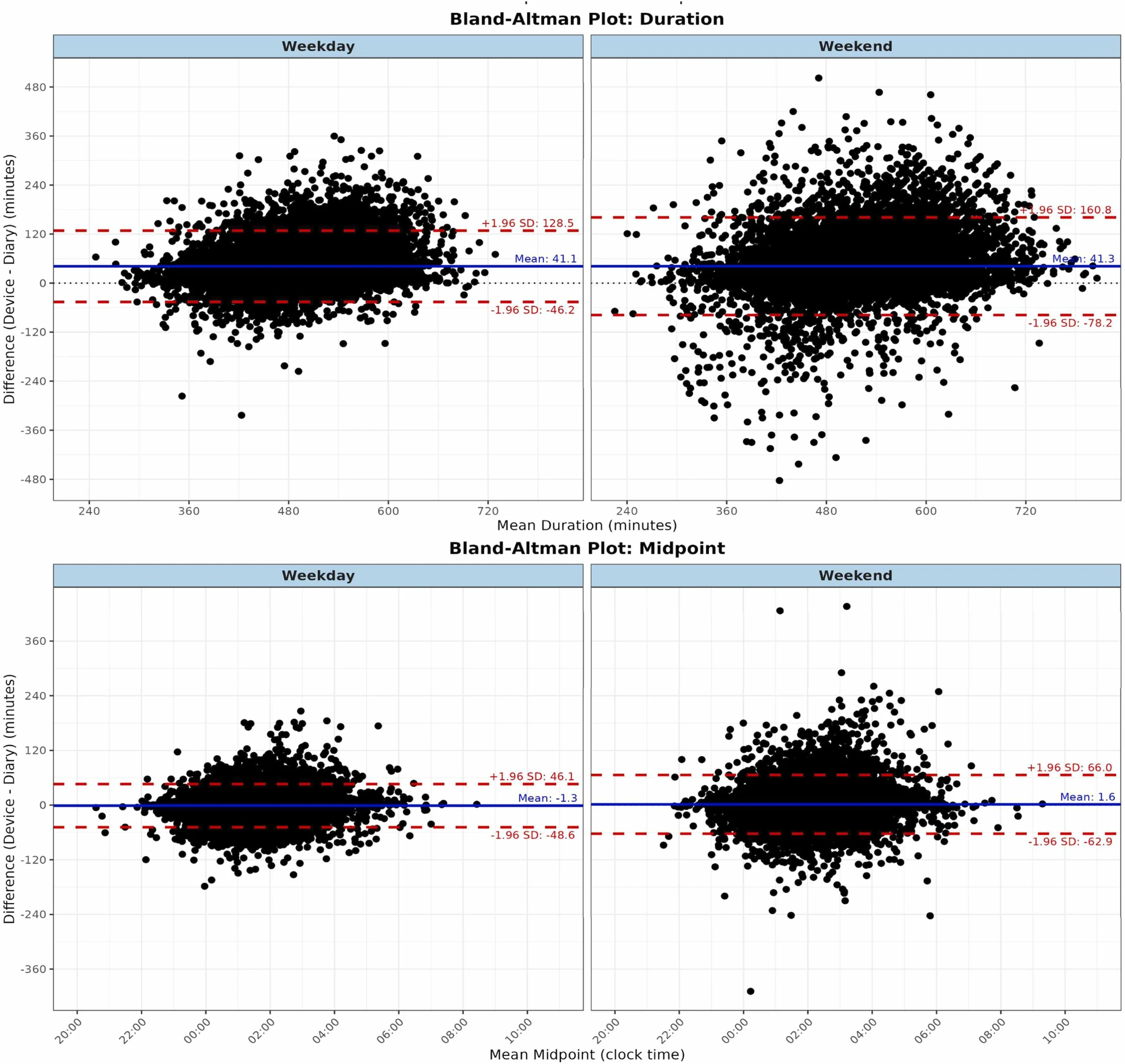
Estimates of time in bed were 41.1 minutes longer on weekdays and 41.3 minutes longer on weekends than sleep diaries indicated.
Our read
Biomarkers- Studied:
- Cross-sectional study of 17,855 Cancer Prevention Study-3 participants, a week
- What changed:
- Monitor-based sleep midpoints matched diaries: 1.3 minutes earlier on weekdays and 1.6 minutes later on weekends
- The catch:
- Sleep diaries were the reference, rather than directly measured sleep
Editor of record: Boris Djordjevic · AgingResearch.News
Among 21,325 Cancer Prevention Study-3 participants averaging 58 years old, an observational validation study compared hip activity-monitor records with sleep diaries collected over a week. Participants wore the monitors during waking hours. The analysis included 17,855 people with at least three weekday and one weekend sleep measurements. Participants were 77% female and 87% non-Hispanic white.
The researchers estimated time in bed from overnight gaps between consecutive days of monitor use. These estimates correlated with diary-based estimates but were longer on average. The estimated sleep midpoint—the halfway point of the overnight interval—was 1.3 minutes earlier than the diary midpoint on weekdays and 1.6 minutes later on weekends. The two methods met the study’s test for equivalent midpoints, which allowed a difference of up to 15 minutes.
Why it matters
For research on sleep as adults age, the authors suggest that previously collected physical activity data may offer useful sleep estimates.
Caveats
Agreement with sleep diaries does not show how accurately the estimates captured actual time asleep. The findings chiefly describe women and non-Hispanic white participants.


Comments
Be the first to comment.