Persistent depressive symptoms linked to later arthritis
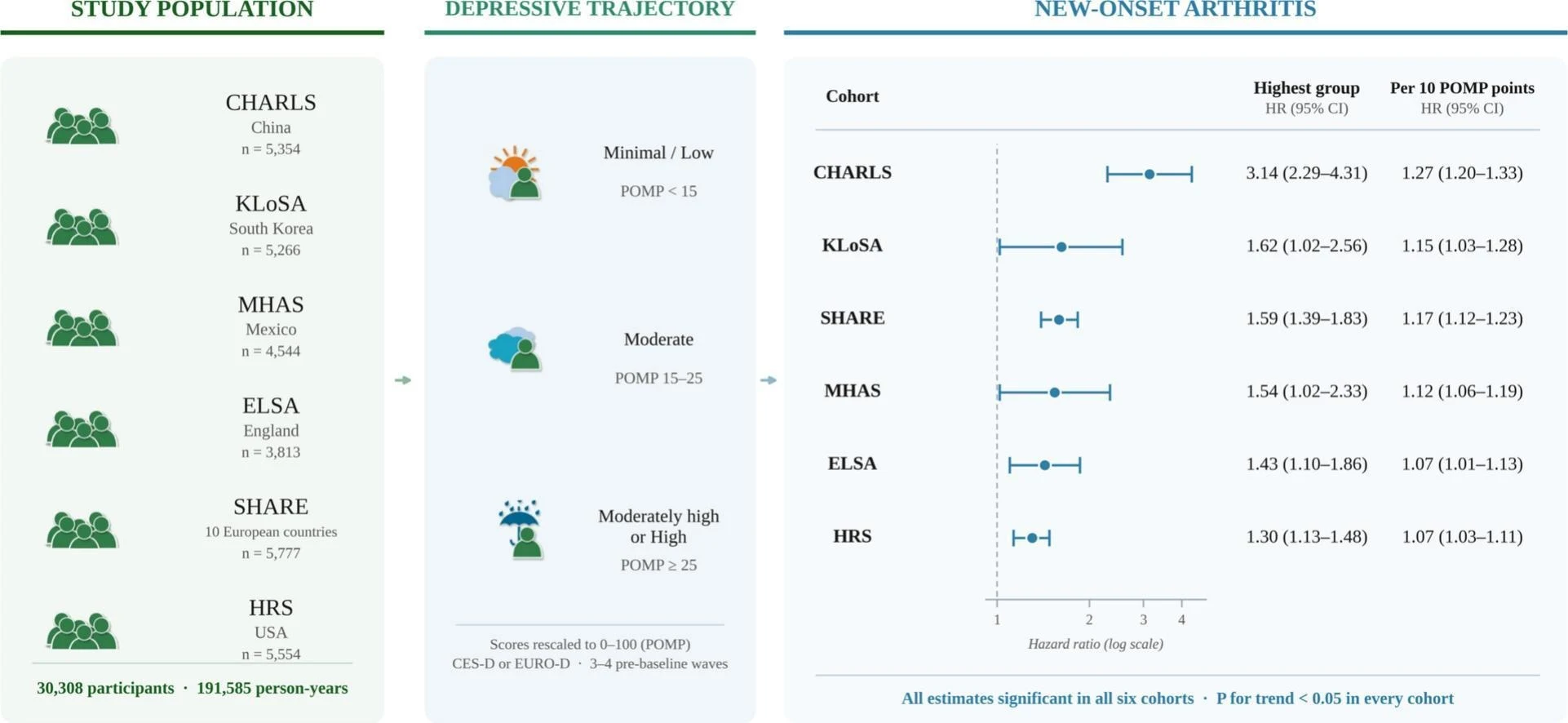
Across six cohorts, the highest depressive-symptom groups had 1.30 to 3.14 times the arthritis-onset rate of the lowest groups.
Our read
Populations- Studied:
- Cohort study of 30,308 people (Dose-response)
Editor of record: Boris Djordjevic · AgingResearch.News
Among 30,308 middle-aged and older adults without arthritis, six long-term cohort studies examined whether persistent depressive symptoms were linked to new arthritis. Participants lived in China, South Korea, Mexico, England, ten European countries and the United States. Researchers used three to four earlier survey waves to group participants by their depressive-symptom patterns, after putting scores on a common scale.
During follow-up, 6,208 participants developed arthritis. The highest symptom groups had higher rates of new arthritis in every cohort, compared with the lowest groups. Hazard ratios, which compare rates of developing arthritis at a given time, ranged from 1.30 in the United States to 3.14 in China. Rates rose progressively across symptom groups. The association did not differ detectably by age, sex or body mass index, a measure of weight relative to height.
Why it matters
Persistent depressive symptoms may help identify middle-aged and older adults whose joint health deserves closer attention, the authors suggest.
Caveats
Other health differences between the depressive-symptom groups could have contributed to their different arthritis rates, even after statistical adjustments. The findings concern middle-aged and older adults without existing arthritis, not younger people or those who already had arthritis.


Comments
Be the first to comment.