Acarbose improved memory for places in normally aging mice
Normally aging mice given acarbose from 4 months of age performed at young-adult levels on spatial memory tests at 12 and 24 months.
Our read
Interventions- Studied:
- Experiments in normally aging genetically heterogeneous mice (Randomized)
- What changed:
- Acarbose-treated aged mice showed above-chance memory for the platform by Probe 2, versus Probe 4 in controls
- The catch:
- Male aggression and attrition left female-biased cohorts, limiting assessment of sex-specific memory benefits
- In the record:
- One of 501 papers on acarbose on record: 345 with results in people, 43 in animals. Its result on spatial learning and memory agrees with 2 of 3 other findings on record; 1 found no change.
Editor of record: Boris Djordjevic · AgingResearch.News
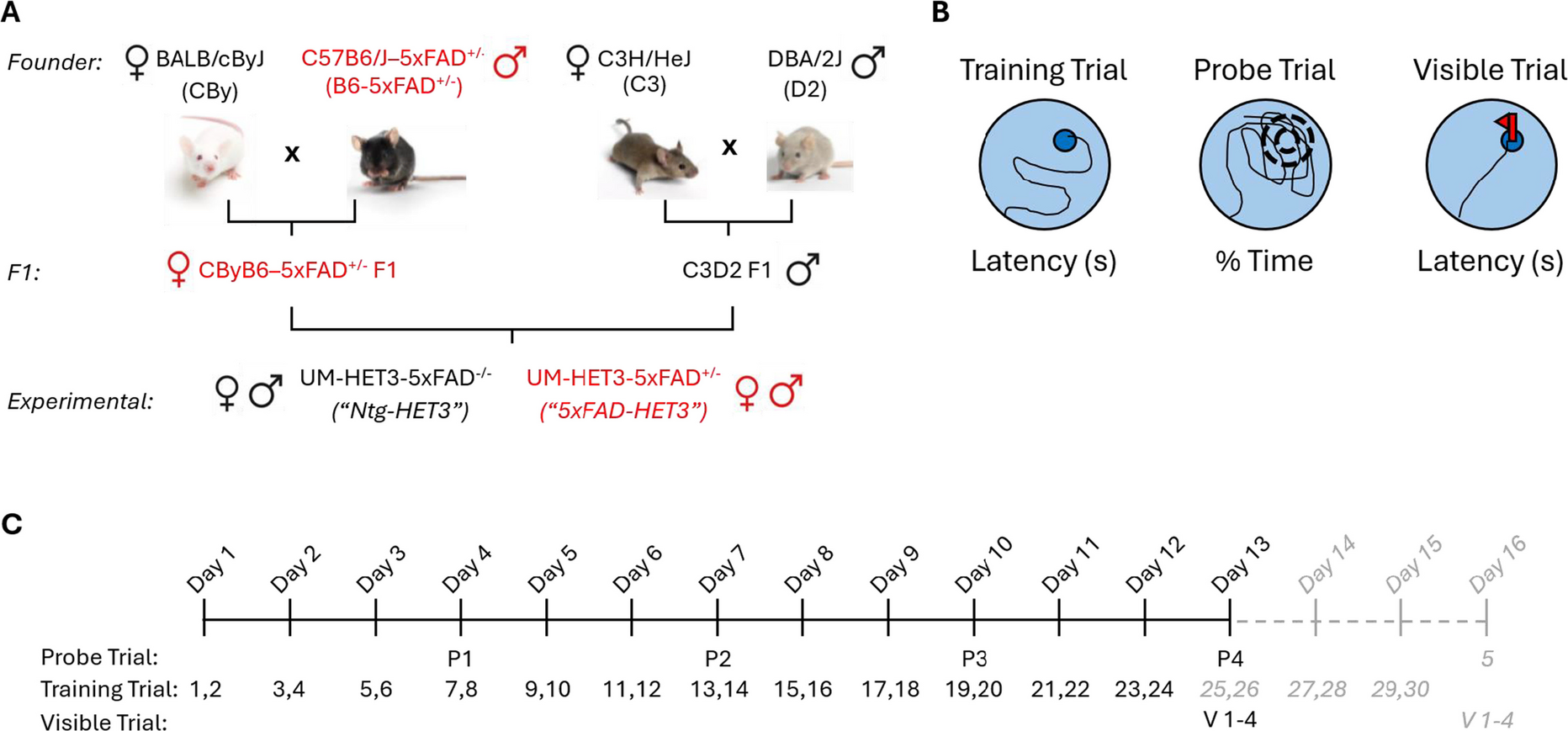
Genetically diverse male and female mice were studied in an animal experiment comparing normal aging with a model of Alzheimer's disease. From 4 months of age, mice received standard chow or chow containing 1,000 parts per million of the drug acarbose. Separate groups took water-maze tests at 6, 12 or 24 months in a cross-sectional design. The tests assessed how well mice learned and remembered a hidden platform's location.
In normally aging mice, acarbose improved spatial memory at 12 and 24 months to levels equivalent to young adults, with greater effects at older ages. Its effects on learning were more modest. In the Alzheimer's-related mouse model, acarbose did not improve the progressively worsening learning or memory impairments.
Why it matters
The authors argue that Alzheimer's disease is not simply faster aging and needs therapies targeting its distinct biological causes, beyond interventions aimed at aging.
Caveats
Acarbose began at 4 months of age, so the experiment did not test whether starting it in old mice would help memory. These mouse results do not show whether acarbose improves memory in people.
Acarbose is part of Bryan Johnson's Blueprint
Comments
Be the first to comment.