Exercise reduced chemotherapy-related heart damage in mice
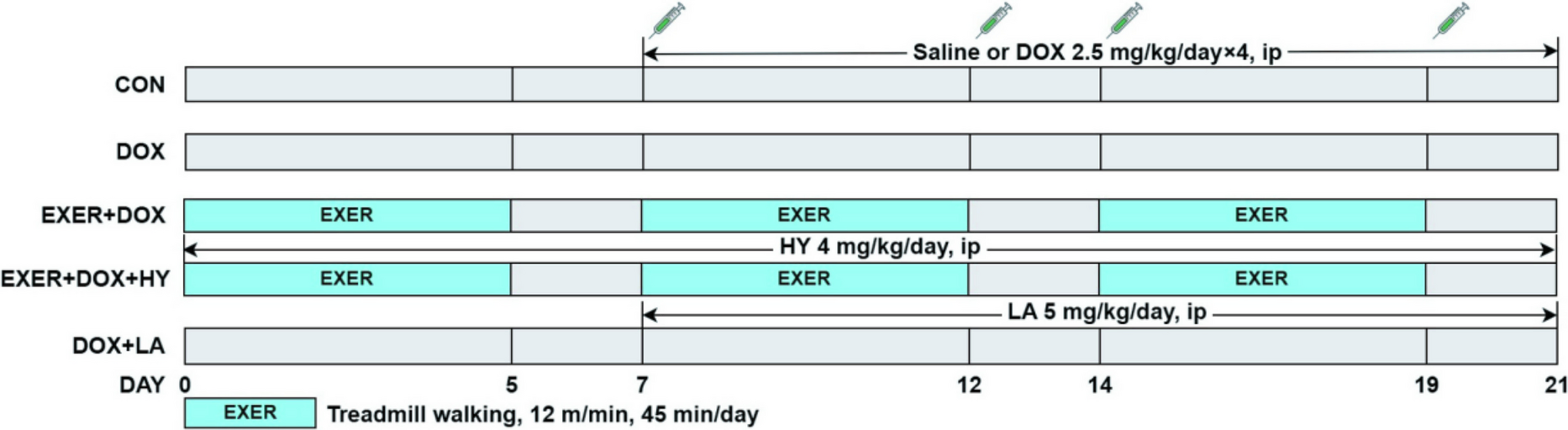
An experiment in male mice assigned to five groups linked exercise’s benefits against doxorubicin heart damage to better upkeep of the cells’ energy-producing structures.
Our read
Interventions- Studied:
- Experiments in mice (Randomized)
- In the record:
- One of 1,819 papers on aerobic exercise on record: 691 with results in people, 207 in animals. Its result on exercise tolerance agrees with 2 of 3 other findings on record; 1 points the other way.
Editor of record: Boris Djordjevic · AgingResearch.News
Male C57BL/6J mice were randomly assigned to five groups in an experiment testing aerobic exercise against heart damage caused by doxorubicin, a chemotherapy drug. Exercise suppressed excessive activity in a cell-signaling pathway involving the proteins TRPC6 and NFAT3.
Exercise also normalized quality control of mitochondria, the cell structures that supply energy. It increased mitochondrial formation and limited excessive splitting and signals for mitochondrial removal. Exercised mice had less heart muscle injury, enlargement and scarring. Heart scans showed improved pumping function. Treadmill tests showed improved heart rate recovery after exertion, along with longer running distances and times. A drug that blocked the signaling pathway reproduced exercise’s heart benefits. A drug that activated the pathway eliminated exercise’s protection.
Why it matters
The authors view the findings as experimental support for exercise rehabilitation in people with doxorubicin-related heart muscle disease.
Caveats
The experiment used only male C57BL/6J mice, leaving open whether female mice or people receiving doxorubicin would gain the same protection.
Where the evidence stands
Aerobic exercise
- 467 independent labs in 57 countries
- 132 findings against
- 64 trials, 4 with no results posted
- Funders: National Institutes of Health and others
- 62 of 1,875 findings with company ties
TRPC6
- 4 independent labs in 3 countries
- Funders: National Institutes of Health and 5 more
The paper
Cell Biology and Toxicology, Nov 16, 2026, CC BY-NC-ND
Comments
Be the first to comment.