Clinical ratings could shrink Alzheimer’s prevention trials
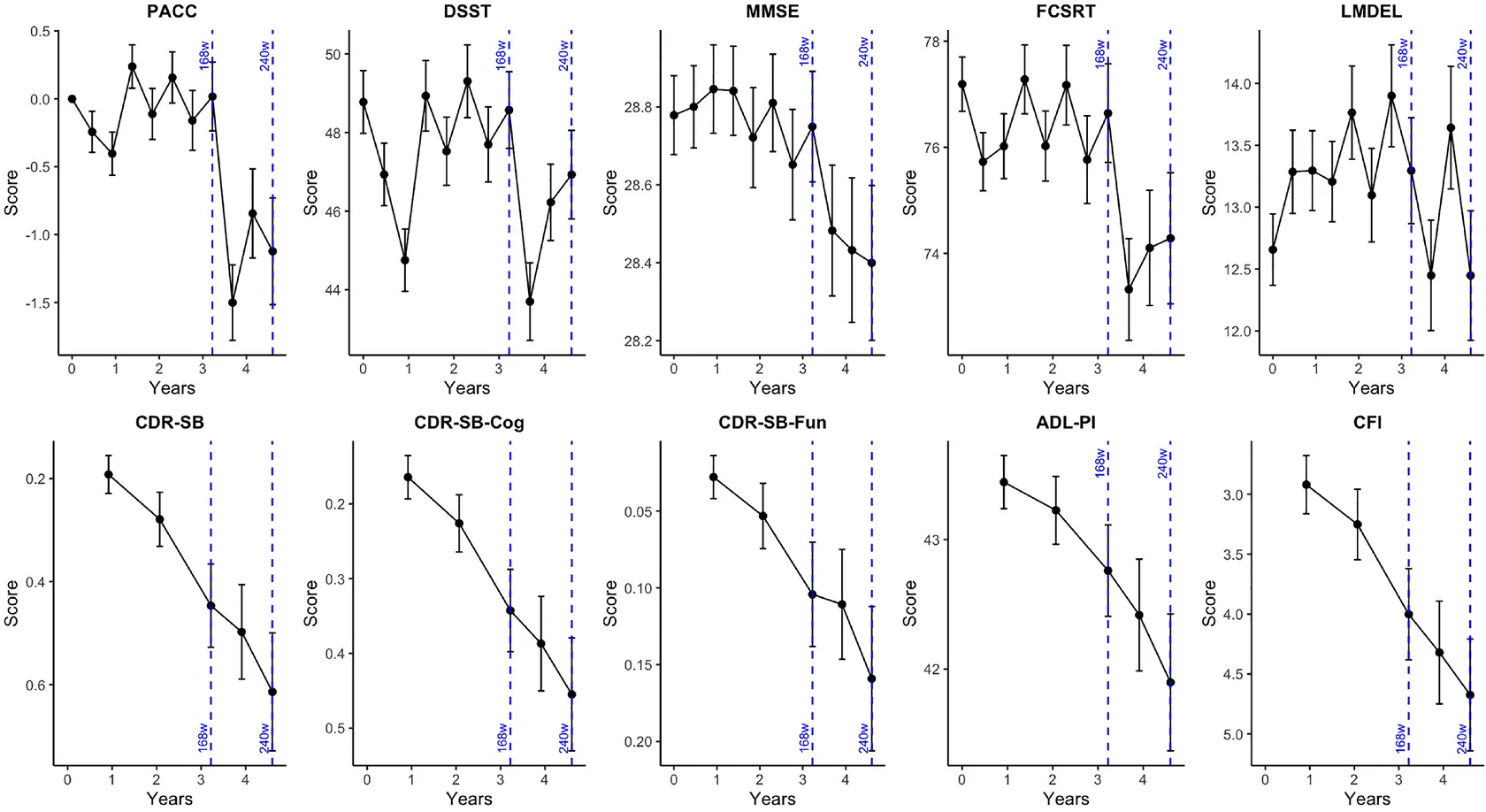
An analysis of 583 placebo recipients found that cognitive tests showed no meaningful decline over 168 weeks, while clinician ratings worsened steadily.
Our read
Biomarkers- Studied:
- Cohort study of 443 adults with preclinical Alzheimer's disease, 168 weeks
- What changed:
- Estimated trial enrollment was 95.3% lower per arm using CDR-SB ratings rather than the DSST cognitive test
- The catch:
- Cognitive tests were administered more frequently than clinical ratings, potentially biasing their comparison
Editor of record: Boris Djordjevic · AgingResearch.News
Cognitively unimpaired adults with preclinical Alzheimer’s disease—disease changes before clear thinking or memory impairment—provided data for an observational analysis of trial outcome measures. Researchers analyzed 583 placebo recipients from the A4 trial. The main 168-week calculations used 443 participants aged 65–85; 58.6% were women.
A combined score from four cognitive tests showed no meaningful decline over 168 weeks. Clinician ratings of thinking and daily functioning, and informant reports of daily difficulties, worsened steadily. Practice effects—gains from repeated testing—persisted despite alternating test versions. Calculations assuming a 30% slowing of decline estimated that clinician ratings would require 805 participants per group, 95.3% fewer than a test matching digits with symbols, for the same chance of detecting that effect.
Why it matters
Alzheimer’s prevention research needs ways to measure subtle changes before clear memory or thinking impairment develops. These findings may inform how trials evaluate interventions at this early stage.
Caveats
The main calculations included only participants with complete follow-up and assumed a treatment effect rather than measuring a treatment benefit. The 168-week analysis covered cognitively unimpaired adults aged 65–85, not people with dementia.
From the paper
- Limitation
The low adherence to planned visit dates in A4 resulting from interruptions experienced during the Covid-19 epidemic may have increased variability within and across visits when grouping assessments by visit number.
Quoted word for word from the full text on alz-journals.onlinelibrary.wiley.com.
- Alzheimer's disease
- Alzheimer's Disease Cooperative Study Activities of Daily Living-Prevention Instrument
- Clinical Dementia Rating Sum of Boxes
- Cognitive Function Instrument
- Preclinical Alzheimer Cognitive Composite
- Humans
The paper
Division of Biostatistics and Bioinformatics University of California San Diego La Jolla California USA
Alzheimer's & Dementia, Nov 9, 2026, Open access, CC BY-NC



Comments
Be the first to comment.