Genetic tendency to nap linked to dementia in Swedish twins
Higher genetic napping scores were linked to greater dementia risk over 16.01 years, with a hazard ratio of 1.12 per standard-deviation increase.
Our read
Populations- Studied:
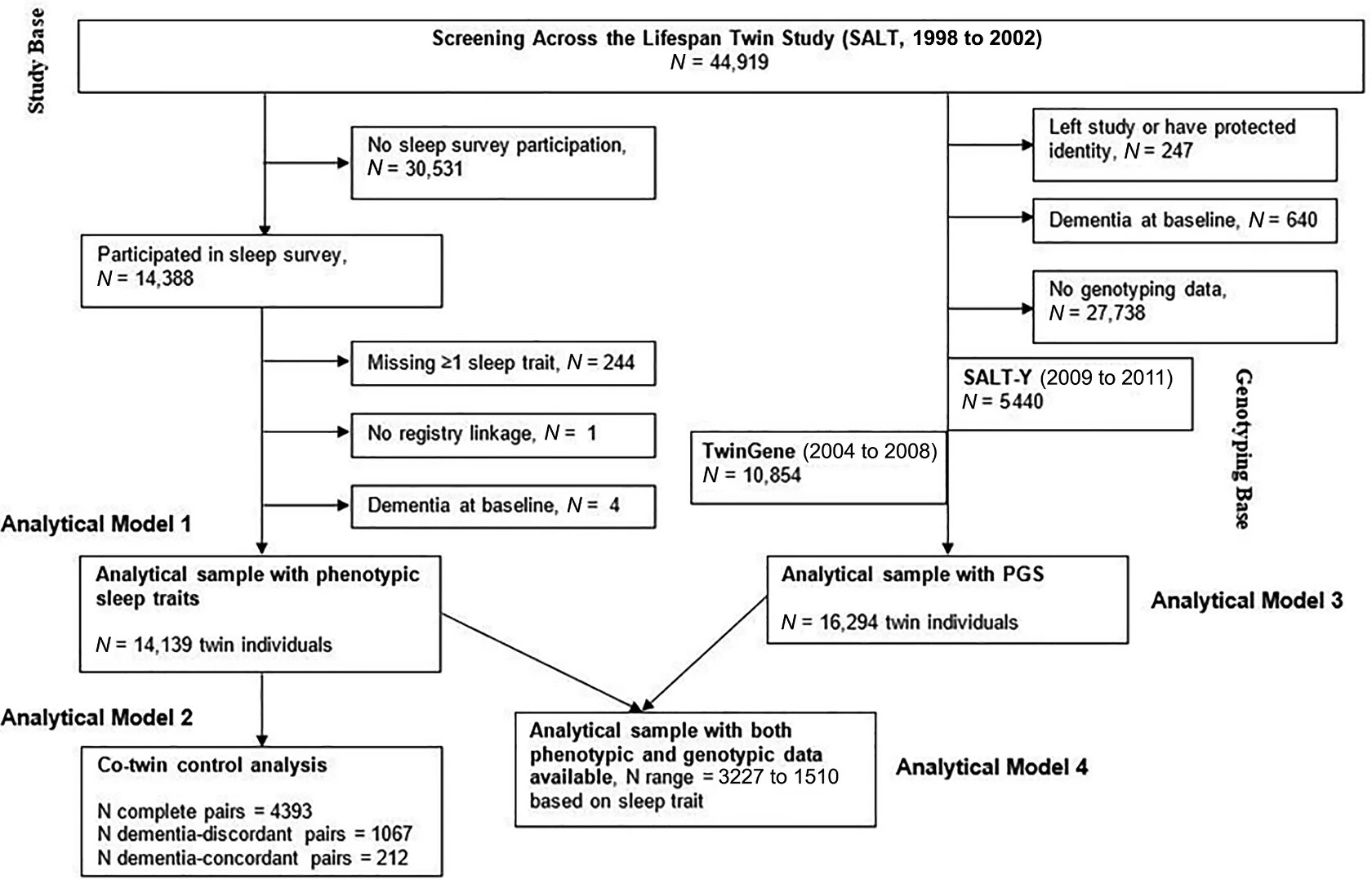
- Cohort study of 16,164 genotyped Swedish twins, mean 16.01 years
- What changed:
- Dementia risk was 11% higher with each standard-deviation increase in genetic tendency to nap
- The catch:
- Napping-linked genes also influence blood pressure and BMI, which can confound the dementia association
- In the record:
- The 381st paper on sleep duration with results in people; 611 on record in all. Its result on dementia goes against all 7 other findings on record.
Editor of record: Boris Djordjevic · AgingResearch.News
Among 16,164 Swedish twins averaging 55.32 years old, an observational study examined genetic tendencies toward sleep habits and later dementia. Genetic scores combined DNA variants associated with sleep habits in a largely middle-aged population. Researchers tracked dementia through national registers, excluding diagnoses within 10 years of enrollment.
Over an average 16.01 years, 559 people received dementia diagnoses. A higher genetic napping score was linked to higher risk. The hazard ratio compared diagnosis rates over time; a standard deviation measured how widely scores varied. Among 3,133 twins averaging 66.79 years old with both genetic and reported sleep data, the link remained after accounting for reported napping. Separately, longer reported sleep was linked to lower dementia risk among 13,087 twins averaging 70.27 years old, but the association weakened in comparisons within twin pairs.
Why it matters
The authors suggest that genetic susceptibility to midlife napping may mark a distinct vulnerability to dementia, while late-life napping may serve a compensatory or restorative function.
Caveats
The analysis compared genetic sleep tendencies and later diagnoses; it did not test whether changing napping habits altered dementia risk. Reported sleep habits came from questionnaires, and the authors cautioned that testing multiple associations could yield false-positive links.
Where the evidence stands
Chronotype
- 3 independent labs in 2 countries
- Funders: National Institute on Aging and 2 more
Daytime napping
- 31 independent labs in 11 countries
- 6 findings against
- Funders: National Institute on Aging and others
- 6 of 64 findings with company ties
From the paper
- Participants
A total of 3133 participants had available data on at least one sleep trait and corresponding genotyping information for constructing PGS.
- Result
… longer sleep duration (hazard ratio [HR] 0.93; 95% confidence interval [CI]: 0.86 to 1.00; p = 0.04) was associated with lower dementia risk over 13.42 years in models adjusted for sociodemographic and lifestyle behavioral factors.
- Limitation
First, all measures of sleep traits were self-reported, which may be prone to recall bias and misclassification.
Quoted word for word from the full text on alz-journals.onlinelibrary.wiley.com.
The paper
Phenotypic and genetically predicted sleep traits in relation to dementia incidence in Swedish twins
and Society Karolinska Institutet Stockholm Sweden; Department of Medical Epidemiology and Biostatistics Karolinska Institutet Stockholm Sweden
Alzheimer's & Dementia, Nov 9, 2026, Open access, CC BY
Comments
Be the first to comment.