Bladder drugs presumed safer not linked to lower dementia risk
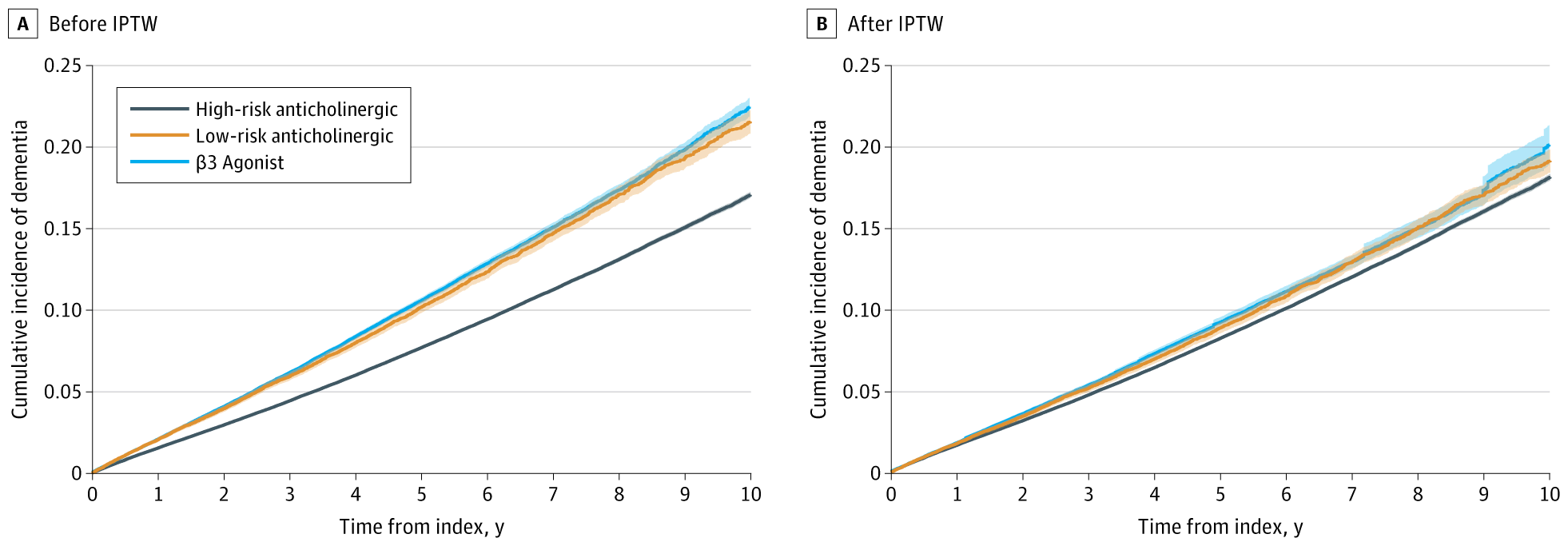
Estimated 10-year dementia risk was 20.0% with mirabegron or vibegron, compared with 18.1% with drugs classified as high-risk anticholinergics.
Our read
Populations- Studied:
- Cohort study of 830,393 adults with overactive bladder, 1046 to 1568 days
- What changed:
- Estimated 10-year dementia risk was 20.0% with mirabegron or vibegron versus 18.1% with high-risk anticholinergics
- The catch:
- Diagnosis codes or dementia-specific medication can miss unrecognized dementia
- Why it’s aging research:
- It bears on staying healthy in midlife and later life.
Editor of record: Boris Djordjevic · AgingResearch.News
Adults aged 40 to 90 with overactive bladder—830,393 people, 70.5% female—were studied in a retrospective observational cohort using health records from 2012 to 2025. They had no preexisting dementia and began bladder medication within a year of diagnosis.
The researchers compared mirabegron or vibegron with two groups of anticholinergics, medicines that block the chemical messenger acetylcholine. After statistical adjustment, anticholinergics classified as high risk were associated with lower dementia risk than mirabegron or vibegron. Anticholinergics classified as low risk did not clearly differ from that pair. Longer anticholinergic use was not associated with increased dementia risk. Dementia was recorded in 65,134 patients.
Why it matters
Dementia is a concern when choosing bladder medicines for older adults. The authors suggested that earlier risk signals may reflect differences between patients rather than drug effects.
Caveats
Modest unmeasured differences between patients could explain the associations, and dementia was identified through diagnosis codes or dementia-specific medication. The results concern adults aged 40 to 90 without preexisting dementia who were treated for overactive bladder.
The paper
Drug Therapies and Incidence of Dementia Among Adults With Overactive Bladder
University Hospitals Cleveland Medical Center Urology Institute
JAMA Network Open, Nov 6, 2026



Comments
Be the first to comment.