Drug-loaded particles reduced joint damage in guinea pigs
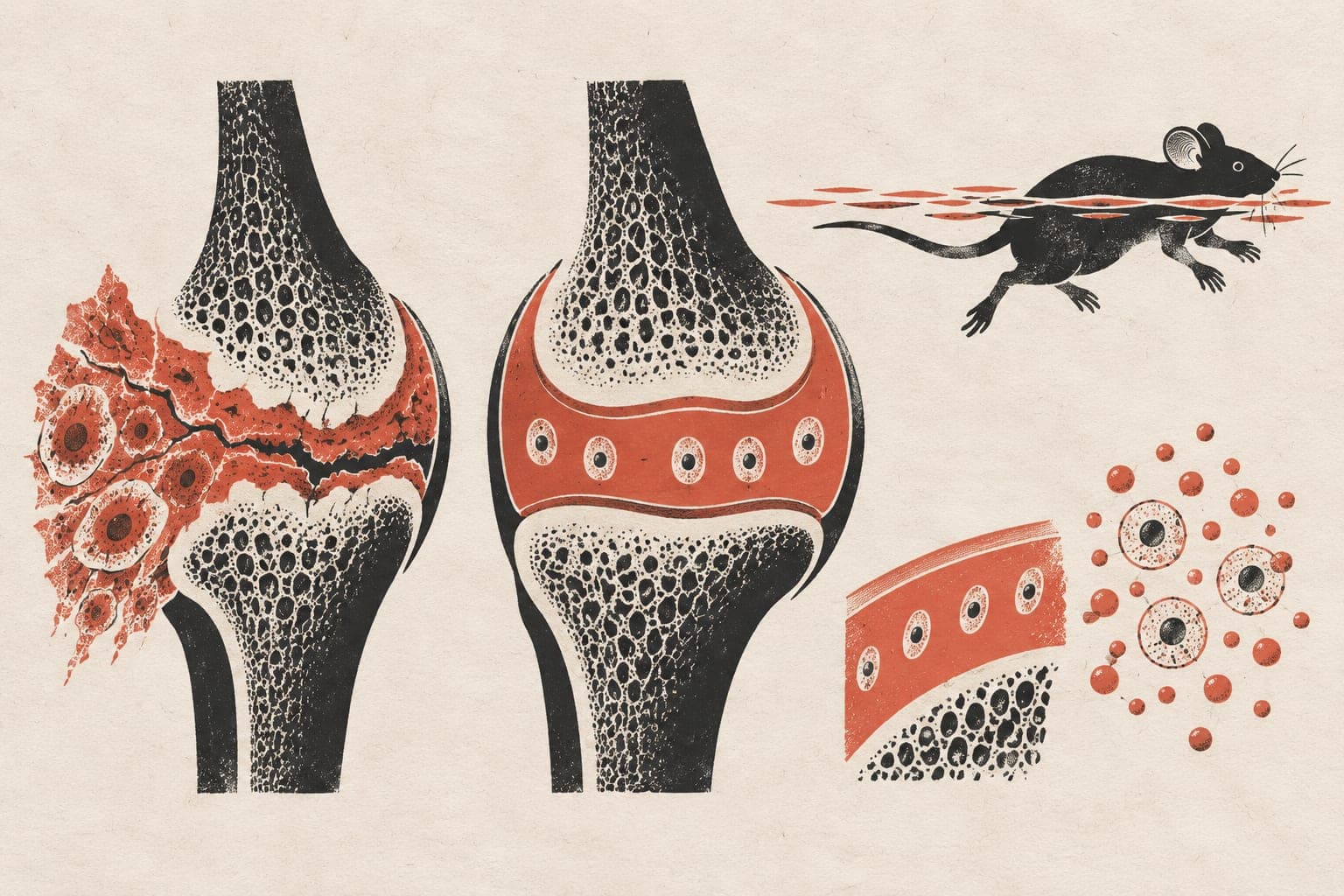
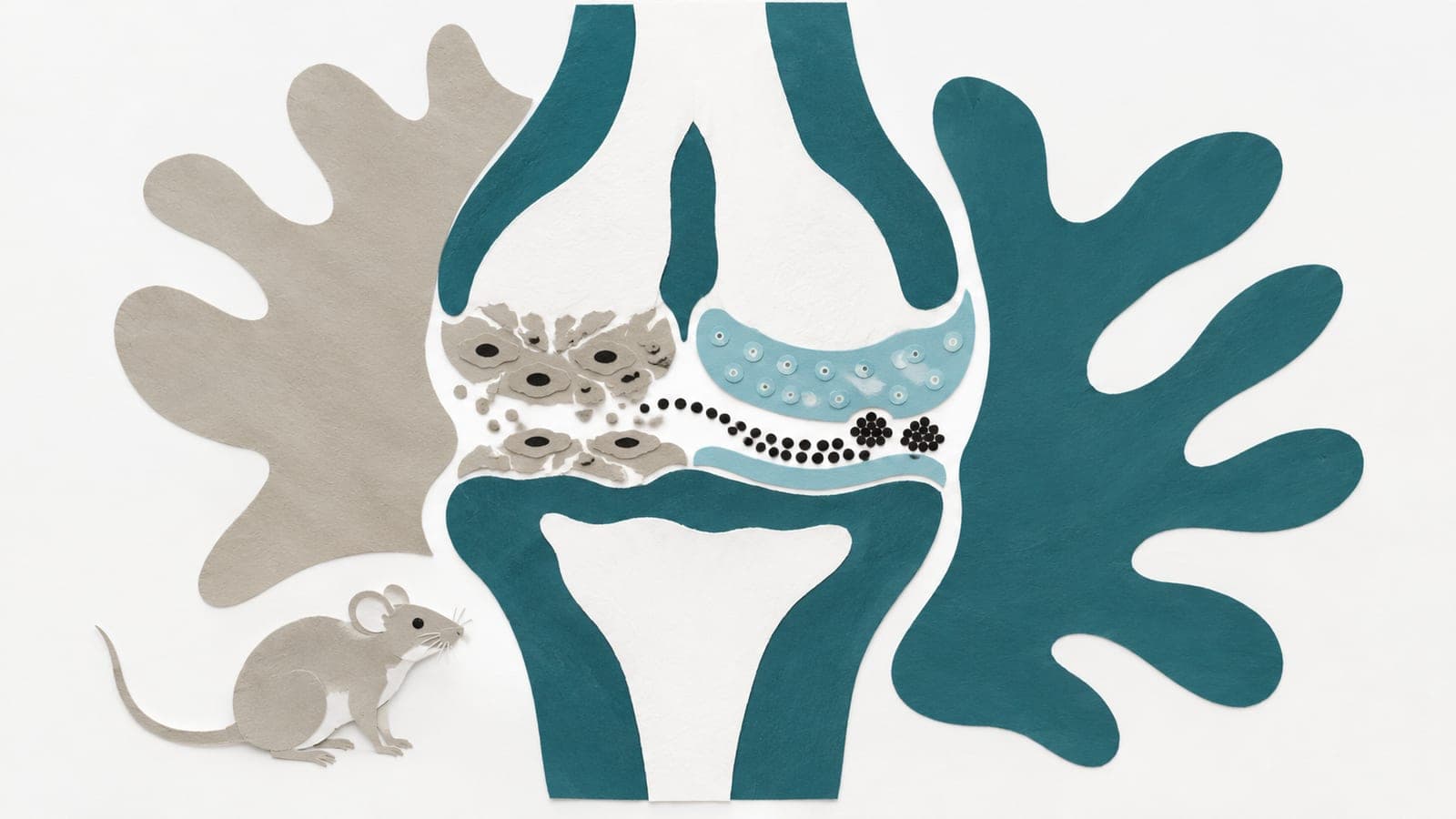
In an animal experiment, injections begun at 3 months reduced joint damage and preserved movement in female guinea pigs assessed at 7 and 10 months.

Our read
Interventions- Studied:
- Preprint: experiments in animals
Editor of record: Boris Djordjevic · AgingResearch.News
Female Dunkin-Hartley guinea pigs that naturally develop osteoarthritis, a degenerative joint disease, received joint injections of drug-loaded nanoparticles from 3 months of age in an animal experiment. The drug inhibited secreted phospholipase A2, an enzyme that helps regulate inflammation-related molecules.
At 7 and 10 months, treatment reduced cartilage destruction, inflammation of the joint lining and bony outgrowths. It also preserved the animals’ ability to bear weight, push off and move. These changes accompanied normalization of gene activity involved in tissue building and breakdown, and reduced enzyme activity in joint fluid. The researchers observed no toxicity elsewhere in the body following long-term treatment.
Why it matters
Age-related osteoarthritis lacks effective treatments that change its course. The work points to an inflammation-regulating enzyme as a promising target for developing such treatments.
Caveats
The experiment tested injections begun at 3 months of age in female guinea pigs, not benefits in people. The bioRxiv preprint has not been peer-reviewed, and the abstract does not give the injection dose.
The paper
sPLA2 inhibitor-loaded nanoparticles mitigate spontaneous osteoarthritis in guinea pigs
University of Pennsylvania
bioRxiv, Nov 9, 2026, Open access, Preprint, not yet peer-reviewed
Comments
Be the first to comment.