Older adults show narrower brain connectivity patterns
During a navigation task, one brain connectivity pattern had an approximately 65% smaller range in 19 older adults than in 19 younger adults.
NeuroImage
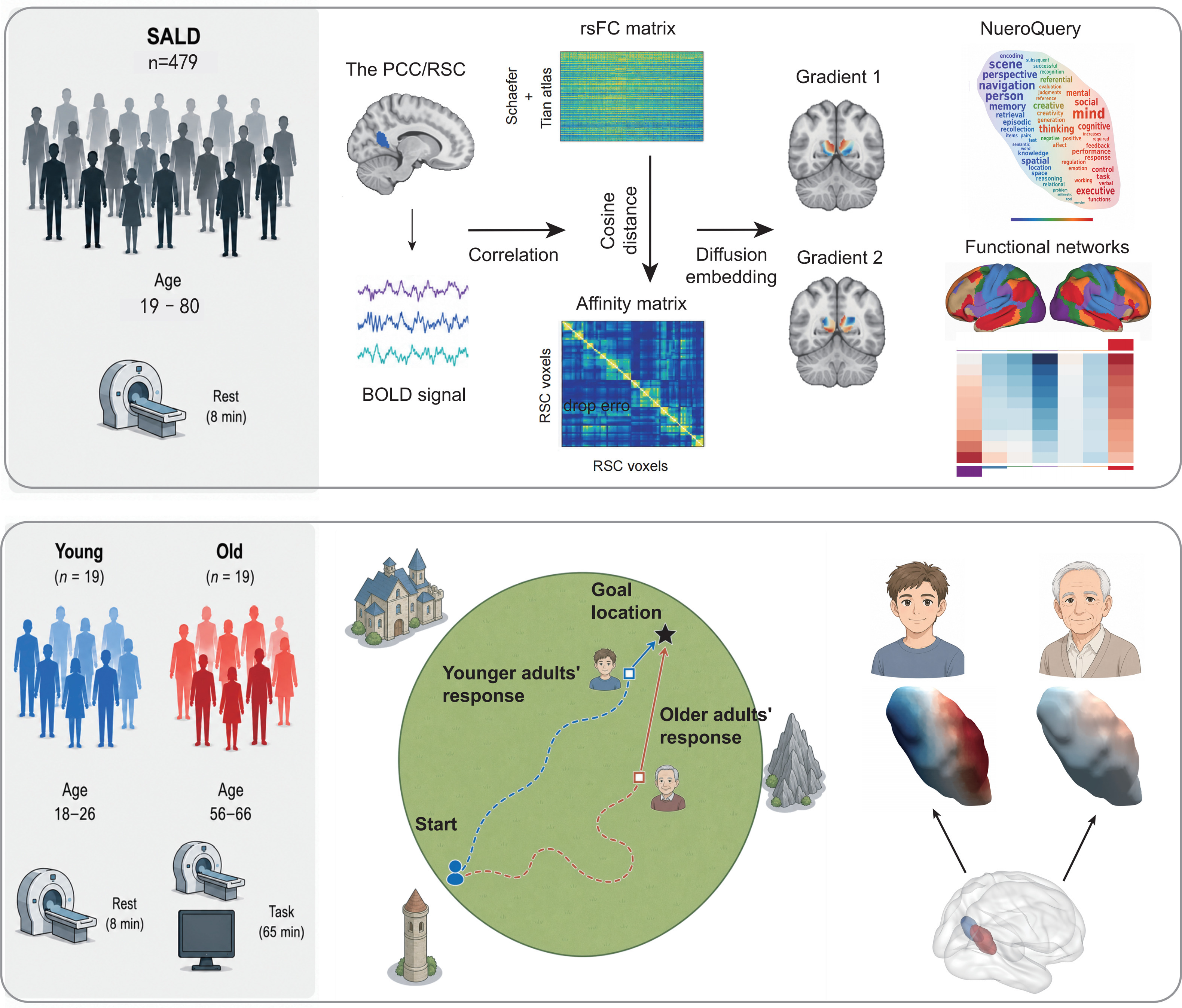
In an observational study, researchers analysed 479 adults aged 19–80 and a separate group of 19 younger and 19 older adults. They examined brain connectivity: how activity in different brain areas varies together. They mapped gradual changes in connectivity across the posterior cingulate and retrosplenial cortex, brain areas involved in navigation.
In the larger sample, both main connectivity patterns had smaller ranges at older ages. The separate group underwent brain scans at rest and while remembering object locations relative to their surroundings. Older adults had smaller ranges in three measurements. The largest reduction, approximately 65% compared with younger adults, appeared in one left-sided pattern during the task. Among older adults, a greater range in that pattern was associated with smaller object-location errors.
Why it matters
Spatial navigation declines with age, but the underlying brain mechanisms remain unclear. This work addresses how the organisation of navigation-related brain areas relates to that decline.
Caveats
This observational study could not show that narrower connectivity patterns caused navigation difficulties. The navigation analysis included only 19 older adults.
The paper
Show 3 more authors
Yuxuan Yang, Haichao Zhao, Qinghua He,Southwest University
NeuroImage · 7 Oct 2026