Older age was linked to more DNA deletions in human colon
Simple DNA deletion counts showed an overall roughly 10-fold increase across ages 0.8 months to 90 years in people without radiation or chemotherapy treatment.
bioRxiv
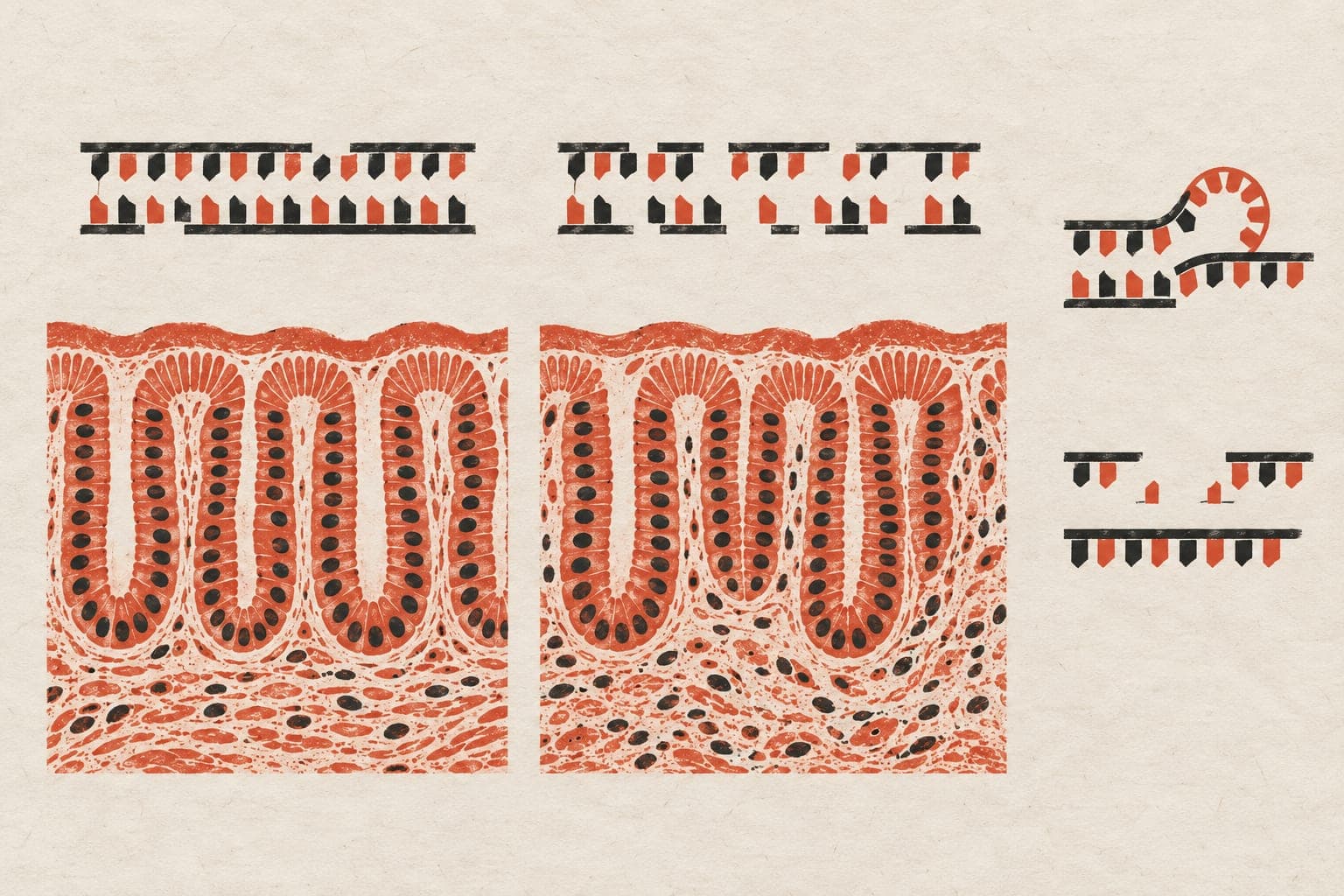
In normal human colon crypts, small glands in the bowel lining, researchers analysed missing pieces of DNA in an observational study. They focused on simple deletions, which involved no added DNA or replacement of neighbouring DNA letters.
Among people aged 0.8 months to 90 years who had not received radiation or chemotherapy, deletion counts showed an upward trend with age. Roughly 58% of simple deletions were consistent with a copying error in which DNA strands slip out of alignment. Among 4,264 deletions spanning at least two DNA letters, roughly 71% best matched a repair process that joins broken DNA ends.
Why it matters
Changes in DNA sequence may contribute to human aging. This analysis addresses how these changes accumulate in normal cells, rather than cancer cells with altered patterns of DNA damage and repair.
Caveats
This observational study could not establish whether the deletions contributed to aging. The findings came from colon crypts, and the preprint has not been peer-reviewed.
The paper
Analysis of Naturally Arising Simple Deletions in Single Human Colon Crypts with Age
Show 3 more authors
C. Okitsu, J. Wlodarczyk, Z. Manojlovic,University of Southern California
bioRxiv · 6 Oct 2026 · Preprint, not peer-reviewed