Mapping hypertension prevalence and absolute burden across the states and districts of India
Abstract
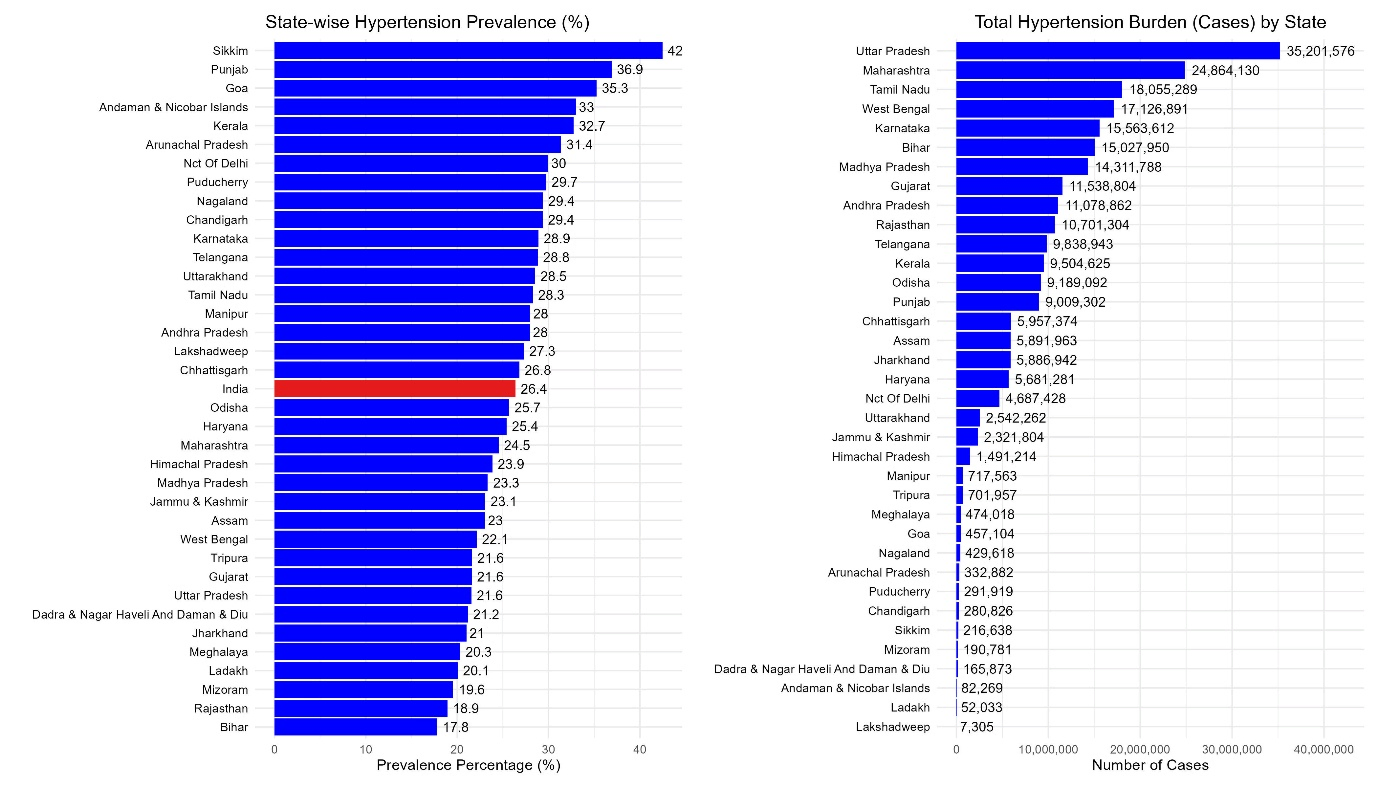
Hypertension is India's leading risk factor for premature mortality, and national programmes now require district-level targeting. Existing evidence maps prevalence, which identifies where individuals are most likely to be hypertensive but not where the largest numbers of affected people live. This study examines the distribution of both prevalence and absolute burden across India's states and districts. Individual-level blood pressure data from the National Family Health Survey-5 (2019–21), covering 707 districts, were used to estimate weighted prevalence, with hypertension defined as mean systolic blood pressure ≥ 140 mmHg and/or diastolic ≥ 90 mmHg. District populations from WorldPop gridded estimates were multiplied by prevalence to obtain absolute burden. Districts were classified into four bivariate categories using national medians and ranked within states by cumulative burden contribution. National prevalence was 26%, ranging from 18% to 42.% across states and 11% to 49% across districts. The estimated hypertensive population was 250 million in India. Absolute burden followed a different pattern; Uttar Pradesh alone accounted for 14% of the national total despite below-average prevalence, while eight high-prevalence small states contributed only 0.8%. Within nearly every state, a small subset of districts accounted for the majority of state burden. The divergence between prevalence and burden indicates that healthcare programmes ranked by prevalence would direct resources away from the districts where the greatest number of people require care. Hypertension control programmes in India should incorporate district-level burden estimates alongside prevalence when allocating screening, treatment and follow-up services.
The paper
Govind Ballabh Pant Social Science Institute; University of Allahabad
Research Square, Oct 12, 2026, Open access, Preprint, not peer-reviewed


