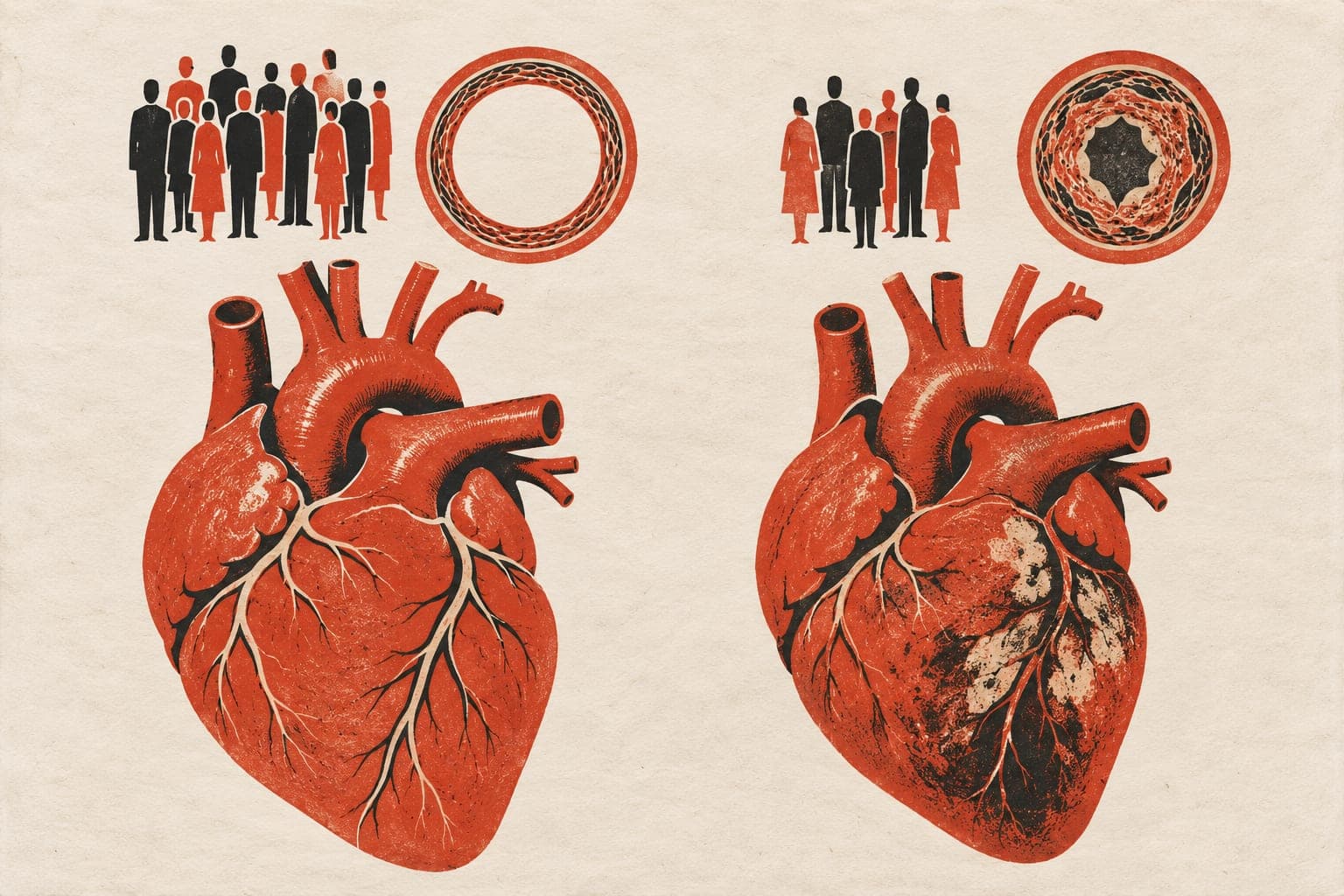
Higher estimated artery stiffness linked to higher cancer risk
The adjusted hazard ratio—a comparison of cancer rates over time—was 1.48 for higher versus lower estimated artery stiffness.
Research Square
Researchers conducted an observational cohort study of 11,648 middle-aged and older adults aged 45 and above in the China Health and Retirement Longitudinal Study. They grouped participants by estimated pulse wave velocity, a measure of artery stiffness. The median follow-up lasted seven years.
They recorded 215 cancer cases during follow-up. Higher estimated stiffness was associated with greater cancer risk after accounting for age, sex and other factors. The association was significant in several subgroups, including men and adults under 65. Higher values were also linked to cancers of the head, respiratory system and other systems.
Why it matters
The study addressed whether estimated artery stiffness could help identify middle-aged and older adults at higher cancer risk.
Caveats
This observational study could not show that artery stiffness caused cancer. The findings are from a preprint that has not been peer-reviewed.
The paper
Wang Z, Xue F, Lin F
Research Square · 7 Oct 2026 · Preprint, not peer-reviewed