Uric acid salt linked to high-risk plaque in heart arteries
In an observational study of 116 patients, detected urate was linked to odds of high-risk plaque 4.91 times those without detected urate.
Research Square
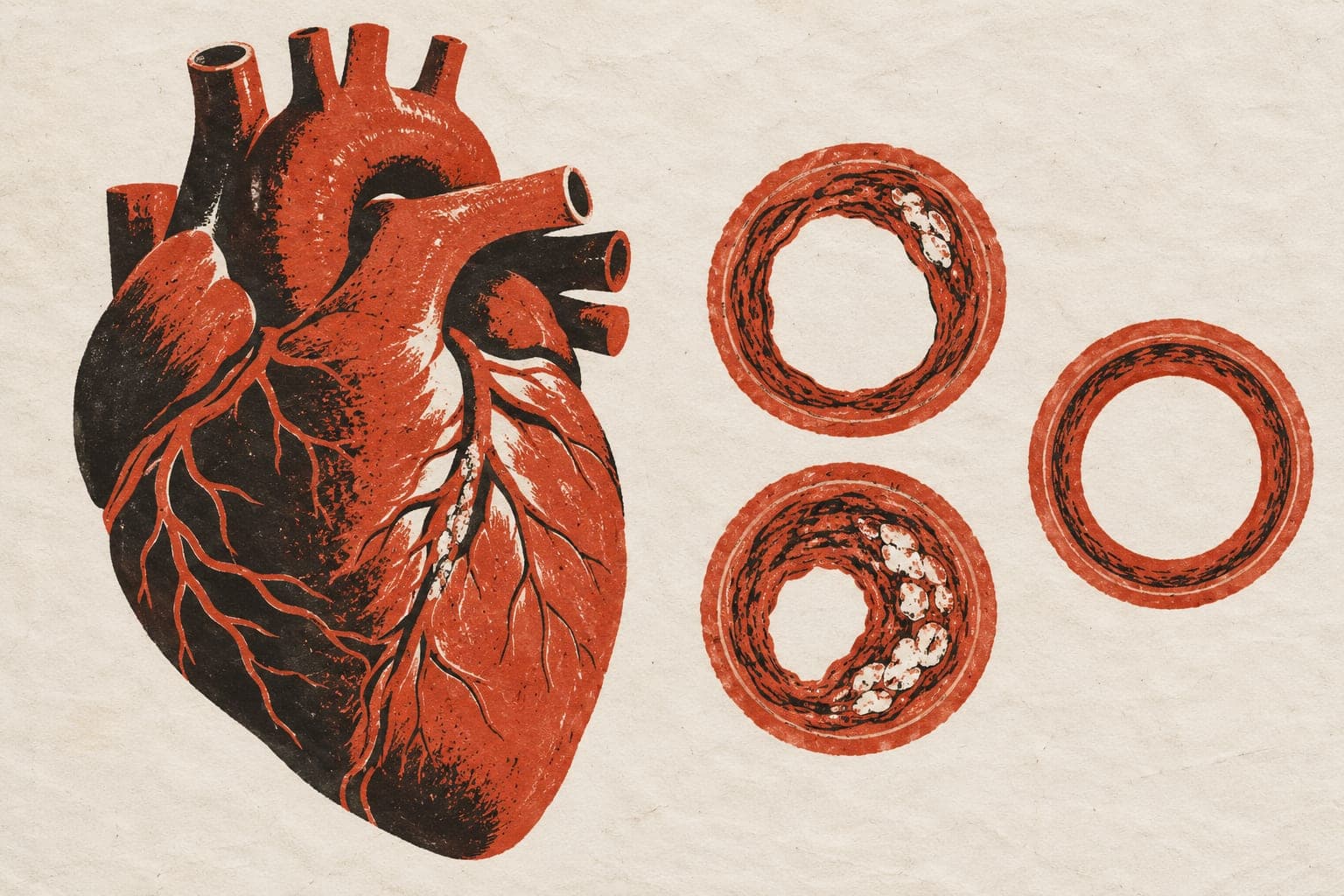
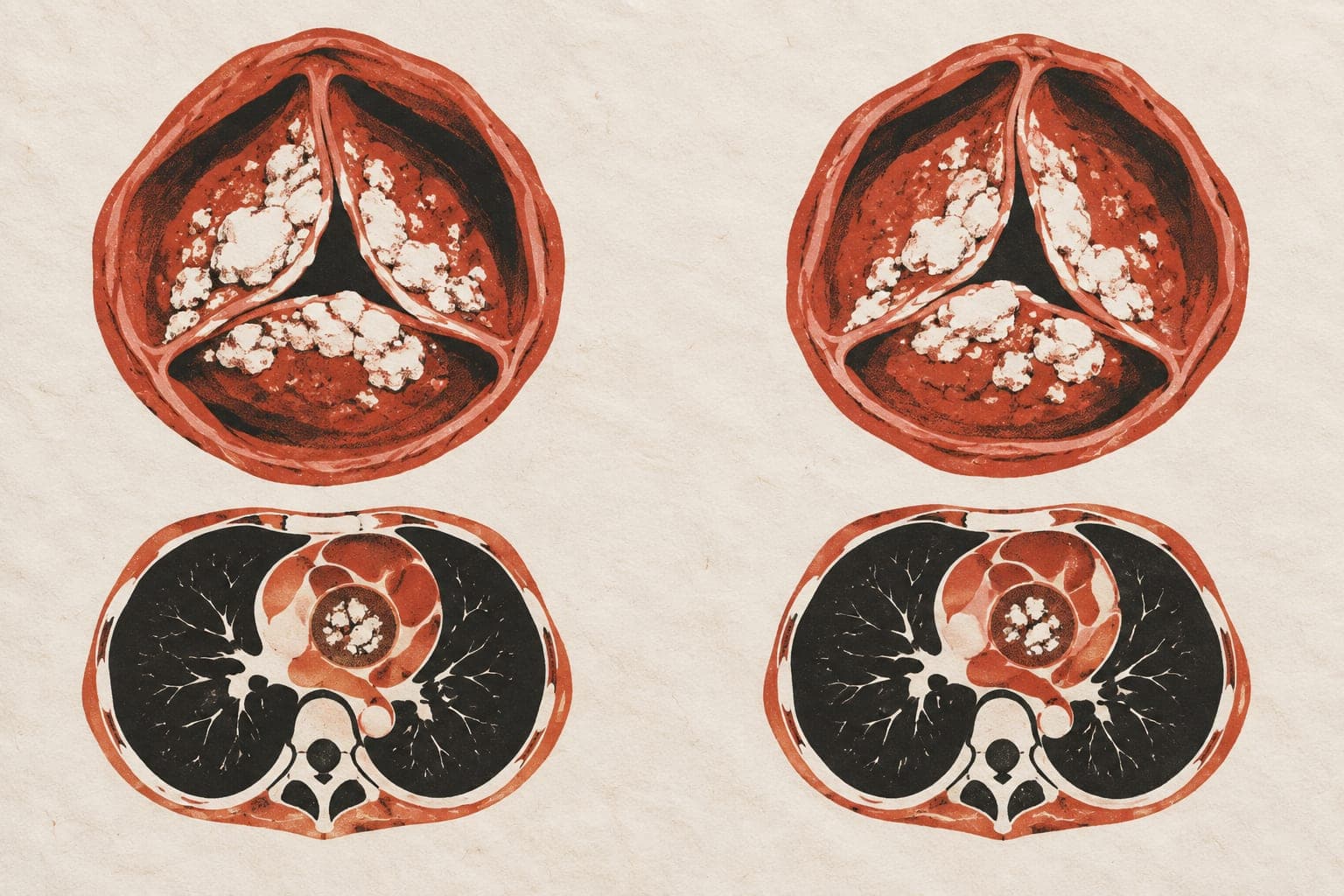
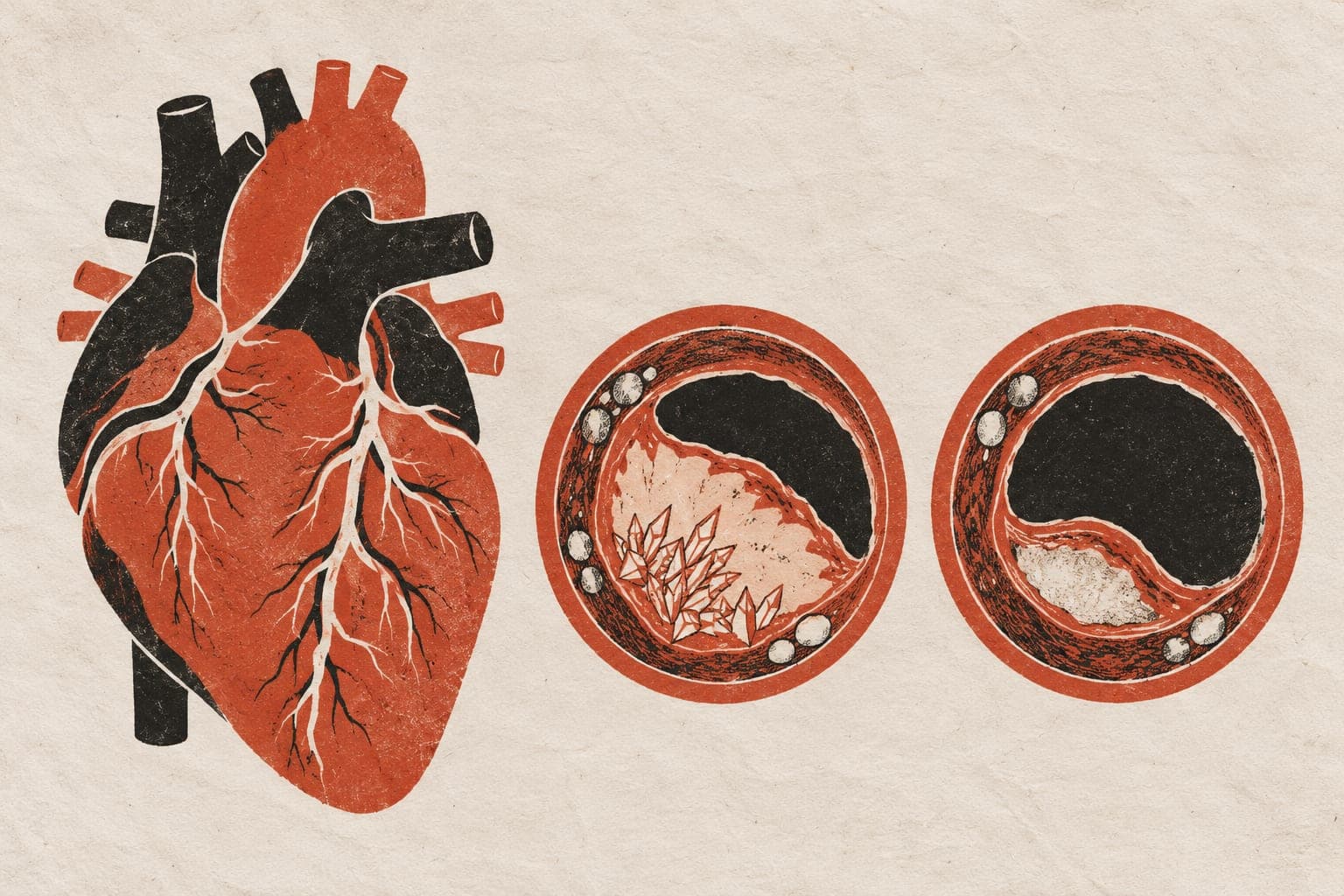
Researchers studied 116 patients and 348 coronary arteries, which supply the heart, in an observational study. They used specialised X-ray scans to identify urate, a salt of uric acid, within plaques, or build-ups in artery walls. The scans distinguished urate from calcium, which conventional scans could not.
Urate appeared in 35.3% of patients and 17.5% of arteries. It was the only factor independently linked to high-risk plaque in the analysis. The calcium score, a measure of calcium deposits, was not an independent predictor. Patients with detected urate had normal blood urate levels. In an independent group of 92 patients, a different type of X-ray scan corroborated the detection of urate in coronary plaque.
Why it matters
The study addresses whether urate may act locally within artery plaques, a question relevant to cardiovascular disease in aging.
Caveats
This observational study could not establish whether urate caused plaque vulnerability or whether lowering urate would reduce cardiovascular events. The paper is a preprint and has not been peer-reviewed.
The paper
Coronary Urate Detected by Spectral CT Marks the Vulnerable Plaque
Fujimoto S, Sato H, Kawaguchi Y et al.
Research Square · 6 Oct 2026 · Preprint, not peer-reviewed