Genetic dementia risk linked to thinking levels and decline
An observational analysis of 11,518 US adults used 26 years of data to distinguish genetic links involving preexisting thinking ability from those involving age-related decline.
Our read
Populations- Studied:
- Preprint: cohort study of 11,518 people (26 years)
Editor of record: Boris Djordjevic · AgingResearch.News
An ancestrally diverse sample of 11,518 US adults contributed 26 years of data to an observational analysis of genetic links to dementia. Researchers modeled changes in cognitive function alongside dementia risk. They examined genetic scores, which combine many genetic variants associated with a particular trait.
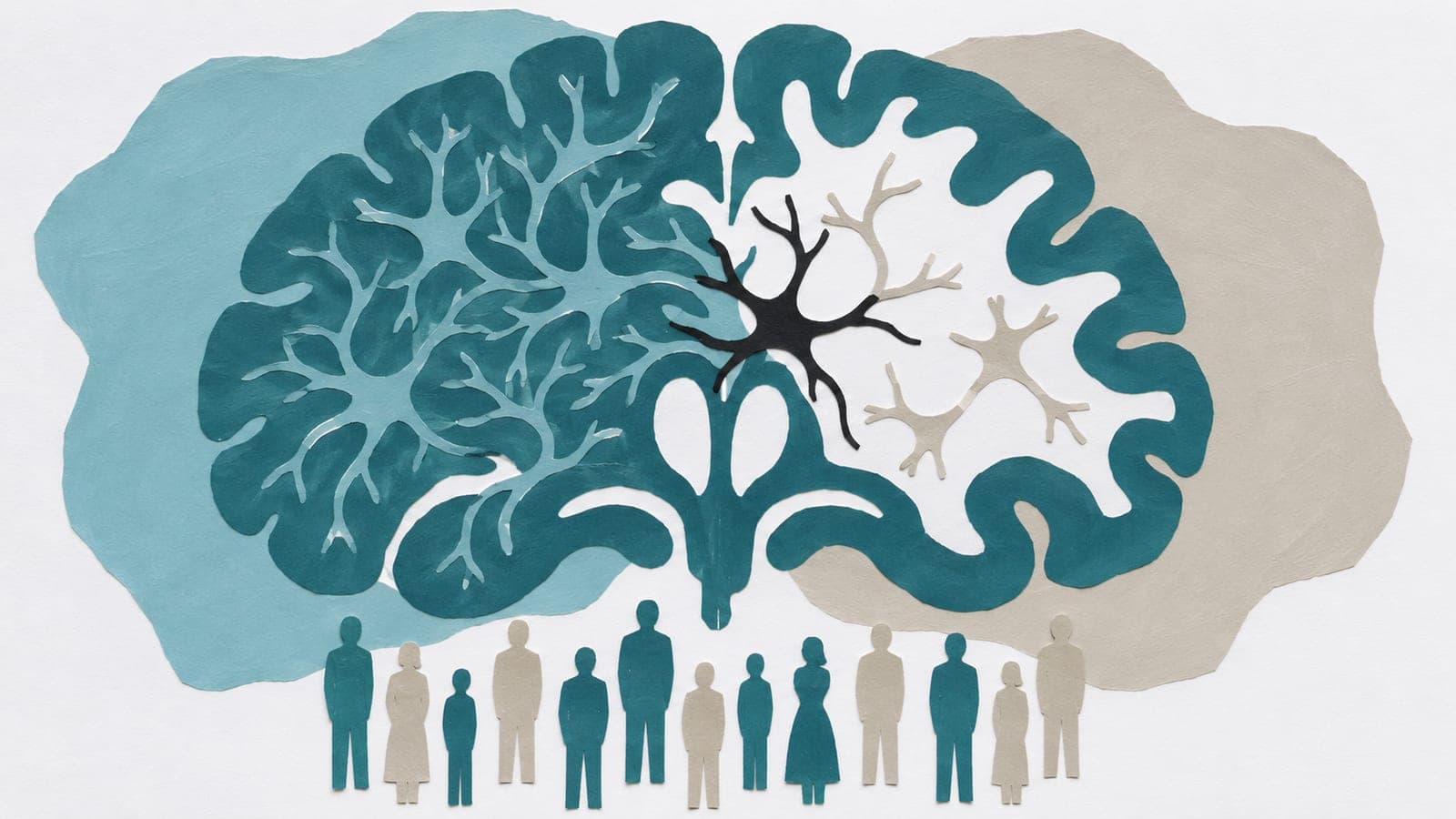
In the models, scores for type 2 diabetes, stroke and hearing loss were associated with dementia risk through the rate of cognitive decline. Scores for educational attainment, physical activity and smoking were associated with dementia risk through differences in cognitive function before dementia developed. These were among the traits whose genetic links followed the two different patterns. Some results varied by continental ancestry.
Why it matters
For dementia prevention, the authors suggest that separating age-related decline from preexisting cognitive differences may help distinguish processes that might be targeted later in life from those requiring earlier intervention.
Caveats
The analysis did not test whether changing diabetes risk, physical activity or other traits would reduce dementia risk. The findings come from a preprint that has not been peer-reviewed.
- Cognitive function polygenic index
- Type 2 diabetes
- Type 2 diabetes polygenic index
- Stroke
- Stroke polygenic index
- Humans
The paper
Washington University School of Medicine; University of Texas at Austin
medRxiv, Nov 9, 2026, Open access, CC BY-NC-ND, Preprint, not yet peer-reviewed

Comments
Be the first to comment.