Map links DNA variation to gene activity in aging human brains
The method identified 49,532 distant gene-regulation links supported by shared genetic signals in molecular data from aging human brains.
Our read
AI & data- Studied:
- Preprint: genetic association study of aging human brain donors
- What changed:
- TransMap identified 49,532 distant gene-regulation links supported by shared genetic signals in aging human brains
- The catch:
- Shared genetic signals are a proxy for causal regulation between neurons and glia
Editor of record: Boris Djordjevic · AgingResearch.News
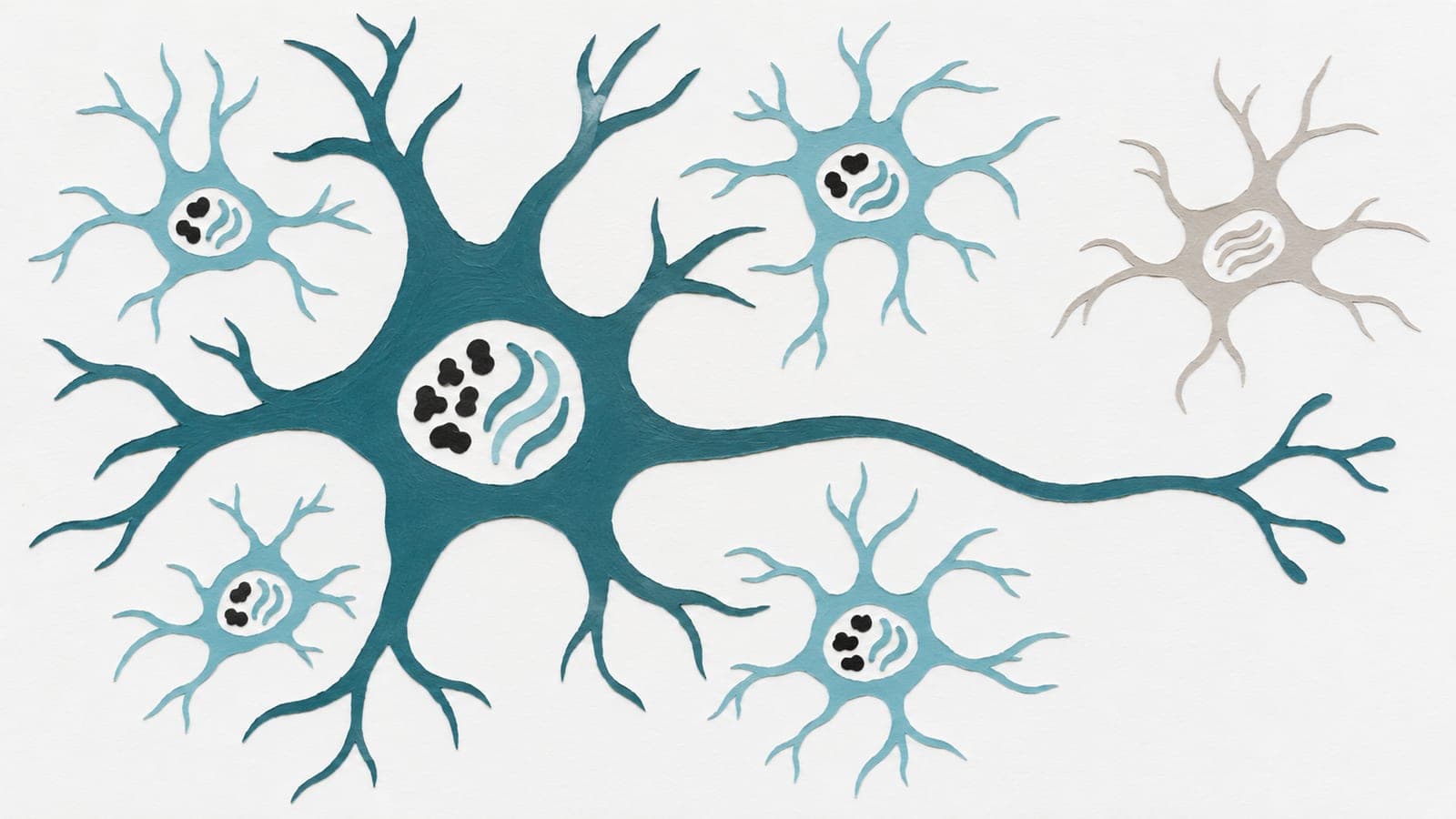
Aging human brain samples were examined in an observational analysis combining gene-activity profiles with protein and other molecular measurements, with an average of 476 donors. The researchers developed TransMap, a computational method linking DNA variants to the activity of genes elsewhere in the genome, individually and in coordinated groups.
The method identified 49,532 distant regulatory links supported by shared genetic signals. Genetic signals linked to nearby gene activity in neurons were preferentially associated with coordinated gene-activity responses in glia, cells that support neurons. An analysis focused on Alzheimer’s disease identified distant regulatory associations in 115 disease-associated regions of the genome.
Why it matters
Connecting inherited Alzheimer’s risk with gene activity may help clarify which regulatory processes are involved in the disease.
Caveats
The statistical links do not show whether altered gene activity in neurons caused the glial responses. The report is a preprint and has not been peer-reviewed.
The paper
A multi-scale cell-type resolved map of trans-regulatory architecture in the aging human brain
Memorial Sloan Kettering Cancer Center
medRxiv, Nov 8, 2026, Open access, CC BY, Preprint, not yet peer-reviewed
Comments
Be the first to comment.