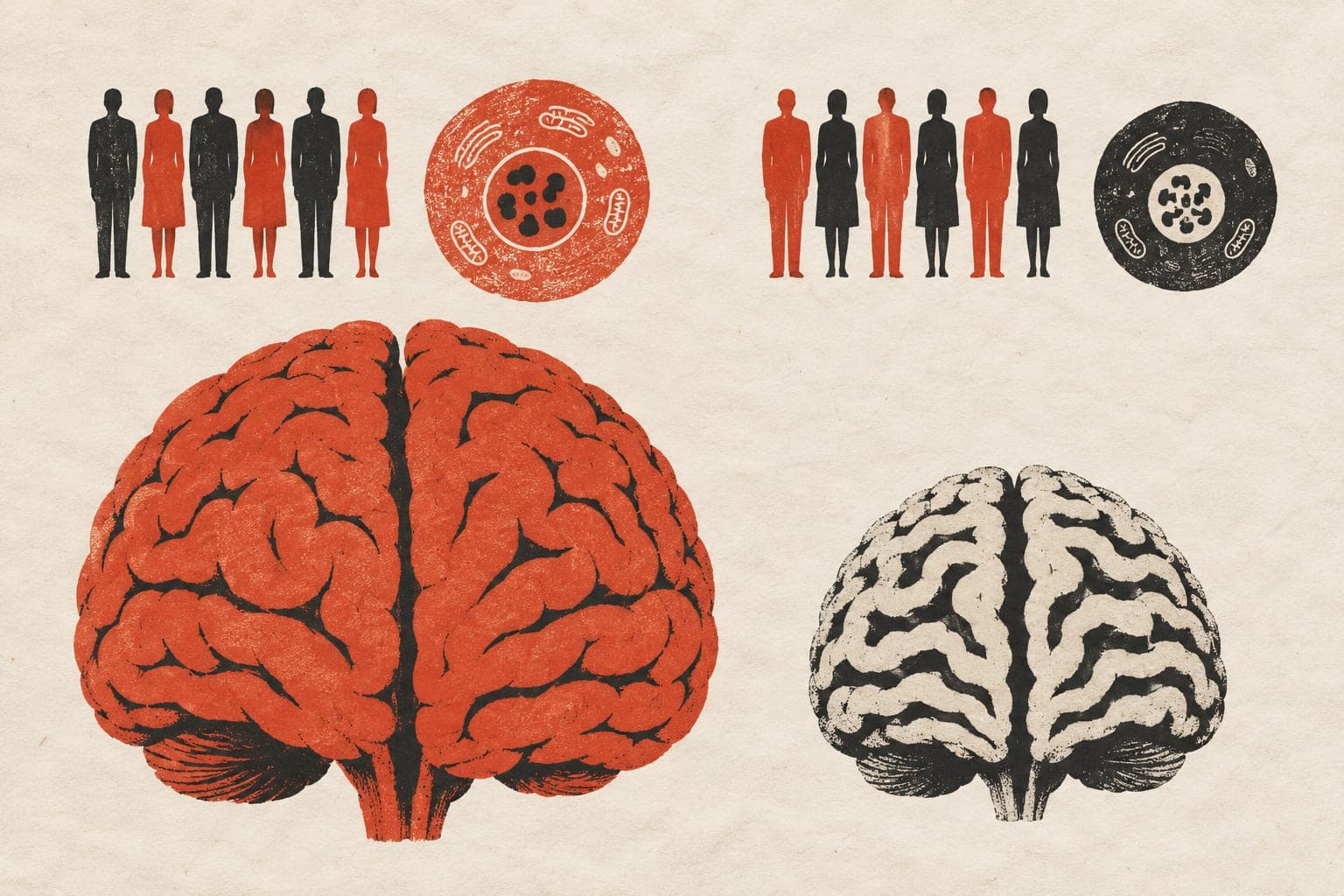
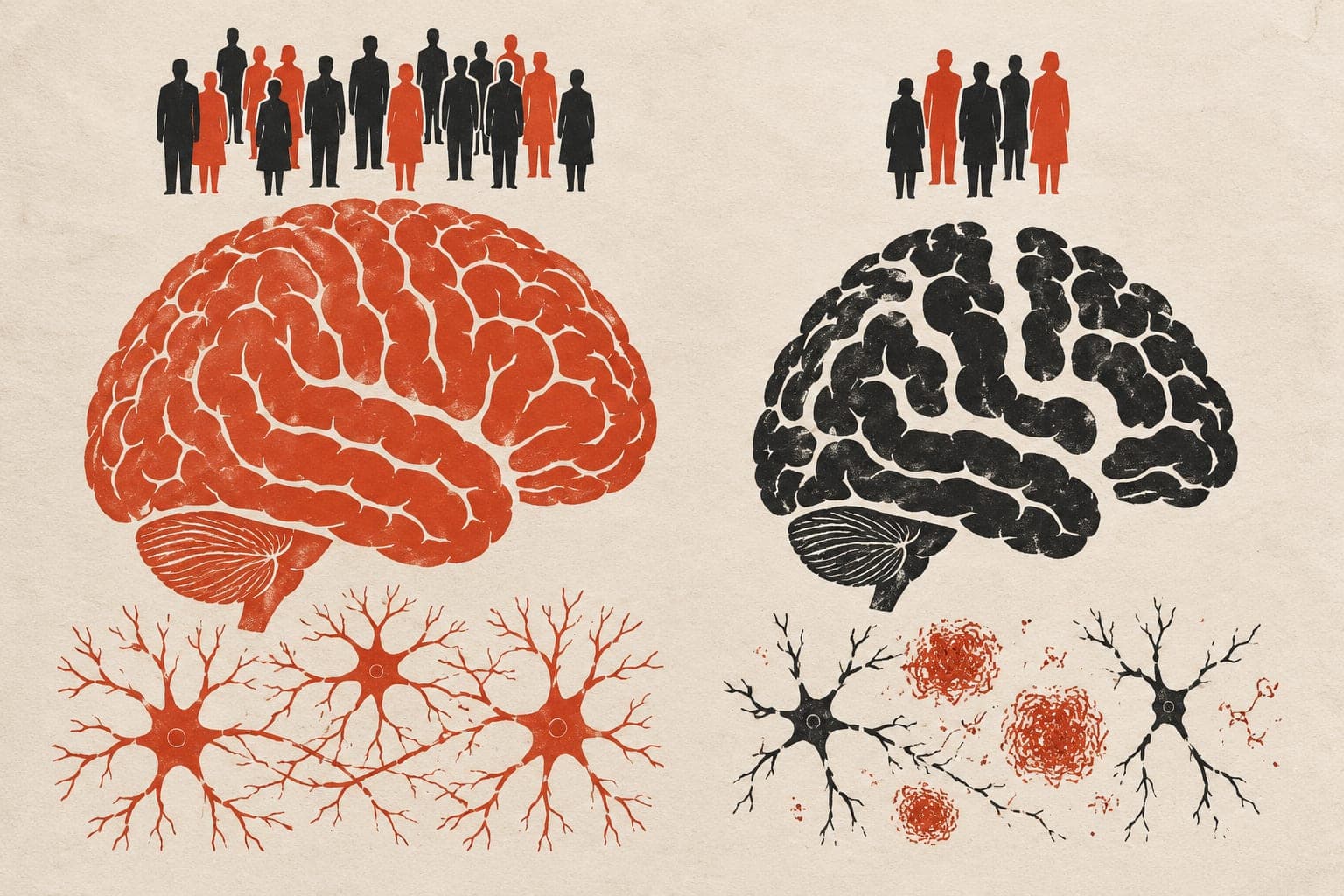
Benchmark accounts for family ties in genetic disease prediction
Across 14 diseases, the strongest scores explained 5.7–24.9% of modeled variation in underlying disease susceptibility, matching or exceeding published scores for most diseases.

Limit: Health benefits from using genetic scores were not measured
Edited by Boris Djordjevic · AgingResearch.News
Researchers built a benchmark using participants in version 9 of the All of Us Research Program to evaluate genetic prediction for 14 diseases. Polygenic risk scores combine information from many genetic variants to estimate disease susceptibility.
This benchmark analysis kept whole families together when dividing data for model development, adjustment and testing. It also reserved parents, children or siblings for within-family checks. It separated models using only program data from those using results from outside genetic studies, allowing comparisons using equal amounts of data. The strongest scores matched or exceeded published commercial and academic scores for most diseases. For 11 of 12 diseases with interpretable sibling comparisons, the range of likely values included equally strong links between scores and disease within families and across the population. Type 2 diabetes showed weaker links within families.
Why it matters
For age-related diseases such as Alzheimer's, consistent comparisons can help researchers judge how well different methods estimate inherited susceptibility.
Caveats
This was a prediction benchmark, not a test of whether using genetic scores improves health outcomes. The results came from All of Us data, and the preprint has not been peer-reviewed.
The paper
A family-aware All of Us benchmark for polygenic prediction and genomic machine learning
Reticular
medRxiv, Oct 26, 2026, Open access, CC BY-NC, Preprint, not peer-reviewed