Immune-cell protein linked to impaired jawbone healing in mice
Experiments using a mouse jawbone defect model linked changes in an immune-cell protein’s production and release to impaired bone regeneration in diabetes.
Our read
Interventions- Studied:
- Experiments in mice with jawbone defects
- What changed:
- Added grancalcin impaired responses involved in bone formation and blood-vessel growth in laboratory tests
- The catch:
- Laboratory bone-formation and blood-vessel-growth responses are indirect measures of jawbone healing
- In the record:
- One of 567 papers on quercetin on record: 116 with results in people, 88 in animals. Its result on cellular senescence agrees with 41 of 42 other findings on record; 1 found no change.
Editor of record: Boris Djordjevic · AgingResearch.News
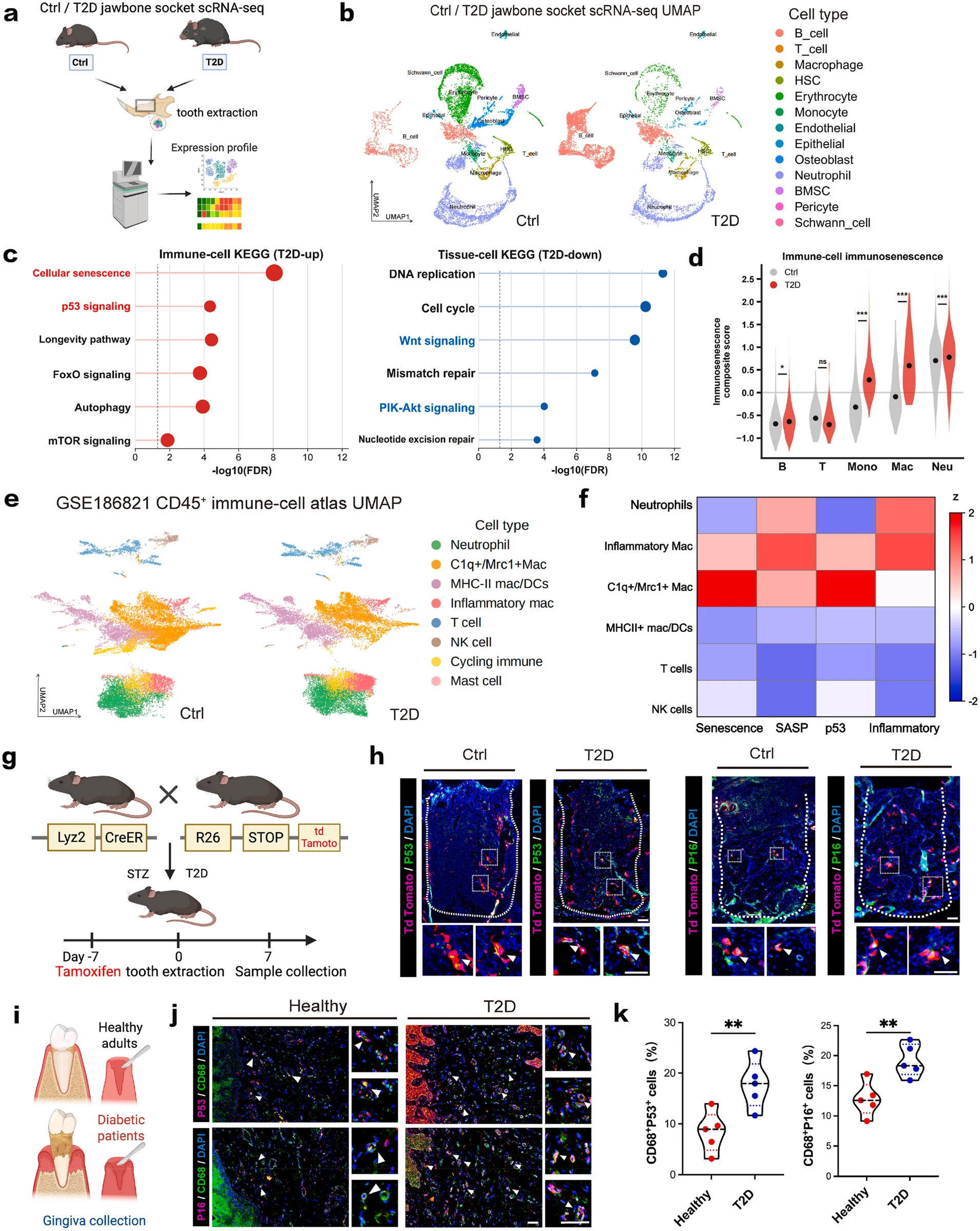
Mice with jawbone defects were studied in experiments examining how diabetes disrupts bone healing. The team identified macrophages, a type of immune cell, with features associated with senescence, a state in which cells stop dividing. These cells had elevated levels of the protein grancalcin.
In laboratory tests, added grancalcin impaired responses involved in bone formation and blood-vessel growth. Neutralizing grancalcin partially reversed the inhibitory effects of fluid collected from diabetic macrophages. In diabetic macrophages, altered energy processing sustained activity of the grancalcin gene. High blood sugar also increased the protein’s release outside cells. The authors described these as two layers controlling grancalcin’s availability outside cells. In mice, local delivery of quercetin in a gel reduced senescence-associated macrophage features and improved jawbone regeneration with blood-vessel formation.
Why it matters
Bone regeneration requires immune cells to shift from inflammation toward supporting repair. The authors propose locally targeting grancalcin as an approach to diabetic bone-healing therapy.
Caveats
The jawbone-healing benefit came from experiments in mice, leaving open whether local quercetin delivery would improve healing in people with diabetes.
The paper
Nanjing Medical University
Redox Biology, Nov 17, 2026, Open access

Comments
Be the first to comment.