Frailty linked to lower survival after surgical complications
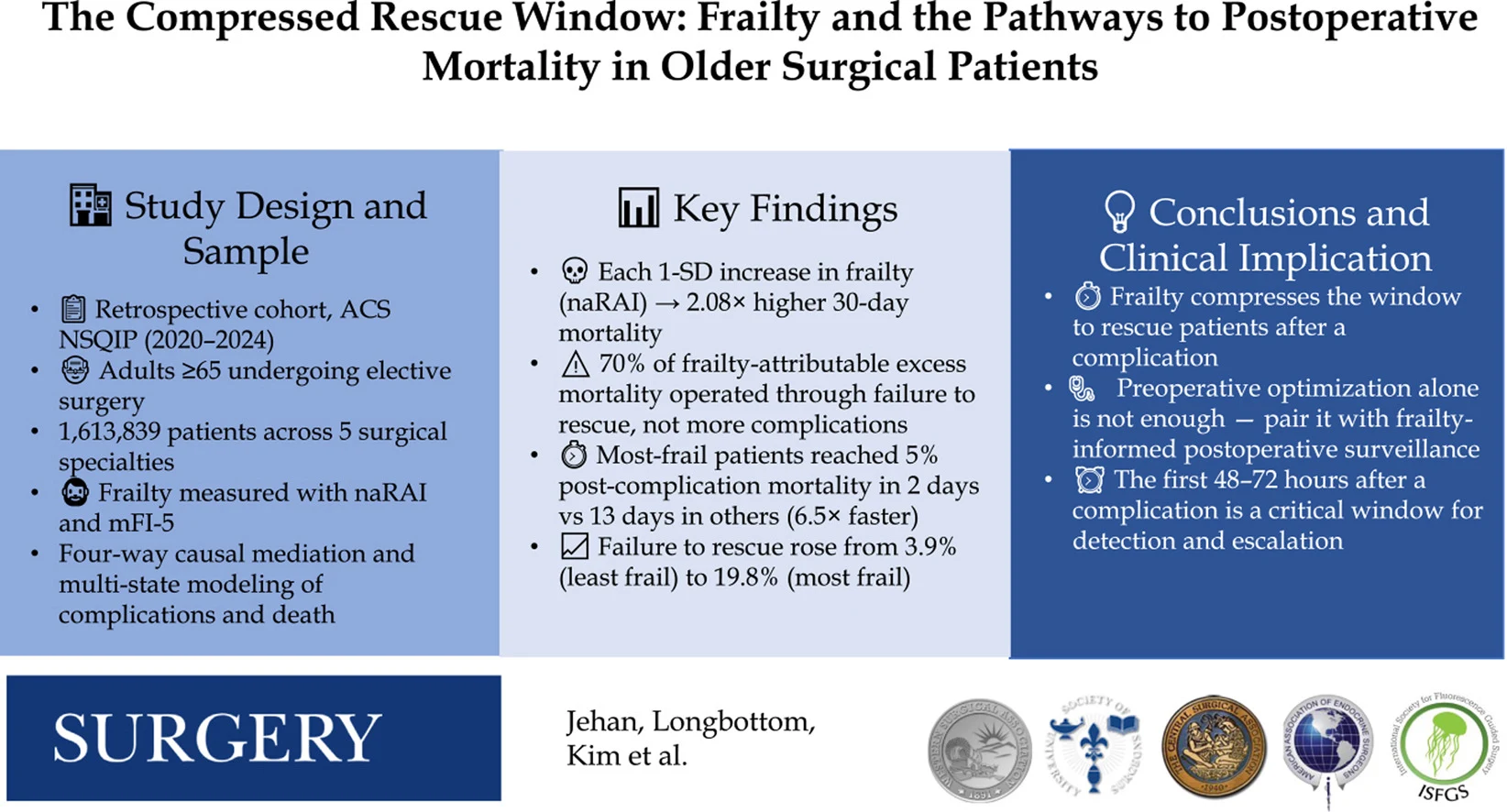
In older surgical patients, models attributed 70% of frailty-associated excess mortality to poorer survival after complications using one frailty score, and 63% using another.
Our read
Populations- Studied:
- Cohort study of older adults undergoing surgery, 30 days, against the remaining patients
- What changed:
- After complications, mortality reached 5% within two days in the frailest fifth versus 13 days in the remaining patients
- The catch:
- Differences in patients’ health or operations could explain survival differences after complications
Editor of record: Boris Djordjevic · AgingResearch.News
Patients aged 65 or older undergoing general or gastrointestinal, vascular, orthopedic, thoracic or urologic surgery were assessed in a retrospective cohort study using US surgical registry files from 2020–2024. Emergency and urgent operations were excluded.
Two scores measured preoperative frailty, or reduced ability to withstand physical stress. Within 30 days, 1.9% of patients died and 11.3% had major complications. Frailty was associated with both higher complication risk and lower survival after complications. Statistical models attributed the larger share of frailty-associated excess mortality to lower survival after complications rather than to complications occurring more often. Following a complication, cumulative mortality reached 5% within two days in the frailest fifth of patients, versus 13 days in the rest.
Why it matters
For older surgical patients, the authors suggest improving the ability to withstand physical stress before surgery and tailoring monitoring afterward to frailty, to detect and treat complications promptly.
Caveats
The retrospective analysis could not rule out other differences in patients’ health or operations contributing to survival after complications. The findings do not cover emergency or urgent surgery.
Comments
Be the first to comment.