Frailty, not age, linked to death after general surgery
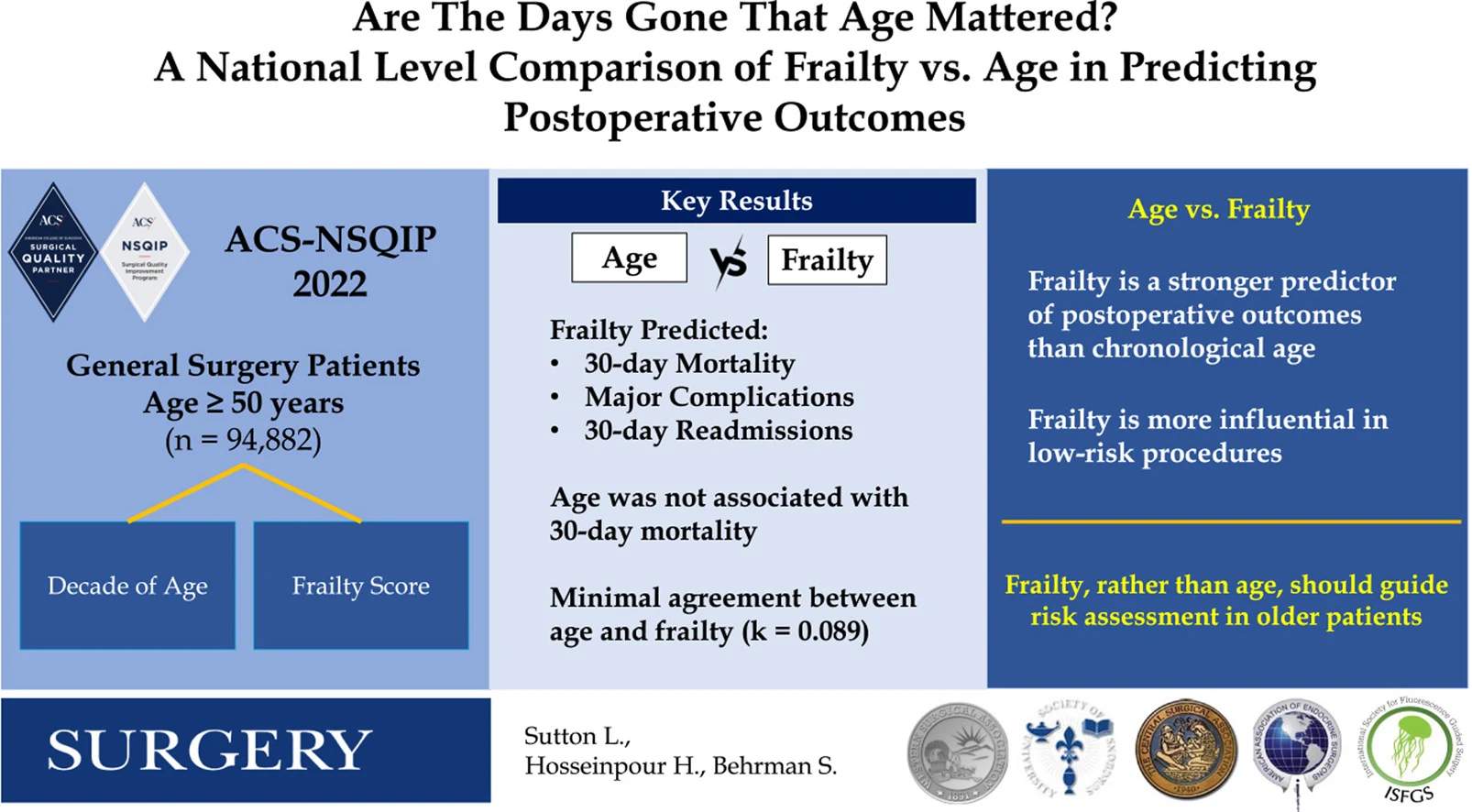
A retrospective study of 94,882 patients aged 50 and older linked higher frailty scores, but not age, to death within 30 days of surgery.
Our read
Biomarkers- Studied:
- Cohort study of 94,882 adults aged 50 and older undergoing general surgery, 30 days
- What changed:
- Higher frailty scores, but not age, were linked to more deaths within 30 days of surgery
- The catch:
- Death was assessed only within 30 days of surgery, excluding later deaths
- In the record:
- The 95th paper on Modified Frailty Index with results in people; 242 on record in all. Its result on 30-day mortality agrees with 4 of 5 other findings on record; 1 found no change.
Editor of record: Boris Djordjevic · AgingResearch.News
Researchers studied 94,882 adults aged 50 and older undergoing general surgery in a retrospective observational analysis of the 2022 National Surgical Quality Improvement Program. They grouped patients by decade of age, operation risk and Modified Frailty Index score, a measure of vulnerability to poor health outcomes.
Higher frailty scores were associated with higher odds of death within 30 days, including after adjustment for other factors. Age was not identified as a risk factor for this outcome. The association with frailty appeared across low-, intermediate- and high-risk operations and was more pronounced as operation risk decreased. Age categories and frailty scores showed poor agreement.
Why it matters
Assessing vulnerability is central to surgical decisions in older adults. The study addressed whether chronological age meaningfully captures that risk.
Caveats
This retrospective observational analysis cannot establish that frailty caused postoperative deaths. The findings concern adults aged 50 and older undergoing general surgery, not younger patients or other types of surgery.
The paper
Baptist Health Sciences University
Surgery, Jul 20, 2026

Comments
Be the first to comment.