Loneliness and declining health are linked in older adults
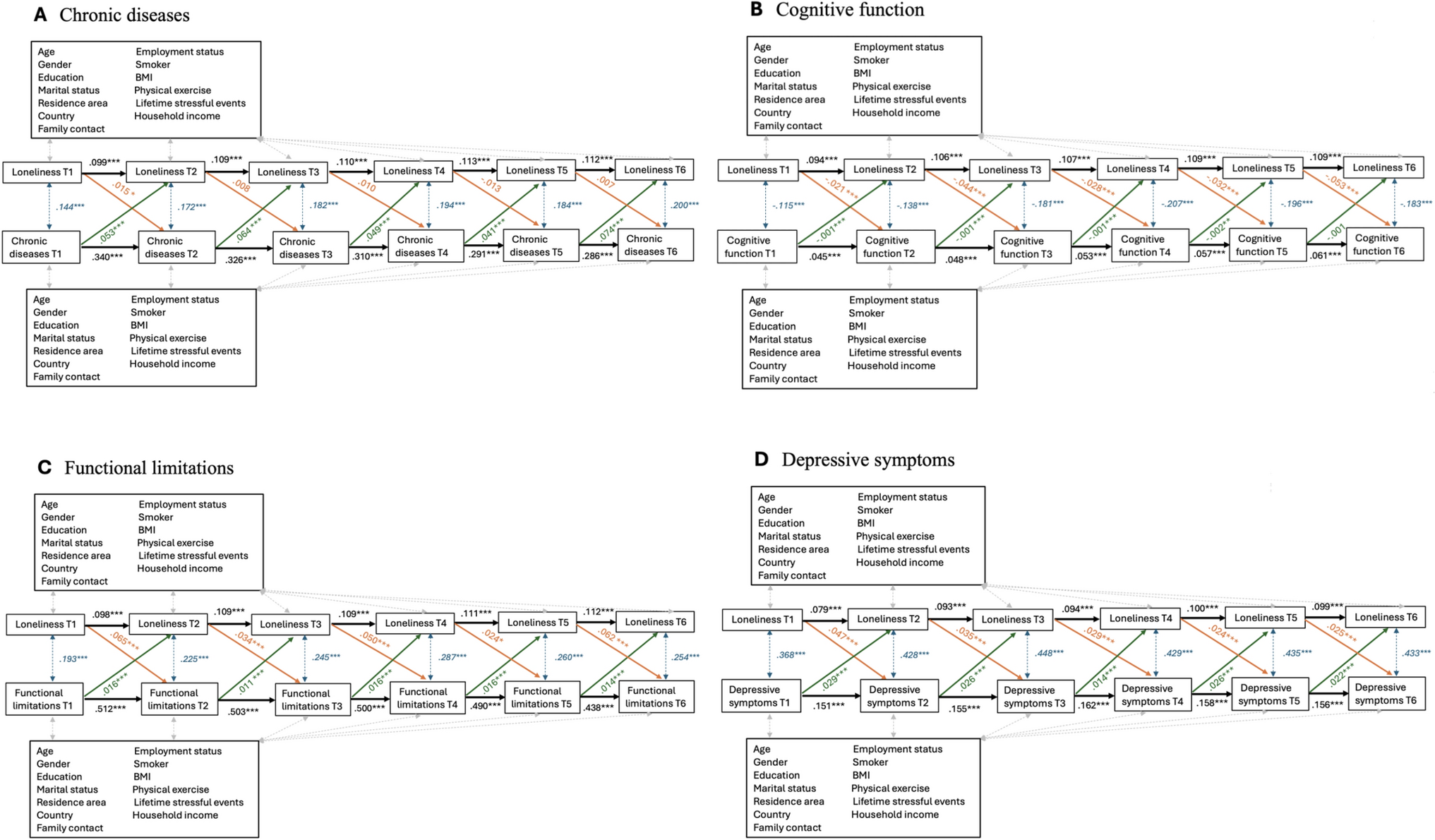
A 12-year longitudinal analysis of 22,097 Europeans aged 50 and older found two-way links between loneliness and mental, cognitive and functional health.
Our read
Populations- Studied:
- Cohort study of 22,097 European adults aged 50 and older, 12 years (Multicenter)
- What changed:
- Greater loneliness predicted worse thinking skills, mobility, and mental health; poorer health also predicted greater loneliness
- The catch:
- Personality traits could influence both loneliness and health but were omitted from the analysis
- In the record:
- The 400th paper on loneliness with results in people; 621 on record in all. Its result on cognitive function agrees with 49 of 52 other findings on record; 2 point the other way and 1 found no change.
Editor of record: Boris Djordjevic · AgingResearch.News
The 22,097 adults aged 50 and older in this longitudinal analysis lived in 13 European countries. Their average age was 64, and 57% were women. Six survey waves covered 12 years. The researchers used statistical models to compare links between loneliness and later health, and between health and later loneliness.
Greater loneliness was associated with later declines in word recall, more depressive symptoms and more physical limitations. Each of these health problems was also linked to later loneliness, but the associations were stronger from loneliness to poorer health. Chronic illnesses showed a different pattern: having more illnesses was linked to later loneliness, while the reverse association appeared only between the first two survey waves. The models accounted for factors including social relationships, health behaviors and stressful life experiences.
Why it matters
The authors suggest that addressing loneliness through community engagement and psychological support may help promote healthy aging.
Caveats
The analysis required participation in at least three consecutive survey waves, so its findings may not represent less consistent participants. Participants lived outside institutions, and people reporting Alzheimer’s disease or dementia at baseline were excluded.
From the paper
- Participants
A total of 22,097 individuals constituted the final sample.
Quoted word for word from the full text on link.springer.com.
The paper
Does loneliness cause poor health or vice versa? A longitudinal analysis across European countries
Universidade da Coruña; University of Coimbra
European Journal of Ageing, Aug 20, 2026, Open access


Comments
Be the first to comment.