Four patterns of physical and mental capacity in older Chinese adults
Among 7,151 older adults, those impaired across all areas had 26.53 times the odds of disability in daily activities compared with the strongest group.
Our read
Populations- Studied:
- Cross-sectional study of 7,151 community-dwelling older adults in China (Registered ChiCTR2400085313)
- What changed:
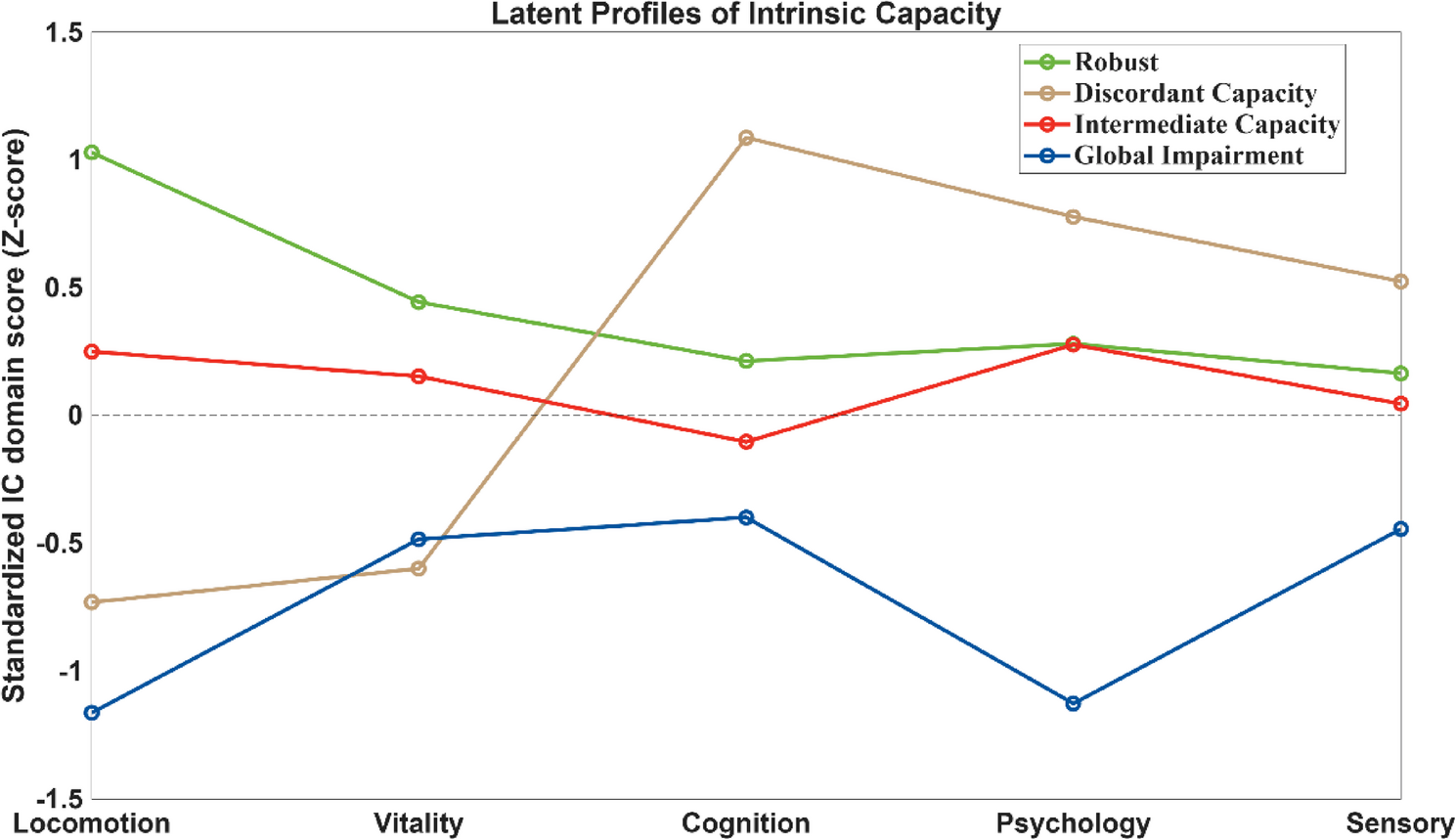
- Four patterns of physical and mental capacity emerged: robust, discordant, intermediate, and globally impaired
- The catch:
- Prior falls may have caused reduced activity and functional decline within the Discordant Capacity profile
Editor of record: Boris Djordjevic · AgingResearch.News
Among 7,151 community-dwelling adults aged 60 and older in China, a cross-sectional study identified four patterns of physical and mental capacity. Women made up 62.6% of participants. Assessments covered movement, thinking, psychological health, strength and physical activity, and vision and hearing.
The groups had strong capacity (20.7%), physical impairment with preserved mental capacities (8.9%), intermediate capacity (47.4%), or impairment across all areas (23.0%). After statistical adjustment, the broadly impaired group had 26.53 times the odds of disability in daily activities such as bathing and dressing compared with the strongest group. Those with physical impairment but preserved mental capacities had 10.26 times the odds of disability, but 0.44 times the odds of reporting a fall in the previous year. The fall association weakened substantially when researchers removed physical activity from the capacity assessment.
Why it matters
Maintaining everyday function is a goal of healthy aging. The authors support tailoring older-adult care to capacity profiles rather than applying one approach to everyone.
Caveats
The one-time assessment could not show whether these capacity patterns preceded disability or falls. The sample excluded people with severe acute illnesses or complete vision or hearing loss.
From the paper
- Participants
Up to June 30, 2025, a total of 9,356 older adults were recruited, of whom 7,151 with complete intrinsic capacity data were included in the analysis.
- Result
Compared with the Robust group, the Global Impairment group exhibited the highest odds of ADL disability (OR = 26.53, 95% CI: 17.24–40.83).
Quoted word for word from the full text on link.springer.com.
The paper
Sichuan University
BMC Geriatrics, Aug 15, 2026, Open access

Comments
Be the first to comment.