Faster biological aging linked to heart disease and death
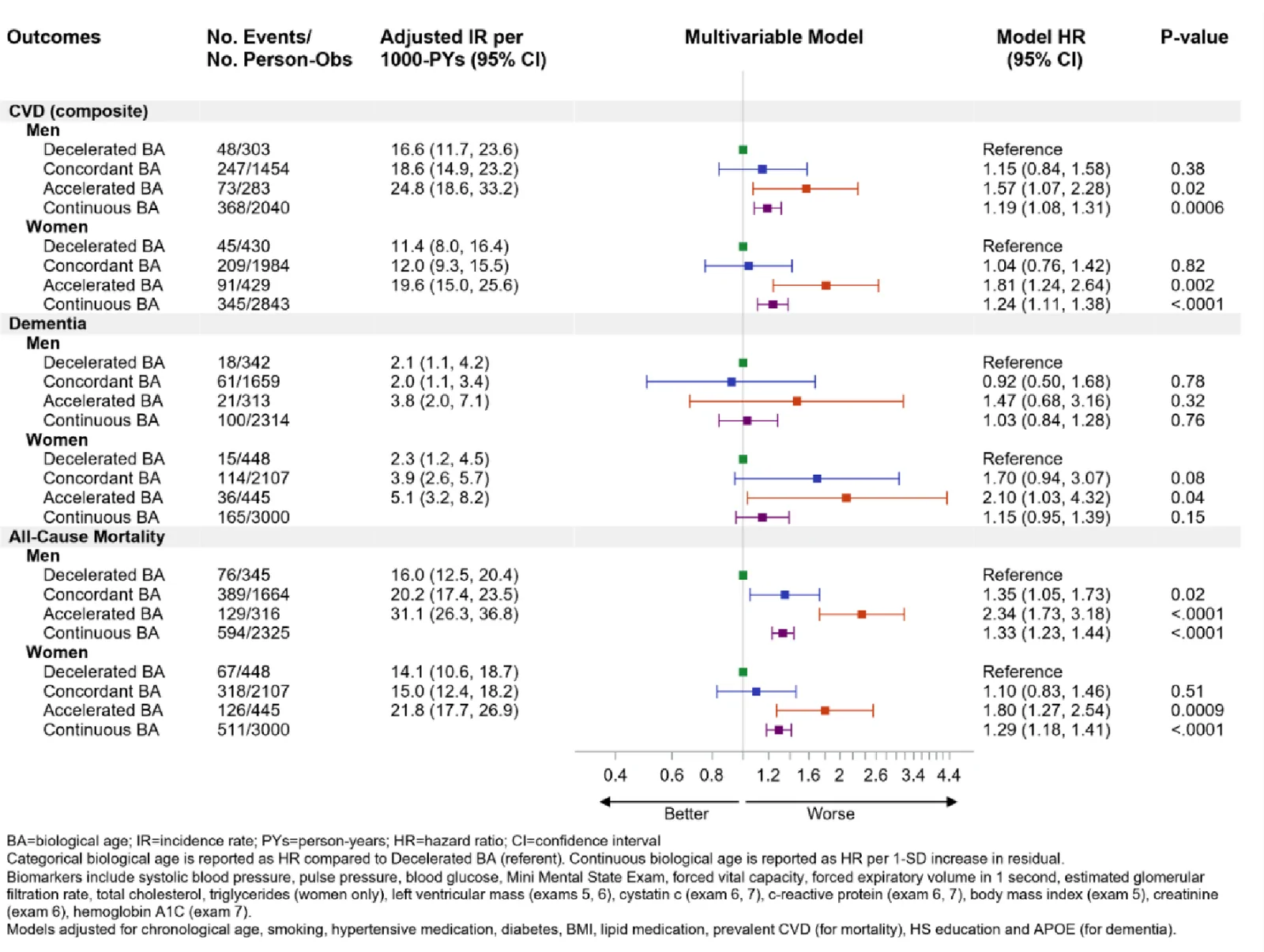
Accelerated biological aging was linked to 2.3-fold higher relative death risk in men and 1.8-fold higher risk in women, compared with slower biological aging.
Our read
Biomarkers- Studied:
- Cohort study of 3,046 Framingham Offspring Study participants, median 26 years
- What changed:
- Death risk was approximately 2-fold higher with accelerated biological aging than with decelerated aging in both men and women
- The catch:
- Biological age estimates omitted potentially relevant biomarkers unavailable at some visits
- In the record:
- One of 3 papers on accelerated biological age on record: 2 with results in people.
Editor of record: Boris Djordjevic · AgingResearch.News
The 3,046 Framingham Offspring Study participants averaged 55 years old, and 55% were women. The observational analysis estimated biological age from body measurements and biochemical markers across three examination cycles between 1991 and 2001. Participants were grouped according to whether their estimated biological age was older than, similar to or younger than their calendar age.
Median follow-up was 23 years for cardiovascular disease and 26 years for dementia and death. Accelerated biological aging was associated with higher cardiovascular disease and death risks than slower biological aging in both sexes. Women with accelerated aging also had higher dementia risk than slower-aging women, with a hazard ratio—a measure of relative risk over time—of 2.1. The dementia association was not statistically significant in men.
Why it matters
Biological age may complement calendar age when assessing later-life health risks. The authors suggest it could help identify people who may benefit from more targeted monitoring or prevention.
Caveats
The authors note that biological age added little predictive value beyond standard risk factors. They describe using it to guide monitoring or prevention as exploratory and requiring prospective validation.
From the paper
- Follow-up
Over the median follow-up of 23 years for the CVD sample and 26 years for the dementia and mortality samples ([min–max] 0–31 years for all samples), there were 713 incident CVD events, 265 cases of incident dementia and 1105 deaths from any cause.
Results, Relations of Accelerated Biological Aging with Outcomes
- Limitation
First, although we used a wide range of clinical biomarkers from multiple biological systems to estimate BA, it is possible that some biomarkers were not available at certain exam visits that may have been more relevant to the aging process.
Quoted word for word from the full text on PubMed Central.
The paper
Boston University
Scientific Reports, Aug 10, 2026, Open access


Comments
Be the first to comment.