Orforglipron reduced sleep apnea severity in two trials
Over 52 weeks, average hourly breathing disruptions fell by 17.8 with orforglipron versus 4.5 with placebo in one trial, and 17.3 versus 5.3 in the other.
Our read
Interventions- Studied:
- Randomized trial in adults with sleep apnea and overweight or obesity, 52 weeks, against placebo (Double-blind, placebo-controlled, multicenter, registered NCT06649045)
- What changed:
- Orforglipron reduced hourly breathing disruptions by 17.8 versus 4.5 with placebo in one trial, and 17.3 versus 5.3 in another
- The catch:
- Follow-up lasted 52 weeks, leaving longer-term benefits and harms unresolved
- In the record:
- The 32nd paper on orforglipron with results in people; 79 on record in all. Its result on gastrointestinal adverse events agrees with all 5 other findings on record.
Editor of record: Boris Djordjevic · AgingResearch.News
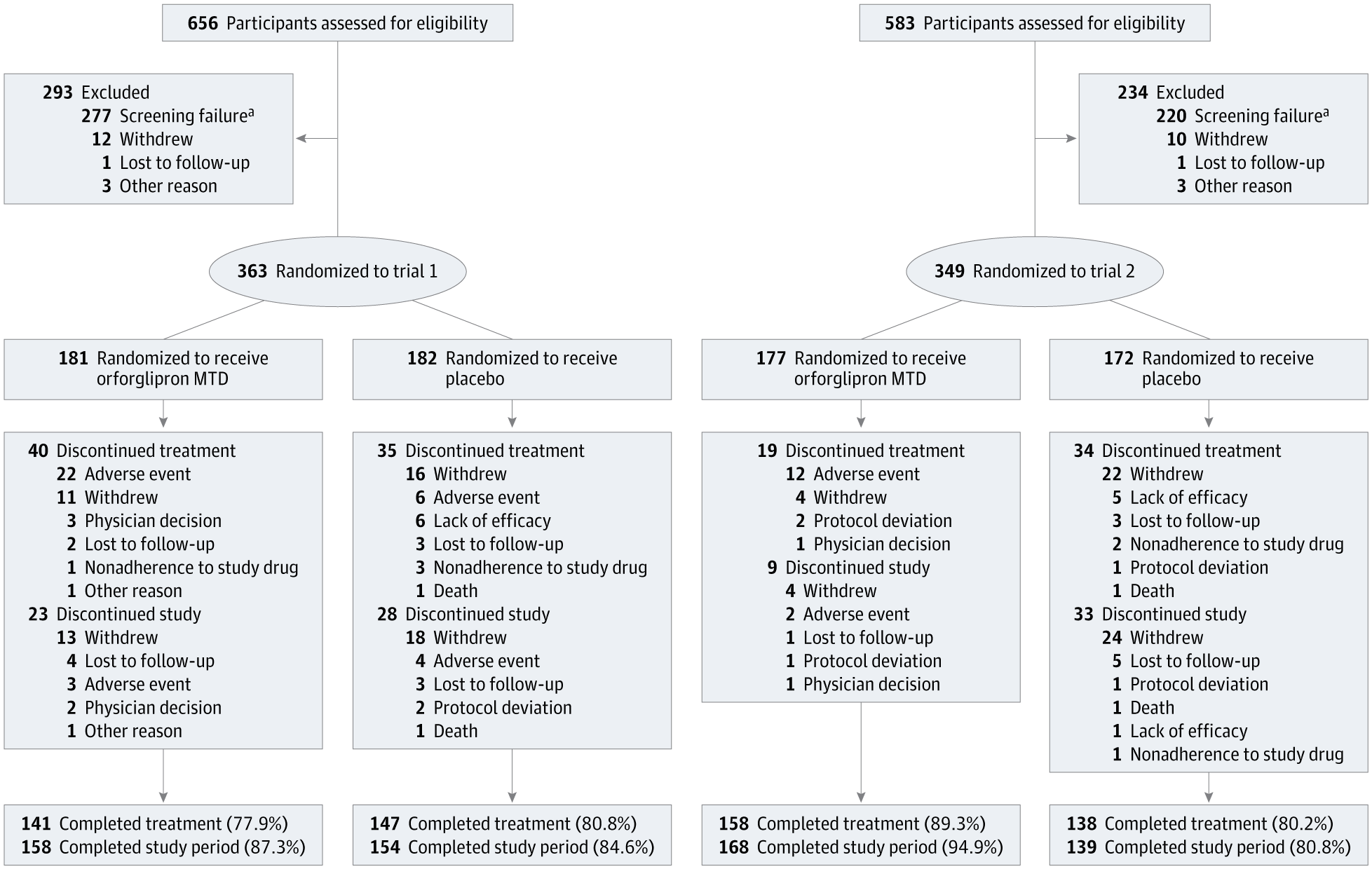
Adults with moderate to severe obstructive sleep apnea—repeated airway collapse during sleep—and overweight or obesity entered two randomized, placebo-controlled trials. Trial 1 enrolled 363 people not using positive airway pressure, which keeps airways open; their mean age was 48.4 years and 31.4% were female. Trial 2 enrolled 349 people using it; their mean age was 51.1 years and 26.9% were female.
Participants took daily oral orforglipron or placebo for 52 weeks. Maximum tolerated doses were equivalent to 9-, 14.5- or 17.2-mg tablets. Orforglipron reduced breathing pauses or episodes of shallow breathing per hour more than placebo in both trials. Digestive problems affected 123 (68.0%) on orforglipron versus 68 (37.4%) on placebo in trial 1, and 125 (70.6%) versus 63 (36.6%), respectively, in trial 2.
Why it matters
Sleep apnea’s association with heart and metabolic disease makes it relevant to health in later life. The authors concluded that oral orforglipron has potential to improve sleep-disordered breathing in adults with moderate to severe obstructive sleep apnea and overweight or obesity.
Caveats
Follow-up lasted 52 weeks, leaving longer-term benefits and harms unresolved. The trials did not address people with milder sleep apnea or a body mass index below 27.
Where the evidence stands
Orforglipron
- 22 independent labs in 9 countries
- 1 finding against
- 36 trials, 1 with no results posted
- Funder: Eli Lilly and Company
- 35 of 80 findings with company ties
- 35 of 36 trials sponsored by its developers
The paper
Orforglipron for Obstructive Sleep Apnea: Results From 2 Randomized Clinical Trials (ATTAIN-OSA)
University of California; Icahn School of Medicine at Mount Sinai
JAMA, Nov 9, 2026


Comments
Be the first to comment.